Szoboszlai’s Stunner Overshadowed by Familiar Liverpool Frailty
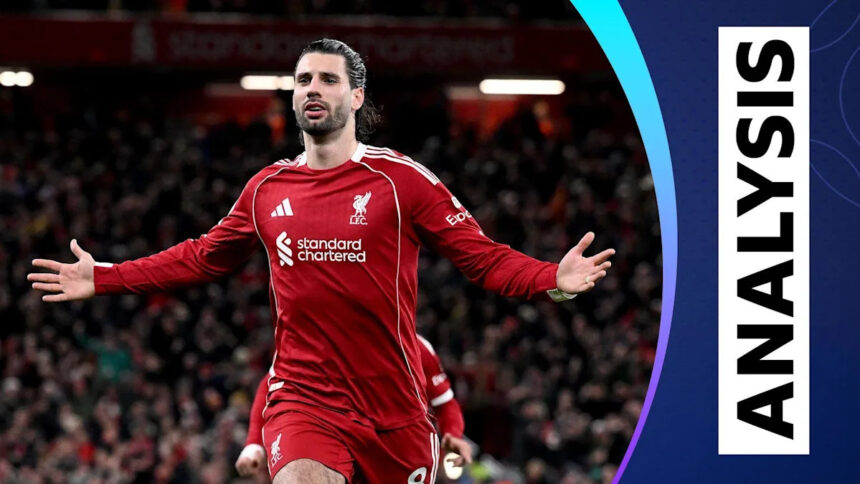
Anfield has witnessed countless moments of magic that have decided the fiercest of contests. For a few, fleeting minutes on Saturday, it seemed Dominik Szoboszlai had authored another. His thunderous, physics-defying strike was a goal worthy of etching a victory into folklore, a moment that should have been the defining chapter of a gritty comeback narrative. Yet, as the final whistle blew, the overwhelming sensation was one of crushing familiarity. For all its breathtaking brilliance, Szoboszlai’s wonder goal became merely a tragic prelude to a recurring nightmare: Liverpool’s chronic inability to see a game out.
A Tale of Two Halves: From Passive to Potent
The first 45 minutes were a concerning echo of early-season teething problems under Arne Slot. Liverpool appeared tactically disjointed and strangely passive, allowing the opposition to dictate the tempo. The midfield, usually a relentless engine room, was bypassed too easily, leaving the defense exposed. Mohamed Salah was isolated, Florian Wirtz struggled to find pockets of space, and Hugo Ekitike’s physical presence was nullified by a deep-lying backline.
However, the second-half transformation was stark and immediate. Slot’s adjustments, likely a combination of positional shifts and renewed intensity demands, flipped the script.
- Mohamed Salah began to drift inside with more menace, linking play and taking on defenders.
- Florian Wirtz found the spaces he craved, orchestrating attacks with clever passes and movement.
- Hugo Ekitike became a focal point, holding up play and bringing others into the game.
This renewed force culminated in the moment of individual genius. Collecting a cleared ball 25 yards from goal, Szoboszlai didn’t break stride. With a defender closing in, he unleashed a ferocious, swerving drive that ripped into the top corner. The stadium erupted, but the most telling reaction came from the pitch itself. Ibrahima Konate, celebrating nearby, instantly held his hands to his head in pure disbelief—a universal gesture acknowledging the sheer improbability of what they had just witnessed. The game was there to be won.
The Collapse: A Pattern That Demands Scrutiny
This is where the story, frustratingly, diverges from the script. Leading with a moment of such inspiration should have been the catalyst for controlled, game-management football. Instead, a palpable anxiety seeped into Liverpool’s play. The passing became safe, then nervous. The proactive press of the second half evaporated, inviting pressure onto a backline that suddenly looked uncertain. Game management has become a persistent issue for this Liverpool side, a mental hurdle as much as a tactical one.
Where seasoned champions squeeze the life out of a match, this Liverpool side too often retreats into a fragile shell. The equalizer, when it came, felt inevitable—a scrappy goal from sustained pressure. But the true disaster was yet to unfold. The winner, a penalty conceded in stoppage time, was a microcosm of the collective meltdown. Alisson Becker, one of the world’s most reliable goalkeepers, made a catastrophic misjudgment. Rushing out for a ball he was never favorite to reach, he clumsily brought down Matheus Nunes. It was a poor decision born of panic and a desperate desire to force a rescue, rather than trust the defensive structure. From a position of iconic victory, Liverpool had orchestrated a wholly avoidable defeat.
Beyond the Result: Key Questions for Arne Slot
While the players must own their execution in the decisive moments, this repeated failure points to a systemic issue that falls at the manager’s door. Arne Slot’s philosophy is built on intensity and control, but the latter is conspicuously absent when it matters most. The analysis must now move beyond individual errors to the collective mindset.
Is it a fitness issue, where the intensity of the system cannot be maintained for 90+ minutes? Is it a tactical communication gap, where players are unsure whether to push for a second or protect a lead? Or is it a psychological scar, a growing lack of conviction that tightens legs and clouds judgment? Slot’s immediate challenge is to drill a killer instinct into this talented squad. This involves:
- Defining clear late-game protocols: Who controls the tempo? How do the forwards and midfielders work to retain possession?
- Building mental resilience: Using these painful experiences as case studies to foster a colder, more ruthless mentality.
- Leadership on the pitch: In the absence of a vocal, controlling presence, who steps up to calm and organize?
Looking Ahead: A Season-Defining Flaw?
In the grand scheme, a single early-season loss is not catastrophic. But the nature of this loss is a glaring red flag. The Premier League and Champions League are won by teams that grind out 1-0 wins on their off days, that protect a lead with grim determination. Liverpool’s thrilling, attack-heavy football under Slot is a joy to watch, but without the foundation of game intelligence, it risks being beautiful yet brittle.
Predictions for the season now hinge almost entirely on Slot’s ability to fix this flaw. If he can, the sheer quality in the side—exemplified by Szoboszlai’s moment of magic—makes them genuine contenders. If he cannot, they are destined for a frustrating cycle of spectacular highs and self-inflicted lows, dropping costly points that will ultimately define their campaign. The title race is unforgiving; it does not care for wonder goals, only for points on the board.
Conclusion: A Warning Written in Wonder
Dominik Szoboszlai’s stunner will live long in highlight reels, a pristine example of technical excellence. But at Anfield, it will be remembered as a ghost goal, a shimmering mirage of what should have been. The real story was written in the agonizing minutes that followed. Until Liverpool learn the dark art of closing out games—of marrying their attacking flair with defensive stoicism—their progress will be hampered. The talent is undeniable, the style is promising, but the street-smarts are missing. For Arne Slot, the lesson is clear: coaching brilliance is one thing; coaching game management is what builds legacies. The Reds’ season depends on him teaching it, and his players learning it, fast.
Source: Based on news from Yahoo Sports.