Aspinall’s Candid Critique: Darts’ Saudi Debut Faces Crowd and Culture Questions
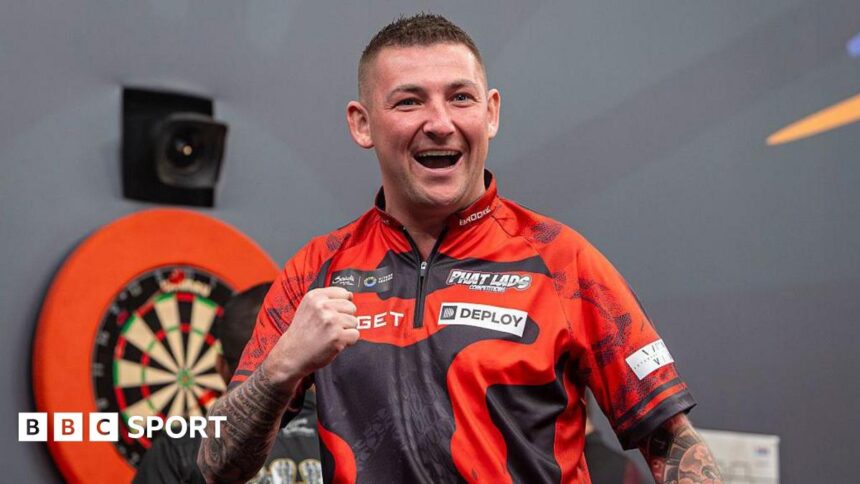
The tungsten has landed in Riyadh. The Professional Darts Corporation (PDC), in its continued global expansion, has staged its first-ever World Series event in Saudi Arabia, bringing the high-octane drama of the sport to a new frontier. Yet, amidst the glitter of the new Global Theater, a voice of stark candor has cut through the celebratory noise. Nathan Aspinall, the world number six and a recent victor at the Bahrain Masters, has raised profound questions not about his own performance, but about the very atmosphere in the arena, casting a shadow over darts’ nascent Saudi partnership and igniting a debate about sport, culture, and authenticity.
The Aspinall Observation: A Chilling Assessment of Arena Atmosphere
Fresh from his victory over Lourence Ilagan in the last 16 of the Bahrain Masters, Nathan Aspinall arrived in Riyadh as a contender. However, his post-match reflections to the YouTube channel Darts Now were less about checkouts and more about the crowd. In a remarkably frank interview, the 34-year-old Englishman dissected the unique environment of the 1,000-capacity venue.
“It’s very different,” Aspinall stated, before delivering his pivotal critique: “I don’t think the crowd were all there of their own accord.” He elaborated, suggesting many attendees seemed to be “invited” and lacked the organic, raucous passion that defines a classic darts night. “They were very quiet unless you hit 180 or a big finish… it was a very strange atmosphere,” he added. This observation strikes at the heart of darts’ identity—a sport built on a symbiotic, often beer-fueled, relationship between player and fan. In a kingdom with strict no-alcohol regulations, a fundamental ingredient of the traditional darts recipe was absent, replaced by a more subdued, curated spectacle.
Beyond the Oche: The Complex Tapestry of Sportswashing and Growth
Aspinall’s comments inadvertently open a window into the broader context of Saudi Arabia’s aggressive entry into global sports. The kingdom, through its Public Investment Fund, has made landmark moves in golf, football, boxing, and now darts. Critics label this sportswashing—an attempt to use high-profile events to soften its international image and divert attention from human rights concerns. The PDC, like many governing bodies, faces the classic dilemma: is this genuine growth or compromised commerce?
The event itself was undeniably star-studded, featuring the magnetic draw of teenage world champion Luke Littler, world number one Luke Humphries, and the legendary Michael van Gerwen. The staging was pristine, the organization undoubtedly professional. Yet, as Aspinall hinted, the cultural translation was imperfect. Key elements of darts’ theatre were missing:
- The Organic Crowd Roar: The lack of spontaneous, knowledge-driven reaction throughout legs.
- Cultural Nuance: The silent tension of a crucial double, usually broken by shouts, was palpably different.
- Player-Crowd Dialectic: The players’ traditional cues and interactions with the audience fell into a quieter void.
Aspinall was diplomatic but clear on the future, stating “there is definitely a long way to go” before a long-term PDC-Saudi partnership could be considered deeply rooted. This isn’t just about building arenas; it’s about cultivating a genuine, understanding fanbase.
The Road Ahead: Predictions for Darts’ Global Gambit
The PDC’s World Series is designed to export the sport, but the Saudi experiment reveals the complexities of that mission. So, what happens next? The path forward is likely to be a careful, and potentially rocky, negotiation of interests.
Short-term (Next 1-2 Years): The financial allure for the PDC is significant. We predict the Saudi event will remain on the calendar, possibly with an increased prize fund to ensure top-player buy-in. The PDC will likely work closely with local organizers to actively foster a more engaged atmosphere—perhaps through fan education initiatives or altered seating layouts to encourage interaction. The focus will be on engineering the “feel” that comes naturally in London, Glasgow, or Berlin.
Medium-term (3-5 Years): The critical question is whether a grassroots darts scene can develop in Saudi Arabia and the wider region. This is the true antidote to Aspinall’s “invited crowd” concern. Without local leagues, homegrown players, and a generation that chooses darts, the event risks perpetually feeling like an imported exhibition. The emergence of a Saudi or Middle Eastern player on the PDC Tour would be a game-changer for local interest.
Player Power & Adaptation: Stars like Littler, Humphries, and van Gerwen will become crucial barometers. If top players express similar reservations to Aspinall, pressure on the PDC will mount. Conversely, players may simply adapt, treating it as a unique, high-stakes exhibition requiring a different mental approach, much like playing a televised final in an empty arena during the pandemic.
Conclusion: A Checkout for Consideration, Not Celebration
The inaugural Saudi Arabia Darts Masters will be remembered not just for its winner, but for Nathan Aspinall’s searingly honest post-match analysis. He has highlighted the fundamental challenge facing not just darts, but all sports entering new cultural domains: you can fly in the stars, build a stunning venue, and offer a colossal purse, but you cannot instantly manufacture soul. The strict no-alcohol regulations are a surface-level symptom of a deeper cultural disconnect from darts’ working-class, pub-born roots.
Aspinall’s claim that the crowd attending the Saudi Arabia Darts Masters “weren’t all there of their own accord” is a metaphor for the event itself. It was there by invitation, not by organic sporting tradition. For the PDC, the long-term partnership Aspinall doubts will depend on transitioning from a state-sponsored spectacle to a people-powered passion. The journey has begun, but as “The Asp” correctly noted, the finishing double is a long way off. The PDC must now decide if the prize money is worth playing for a crowd whose silence speaks volumes.
Source: Based on news from BBC Sport.