How Popularity Overwhelmed Alexandra Eala – And the Australian Open
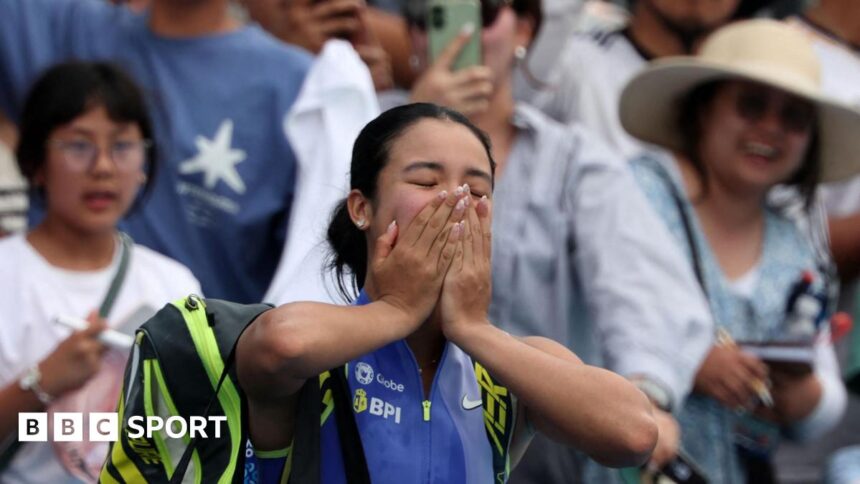
The Australian Open is no stranger to fan fervor. The roar of RLA for a home hero, the sea of Serbian flags for Novak, the passion of the Greek fans for Stefanos. But on a sun-drenched Tuesday at Melbourne Park, a new, unprecedented wave of adoration crashed onto the grounds, and its epicenter was a quiet practice court. This was not about a reigning champion or a veteran legend. This was the moment the world truly grasped the seismic cultural phenomenon that is Alexandra Eala.
A Queue for the Ages: When Practice Outshines Centre Court
The scene was surreal. Snaking through the garden square, past food stalls and sponsor activations, was a line of several hundred people. Was it for a secret Carlos Alcaraz practice session? A chance to see Nick Kyrgios hit trick shots? Perhaps a pop-up stall giving away free lobster rolls? The answer was none of the above. This historic, log-jamming queue was for Court 6, a modest outside practice court, where an 18-year-old world number 49 from the Philippines was warming up.
Thousands of Filipinos descended on Melbourne Park, transforming the area into a vibrant, flag-waving extension of Manila. The atmosphere was less like a tennis tournament and more like a national festival. For the tournament organizers, it was a logistical puzzle they’d never encountered for a practice session. For the tennis world, it was a stark announcement: Alexandra Eala transcends sport. She is a symbol of national hope, and her journey is being witnessed by a nation of 115 million, regardless of the round.
More Than a Player: The Anatomy of a National Icon
To understand the frenzy, one must look beyond the WTA rankings. Eala’s popularity is a potent cocktail of breakthrough achievement, national identity, and relatable narrative.
- Grand Slam Pedigree: While she has just one main-draw win at a major, Eala is already a three-time Junior Grand Slam champion, including a US Open girls’ title. This early success planted the flag for Philippine tennis on the world stage.
- Historic Potential: In a nation obsessed with basketball and boxing, Eala represents the genuine prospect of a Filipino contender in a global, elite sport. She carries the weight of being a trailblazer for Philippine tennis.
- The Rafael Nadal Academy Connection: Her training at the famed academy adds a layer of glamour and credibility, linking her to the legend’s work ethic and champion’s mindset.
- Authentic Representation: Eala’s grounded demeanor, fluency in Filipino, and clear pride in her heritage forge a deep, authentic connection with her compatriots. She is one of them.
This confluence of factors has made her a household name. Her matches are televised nationally, her sponsors are major local brands, and her social media following dwarfs that of players ranked significantly higher. Her popularity isn’t growing; it has already arrived, fully formed, and the Australian Open was simply where the rest of the world caught up.
The Double-Edged Sword: Navigating Fame at 18
For Eala, this adoration is both rocket fuel and a unique pressure cooker. The crowd’s energy in her first-round match was deafening, a tangible force that undoubtedly spurred her to victory. However, expert analysis suggests this level of fame presents challenges most teenagers—and even seasoned pros—never face.
“What we’re seeing is unprecedented for a player at this stage of their career,” says a veteran sports psychologist familiar with the Asian sporting landscape. “The support is incredible, but it reframes every match. A second-round loss for another player is a learning experience. For Eala, it can feel like a national event that didn’t meet expectations. The key will be her team’s ability to insulate her process—to let the love in during the match, but focus on the granular, unglamorous work of improvement when the cameras are off.”
The logistical demands also intensify. Practice schedules become public events. Movement around the grounds requires planning. Every interview carries the weight of speaking to a nation. Managing this ecosystem, while trying to improve from world number 49 to the top 20, is her next great test.
The Future: Predictions for Eala and the Grand Slam Stage
So, what comes next? The Australian Open of 2024 was a watershed, proving that Eala’s drawing power is a permanent feature of the tour’s landscape. Here’s what we can predict:
- Tournament Logistics Will Adapt: Grand Slams will likely schedule her on progressively larger show courts, not just based on ranking, but on proven fan demand. The “Eala effect” will be a factor in draw scheduling.
- The Pressure Will Peak at Home: The ultimate test will be the 2025 Australian Open, or any major, where she makes a deep second-week run. The noise and expectation will be immense, a true trial of her competitive mettle.
- Commercial Powerhouse: Her marketability, both in the Philippines and across the Asian diaspora, will make her one of the most sought-after endorsers in women’s sports, providing resources to build a world-class team around her.
- The Tennis Journey: On the court, the path is clear. Her powerful game needs consistency and tactical variety to breach the top 30. The weaponry is there; it’s about assembling it under the brightest of spotlights.
Conclusion: A New Blueprint for Stardom
The story of Alexandra Eala at the 2024 Australian Open was not about a match result. It was about a cultural moment that overwhelmed a Grand Slam’s routine. It revealed a new blueprint for tennis stardom in the 21st century—one where digital connection, national pride, and aspirational narrative can generate a supernova of popularity before the traditional metrics of success are achieved.
The long queue outside Court 6 was more than just a line of fans. It was a message. It told the tennis establishment that a new, passionate constituency has arrived. It told Eala that she is never alone on this journey. And it told the world that in the global village of sport, a nation’s hope can descend on Melbourne Park, turn a practice session into a historic event, and remind us all that sometimes, the most compelling story isn’t about who wins the trophy, but about who captures the heart of a nation. The challenge for the prodigy at its center is to harness that incredible energy, convert it into resilience, and write the next chapter—not just as a phenomenon, but as a champion.
Source: Based on news from BBC Sport.