Rain Reigns Supreme: Australia’s T20 World Cup Dream Washed Away, Zimbabwe March On
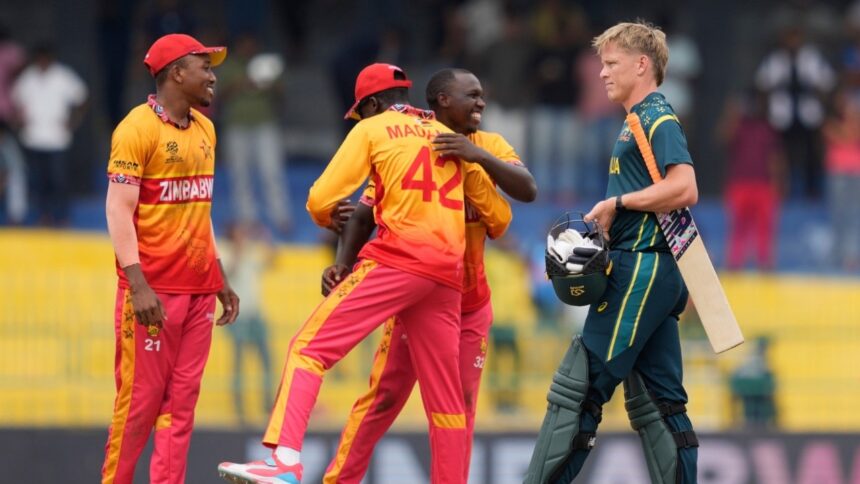
The capricious nature of T20 cricket is often encapsulated in a blistering innings or a magical spell of bowling. But sometimes, the most decisive player wears no jersey at all. In a dramatic, rain-soaked twist of fate at the Pallekele International Cricket Stadium, the weather itself became the tournament’s ultimate game-changer, delivering a verdict that sent shockwaves through the cricketing world. Australia have crashed out of the T20 World Cup, their campaign terminated not by a rival’s brilliance, but by the persistent drizzle in Sri Lanka that abandoned the Ireland vs Zimbabwe clash. From that same washout, Zimbabwe have reached the Super 8 stage, scripting a remarkable tale of redemption that contrasts starkly with Australian despair.
A Downpour of Destiny: How the Scenarios Unraveled
Australia’s path to this precipice was paved with their own unexpected stumble—a defeat to Sri Lanka that left their fate dangling precariously. Needing an Ireland victory over Zimbabwe to keep their hopes alive, the Aussies were relegated to the unfamiliar role of anxious spectators. The mathematics were simple; the emotions, anything but.
As clouds gathered over Pallekele on Tuesday, so too did the tension. Every passing minute without play was a nail hammered into the coffin of the reigning 50-over world champions’ T20 ambitions. When the official abandonment was confirmed, the consequence was historic and brutal: This marks the first time Australia have failed to advance beyond the opening round of the Men’s T20 World Cup. Their final group match against Oman is now a dead rubber, a somber affair where only pride remains at stake.
For Zimbabwe, the persistent rain was a lifeline, transforming into a celebratory shower. The point from the no-result was enough to secure their progression, a moment of immense catharsis for a nation that failed to qualify for the T20 World Cup 2024. Their journey back to this stage, now culminating in a Super 8 berth, is a testament to resilience.
Expert Analysis: Systemic Shock for Australia, New Dawn for Zimbabwe
The fallout from this exit will trigger intense scrutiny in Australia. While the rain was the immediate executioner, the autopsy will focus on the self-inflicted wounds.
- Batting Fragility: Over-reliance on a few stars was exposed. The middle order, once a fortress, showed alarming brittleness under the unique pressures of Sri Lankan conditions.
- Tactical Rigidity: Questions will be asked about selection and adaptability. In a format that demands innovation, Australia’s approach at times appeared a step behind.
- Legacy of Underperformance: This early exit cements a concerning trend in T20 World Cups for Australia, who have only won the title once (2021), despite their all-conquering reputation in other formats.
Conversely, for Sikandar Raza’s Zimbabwe, this is more than just advancement; it’s a validation of a new era. Raza’s inspirational leadership, combined with a blend of experienced campaigners and fearless youth, has forged a unit that believes.
Key to their success has been:
- All-Round Depth: Players like Raza himself, Sean Williams, and Ryan Burl provide multiple options with both bat and ball, offering crucial balance.
- Spin Proficiency: Their attack is well-equipped to exploit subcontinental conditions, a factor that will serve them well in the Super 8s.
- Fearless Mindset: Unburdened by the weight of expectation that crushes bigger teams, Zimbabwe has played with a liberating, attacking intent.
The Road Ahead: Super 8 Stakes and a Clash for Supremacy
While Australia packs its bags, the tournament ignites anew for Zimbabwe. Their mission is immediately upgraded. They now have a monumental opportunity to finish Group B at the top of the standings when they face co-hosts Sri Lanka at the R. Premadasa Stadium. This is no dead rubber; it’s a statement match.
A victory against the 2014 champions would not only secure top spot—potentially dictating a more favorable Super 8 group—but would also announce Zimbabwe as genuine dark horses capable of unsettling any team. For Sri Lanka, it’s a chance to build momentum and reassert their dominance at home. This fixture has been transformed from a potential decider for Australia’s fate into a thrilling showdown for group supremacy.
Predictions for the Super 8s: Zimbabwe’s progression throws an intriguing spanner in the works. They are no longer mere participants; they are potential party-poopers. Teams will underestimate them at their peril. Their spinners can stifle, and their batters have shown they can chase down or set competitive totals. Reaching the semi-finals remains a tall order, but they have the tools to decide who does.
A Conclusion Written in Raindrops
The story from Pallekele is one of cruel irony and beautiful redemption. For Australia, a team synonymous with sporting dominance, their exit is a humbling reminder of T20 cricket’s glorious uncertainty. Their tournament ended not with a roar or a whimper, but with the soft, relentless patter of rain—a profoundly anti-climactic conclusion for a team of their stature.
For Zimbabwe, that same rain washed away the disappointments of the past, irrigating the seeds of a promising future. Their journey to the Super 8 stage is a victory for perseverance, a narrative that transcends sport. It proves that in the chaotic theatre of T20 cricket, fortune can favor the brave-hearted, and sometimes, the most profound advances come not from a thunderous boundary, but from the clouds above. The world champions are out. The qualifiers are through. In this World Cup, the script has been ripped up, and a thrilling new chapter awaits.
Source: Based on news from India Today Sport.