


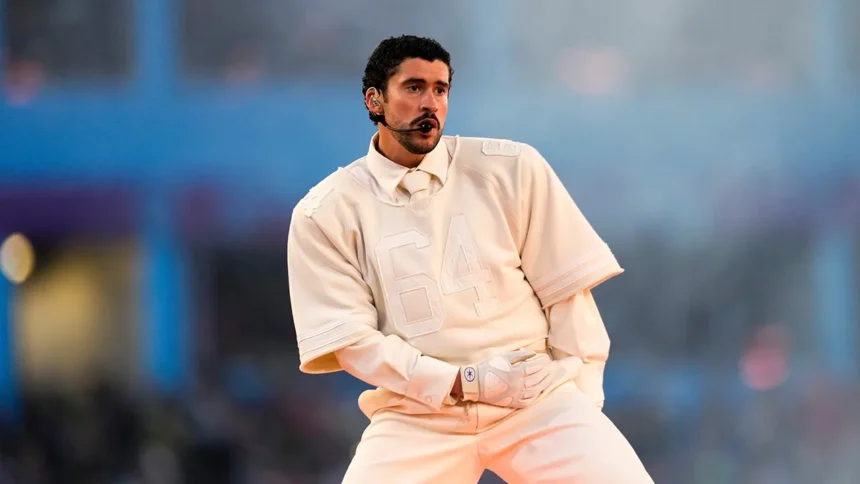
Bad Bunny’s Super Bowl Halftime Show: A Cultural Flashpoint Igniting Political Fury and Fan Debate
The Super Bowl halftime show is designed to be a spectacle, a unifying 12-minute burst of entertainment for the largest television audience of the year. Yet, the performance by Latin trap superstar Bad Bunny at Super Bowl LX proved to be anything but unifying. Instead, it became a potent cultural flashpoint, igniting a firestorm of criticism from former President Donald Trump, dividing viewers along generational and political lines, and sparking a fierce debate about what—and who—represents American culture on its most prominent stage.
A Performance That Transcended the Field
From the moment Bad Bunny emerged atop a stylized, decaying Puerto Rican building to the strains of “El Apagón,” his performance was a defiant celebration of Latinidad. He seamlessly wove through his global hits like “Tití Me Preguntó” and “I Like It,” featuring brief appearances by fellow Puerto Rican icons. The stage pulsed with the rhythms of reggaeton and Latin trap, the lyrics predominantly in Spanish, and the visuals were a vibrant homage to Caribbean culture. For millions of Latinx viewers and a global Gen-Z audience, it was a historic moment of representation and validation. For others, it was an alienating enigma.
The backlash was swift and pointed. Across social media and conservative news outlets, a chorus of criticism emerged, centering on the language barrier and the perceived inappropriateness of the performance’s aesthetics. This sentiment found its most powerful amplifier in former President Donald Trump, who took to Truth Social to deliver a scathing review that framed the show as a national insult.
Trump’s Fury and the Political Theater of Culture
Trump’s lengthy post went far beyond typical show criticism. He labeled it “one of the worst ever,” an “affront to the Greatness of America,” and a “slap in the face to our Country.” His critique hinged on several key themes that resonate deeply within his political base:
- Linguistic Nationalism: “Nobody understands a word this guy is saying” underscored a long-standing tension around English as a de facto national language.
- Cultural Standards: Claiming it didn’t represent American “Standards of Success, Creativity, or Excellence” implicitly positioned a Latin-centric show as “other.”
- Moral Panic: Describing the dancing as “disgusting, especially for young children” invoked familiar tropes about the corruption of youth by foreign influences.
- Media Distrust: Predicting “great reviews from the Fake News Media” framed support for the show as an elitist betrayal of the “REAL WORLD.”
This reaction was contextualized and amplified on platforms like Fox News. Turning Point USA contributor Jack Posobiec analyzed the show not as entertainment, but as a political statement. He framed it as a deliberate act of cultural messaging by the left, arguing on ‘Fox News @ Night’ that the performance was a calculated move to normalize a specific, progressive vision of America that conservatives find hostile. This analysis elevates the halftime show from a musical interlude to a key battleground in the ongoing culture wars.
The Great Divide: Generational Chasm and Demographic Realities
The polarized reaction to Bad Bunny’s performance perfectly illustrates America’s deepening cultural and generational divides. The criticism largely came from an older, predominantly English-monolingual demographic for whom the Super Bowl halftime tradition is rooted in classic rock, pop megastars, and broadly accessible spectacle. For this group, the performance failed to meet expectations of mass appeal.
Conversely, the celebration came from younger audiences and the nation’s booming Hispanic population. Key points from supporters include:
- Historic Representation: Bad Bunny is the first Latin solo artist to headline, reflecting the growing cultural and economic power of Latinos in the U.S.
- Global Dominance: Critics calling him “not a mainstream artist” ignored his status as Spotify’s most-streamed artist globally for multiple years—a metric of success defined by the modern market.
- Cultural Authenticity: The show was praised for refusing to water down its Latin essence to cater to a narrow, anglophone ideal of Americana.
The divide isn’t merely about taste; it’s about demographic identity. The United States is increasingly multilingual and multicultural. Bad Bunny’s show, whether one enjoyed it or not, was a mirror held up to this evolving reality. The intense reaction, particularly from political figures, signals a discomfort with that reflection.
Predictions: The New Normal for Megawatt Events
The fallout from this year’s halftime show sets clear precedents for the future of major cultural events. We can anticipate several key developments:
First, political commentary on entertainment will become even more entrenched. Any major performance—at the Super Bowl, awards shows, or national ceremonies—will be instantly parsed for its political and cultural symbolism by both right and left. There is no longer a neutral entertainment space.
Second, the NFL and other leagues will face intensified pressure in their booking choices. They must now navigate a landscape where selecting any artist with a strong cultural identity or political viewpoint guarantees both fervent support and organized backlash. The safe, crowd-pleasing act may become a relic of the past.
Finally, this event proves that mainstream American culture is irrevocably pluralistic. The attempt to define a single, monolithic “American” standard for creativity is collapsing under the weight of its own inaccuracy. Future showcases will likely continue to reflect the nation’s diverse tapestry, ensuring that the halftime show remains a contentious and revealing annual ritual.
Conclusion: More Than a Show, A Reflection of America
Bad Bunny’s Super Bowl halftime show will be remembered not for its choreography or setlist, but for the national conversation it forced into the open. The visceral fury from Donald Trump and his allies, contrasted with the jubilant celebration from millions of fans, reveals a country at odds with itself over its own identity. The performance acted as a Rorschach test: some saw a disrespectful, confusing spectacle; others saw a long-overdue acknowledgment of a vibrant, essential part of the American story.
In the end, the controversy underscores a fundamental truth. The Super Bowl halftime show is no longer just a concert. It is one of the most potent platforms for examining who gets to be centered in American culture, what languages are deemed acceptable, and whose art is considered excellent. The divided reaction to Bad Bunny doesn’t signify a failure of the performance, but rather a stark illumination of the work that remains in building a national culture that truly sees and celebrates all of its parts. The debate, much like the rhythms of reggaeton, is sure to keep pounding long after the stadium lights have dimmed.
Source: Based on news from Fox Sports.


