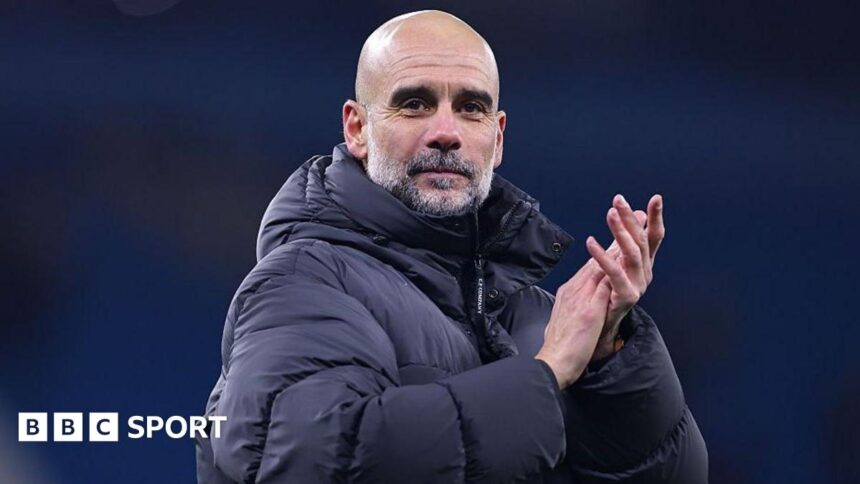
Guardiola’s Vision: How Embracing Cultures Builds a Better Society and Stronger Teams
In the high-stakes, pressure-cooker environment of a pre-match press conference, questions typically orbit around fitness, tactics, and title races. Yet, when Pep Guardiola, the architect of modern footballing dominance at Manchester City, chooses to pivot from the pitch to the profound, the world leans in. Responding to controversial comments on immigration from Manchester United co-owner Sir Jim Ratcliffe, Guardiola, the Spaniard with 47 international caps, offered a simple yet powerful prescription for societal health: embrace other cultures. His words, “we will have a better society,” were not a fleeting soundbite but a foundational philosophy that mirrors the very blueprint of his footballing success.
More Than a Game: Guardiola’s Worldview Forged in Catalonia and Cobham
To understand Guardiola’s perspective is to look beyond the touchline. Born in Santpedor, Catalonia, his identity was shaped within a region with a distinct language and culture within Spain. His playing career under the visionary Johan Cruyff at Barcelona immersed him in a footballing ideology that was revolutionary, a fusion of Dutch total football and Catalan identity. This early exposure to synthesis and different ways of thinking became core to his DNA.
As a manager, his journey is a map of cultural immersion: Barcelona, Bayer Munich, and now Manchester City. At each stop, he didn’t merely impose a system; he absorbed, adapted, and integrated. In Germany, he embraced the language and the culture of efficiency. In England, he navigated the unique intensity of the Premier League and the diverse tapestry of Manchester. His squads are never monolithic; they are global collectives. This lived experience informs his societal stance. For Guardiola, diversity isn’t a challenge to manage; it is the essential fuel for innovation and excellence, whether in a locker room or a city.
The Ratcliffe Remark: A Clash of Philosophies in Manchester
The prompt for Guardiola’s comments was a statement from across the Manchester divide. Sir Jim Ratcliffe, in a discussion with the BBC, said the UK had been “colonised by immigrants,” a phrase that sparked immediate backlash for its inflammatory and historically loaded terminology. While Ratcliffe later apologized for “offending some people,” he stood by his call for “open debate.”
Guardiola’s response was the antithesis of this framing. He reframed the narrative from one of colonization to one of shared human aspiration. “Everybody wants to have a better life,” he stated, grounding the conversation in universal empathy. His key points dismantled the “us vs. them” rhetoric:
- Universal Aspiration: The drive for a better future for family and community is a global constant.
- Opportunity Mobility: People move to where opportunity exists, a dynamic as old as humanity itself.
- Societal Benefit: The implicit conclusion is that societies that welcome and integrate new perspectives become richer, more dynamic, and yes, better.
This wasn’t just political correctness; it was a pragmatic observation from a man who has built winning machines by harnessing global talent and fostering a unified culture from diversity.
The Dressing Room as a Microcosm: How Inclusion Wins Titles
Guardiola’s Manchester City is the perfect case study for his philosophy. Walk into the City Football Academy, and you hear a symphony of accents—from the streets of Oslo to the favelas of Brazil, from the sun of Algeria to the discipline of Portugal. The success is not in spite of this diversity, but because of it. Guardiola creates a shared identity where cultural differences become strengths to be leveraged, not obstacles to be overcome.
This environment fosters:
- Tactical Flexibility: Players with different footballing educations see the game differently, offering more solutions.
- Enhanced Problem-Solving: Diverse perspectives in any group lead to more creative outcomes.
- Resilient Team Cohesion: A bond forged from mutual respect across cultures is uniquely strong.
When Erling Haaland’s Nordic directness combines with Kevin De Bruyne’s Belgian vision and Rodri’s Spanish tactical brain, City becomes unstoppable. Guardiola applies this same integrative principle to his vision for society: a place where the chemist, the nurse, the engineer, and the artist, from all corners of the world, contribute their unique “skills” to the collective project of community.
The Future: A League of Nations or Fortress Mentality?
Guardiola’s intervention places him at the heart of a critical, global debate. In an era of rising nationalism and often-toxic immigration discourse, his voice carries the weight of a proven builder. The prediction here is not about football scores, but about societal outcomes. The path of embracing cultural exchange, as Guardiola advocates, leads toward the model already evident in world-leading cities and companies: innovation, economic vitality, and cultural dynamism.
The alternative, a retreat into isolationist “fortress” thinking, risks stagnation. In football terms, it would be like a team only recruiting from its own postcode, willfully ignoring 99.9% of global talent. No modern club competing for the Champions League would ever make that choice. Why would a nation competing in a globalized world?
Guardiola’s prediction is clear: societies that choose openness will be the winners. They will be the ones attracting the brightest minds, fostering the most creative industries, and, perhaps, producing the most exciting football.
Conclusion: The Final Whistle on a Narrow Mindset
Pep Guardiola has never been a manager who separates his football from his humanity. His statement on embracing cultures is a powerful reminder that the principles of championship team-building are the very principles of successful nation-building. It is a call to recognize our shared hopes and to see the arrival of new cultures not as a threat, but as an opportunity for renewal and growth.
In a world often shouting across divides, Guardiola offers the quiet, confident wisdom of a conductor who knows an orchestra’s power lies in its different instruments playing in harmony. His legacy may be etched in silverware, but his most enduring contribution could be this simple, profound lesson: We do not build a better society by building higher walls, but by building longer tables. And at Pep Guardiola’s table, everyone with talent, dedication, and respect for the collective project is welcome. That is a philosophy capable of winning more than just football matches.
Source: Based on news from BBC Sport.