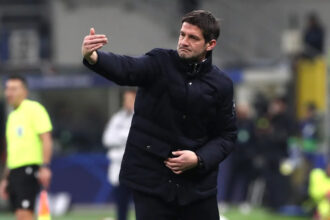
Bodo/Glimt 3-1 Man City: Arctic Storm Leaves Pep Guardiola’s Empire Shaken
Under the ethereal glow of the Arctic Circle’s night sky, a footballing earthquake was recorded. On a pitch more accustomed to the midnight sun than the Champions League spotlight, Norwegian champions Bodo/Glimt delivered a result that will echo through the annals of the competition, dismantling a disjointed Manchester City 3-1. This was not a lucky punch; it was a systematic deconstruction that has plunged Pep Guardiola’s project into its most profound crisis and sparked urgent questions about the manager’s own future at the Etihad.
A Night of History in the Arctic Circle
For context, this was a clash of footballing universes. Bodo/Glimt, from a town of 55,000, were contesting their first-ever Champions League group stage campaign. Their entire squad value is less than the annual salary of several City stars. Yet, from the first whistle, the narrative was rewritten. The Aspmyra Stadion, a compact, artificial-turf arena, became a cauldron where tactical naivety was supposed to meet cold, elite sophistication. The opposite occurred.
City, fielding their youngest-ever Champions League starting XI, looked unnerved and unprepared for Glimt’s ferocious, synchronized intensity. The Norwegian side’s game plan—a relentless high press, lightning transitions, and ruthless finishing—was executed to perfection. This was a historic victory, not just for a club, but for a nation, proving that tactical clarity and collective spirit can, on any given night, topple a gilded empire.
Anatomy of an Upset: How Bodo/Glimt Mastered City
The scoreline was shocking, but the manner of the defeat was deeply alarming for City. Guardiola insisted he did not underestimate the opposition, but his team selection and his side’s performance suggested a fatal disconnect.
- Defensive Disintegration: City’s backline, even with experienced figures, was chaotic. Kasper Hogh’s first-half double exploited catastrophic defensive lapses, with City players caught ball-watching and out of position. The set-piece vulnerability that has crept into City’s game this season was brutally exposed.
- Midfield Malaise: Without its usual metronome control, City’s midfield was overrun. Rodri’s frustration culminated in two quick yellow cards and a dismissal, killing any faint hope of a comeback. Bodo/Glimt’s midfield unit, led by the tireless Patrick Berg, played with a cohesion and hunger that their illustrious counterparts utterly lacked.
- Tactical Triumph: Bodo/Glimt manager Kjetil Knutsen won the battle of the minds. His team’s high-pressing triggers and immediate vertical passes into space behind City’s advanced full-backs were a coaching masterclass. The crowning moment was Jens Petter Hauge’s sublime, curling third goal—a symbol of confidence forged from a perfect plan.
Rayan Cherki’s late consolation for City was a footnote. The story was already written: a complete and systemic failure from the Premier League champions.
The Guardiola Conundrum: Pressure Reaches Boiling Point
This result is not an isolated incident. It is the explosive crescendo of a worrying trend for Manchester City since the New Year. Their aura of invincibility has evaporated, replaced by shaky performances, dropped Premier League points, and now a European humiliation. The whispers around Pep Guardiola’s future have grown into a palpable roar.
Guardiola’s contract expires at the end of next season, and for the first time in his City tenure, there is serious speculation he may not see it out. The cycle at elite clubs is often five to seven years; Guardiola is in his eighth. The questions being asked are profound:
- Has his message grown stale to a squad that has heard it for so long?
- Is the constant tactical tinkering, like the youthful lineup in Norway, causing instability rather than innovation?
- Has the pursuit of an elusive Champions League trophy with City become a psychological burden for the entire club?
The growing crisis of form is now a full-blown crisis of faith. The board’s support for Guardiola remains public, but in the ruthless world of elite football, such catastrophic results cannot be ignored. The pressure is no longer about winning the next game; it’s about proving he can still command the dressing room and reverse a deeply concerning trajectory.
What Comes Next for City and Guardiola?
The immediate fallout from this defeat is severe. City’s hopes of automatic qualification for the last 16 have taken a massive hit, potentially forcing them into a tricky playoff round. More damaging is the psychological scar. The fear factor City once wielded is gone; every opponent now sees tangible vulnerability.
Predicting the next steps requires reading the most inscrutable mind in football: Pep’s own.
Scenario 1: The Reset. Guardiola uses this humiliation as a catalyst. He reverts to a trusted core, simplifies the approach, and re-engages the squad’s competitive fury. This defeat becomes the painful turning point of their season.
Scenario 2: The Fracture. The disconnect widens. Results remain inconsistent, the Champions League dream dies again, and the Premier League title slips away. In this case, a summer departure becomes a real possibility, with both parties agreeing a legendary cycle has naturally concluded.
For Bodo/Glimt, the world is theirs. This victory guarantees legend status and injects millions into their model. For Manchester City, the Arctic chill has seeped into the heart of their project. The coming weeks will reveal if this was a freak storm or the beginning of a long, cold winter for Pep Guardiola’s reign. One thing is certain: in the remote north of Norway, the foundations of a superclub were shaken to their core.
Source: Based on news from India Today Sport.
Image: CC licensed via www.pickpik.com