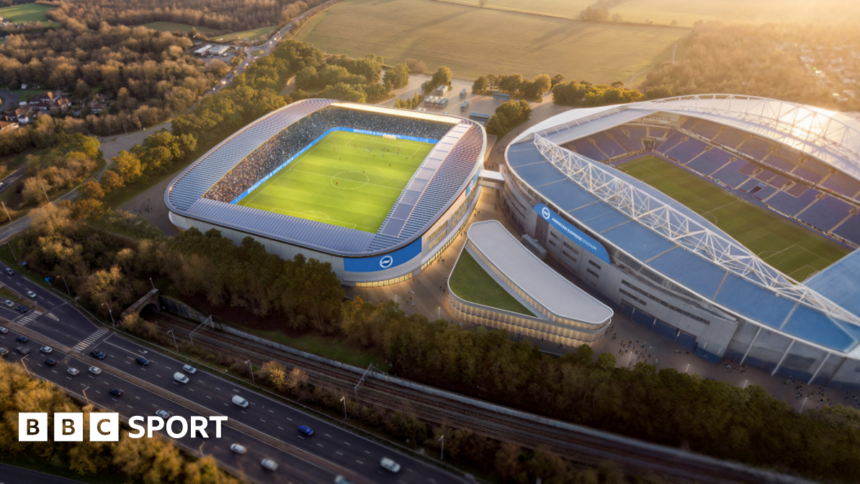
Brighton’s Bennett’s Field Stadium: The Dawn of a New Era for Women’s Football
In a move that will send shockwaves through the global football landscape, Brighton and Hove Albion have unveiled audacious plans to build Europe’s first purpose-built stadium for women’s football. The proposed Bennett’s Field Stadium, nestled adjacent to the iconic Amex Stadium, is not merely a new ground; it is a declaration of intent. For years, women’s teams across Europe have played in borrowed, cavernous men’s stadiums or, worse, on training pitches with minimal facilities. Brighton’s vision shatters that paradigm. This is not about renovation or repurposing. This is about building a cathedral for the women’s game from the ground up.
The project, which the club hopes will open its doors for the 2030-31 season, represents a seismic shift in how clubs value their women’s sides. The Seagulls are betting that a dedicated, intimate, and purpose-built home will unlock a new wave of fan engagement, commercial revenue, and on-pitch success. As a sports journalist who has watched the women’s game evolve from a niche interest to a mainstream powerhouse, I can say with confidence: this is the single most important infrastructure project in the history of European women’s club football. Let’s break down exactly what this means.
The Vision: A Permanent Home, A Unique Identity
The core philosophy behind the Bennett’s Field Stadium is brutally simple yet profoundly important: identity. For too long, the Brighton women’s team has been a tenant. Playing at the Amex for big games is fantastic, but a 31,000-seat stadium can feel empty and impersonal for a regular Women’s Super League (WSL) fixture. Conversely, using training grounds lacks the atmosphere and infrastructure needed to professionalise the matchday experience.
Brighton’s solution is elegant. By building a minimum 10,000-seat stadium directly next to the Amex, they create a bespoke atmosphere. The capacity is perfectly scaled for current demand while allowing room for organic growth. The connection via a bridge walkway is a masterstroke. It physically and symbolically links the two clubs, creating a unified campus feel without forcing the women’s team to play in a shadow.
- Fan Experience: Every seat will be close to the pitch, designed for noise and intimacy. No more distant views or empty upper tiers.
- Commercial Autonomy: The club can sell naming rights, design specific hospitality packages, and create a unique brand identity separate from the men’s team.
- Legacy Building: This isn’t a temporary fix. It’s a permanent monument to the women’s team, signalling to players that they are valued for the long haul.
This is not just about filling seats; it’s about creating a culture. A 10,000-seat stadium that is consistently 80-90% full generates a far more intimidating and inspiring atmosphere than a half-empty 30,000-seat arena. It tells the players, “This is your home, and this is your crowd.”
Expert Analysis: Why This Changes the WSL Landscape
As a football analyst, I see three immediate, game-changing implications of this project. First, it raises the recruitment bar. When a top international player like a Beth Mead or a Sam Kerr is deciding between clubs, the facilities now become a major differentiator. Brighton can now offer a state-of-the-art, dedicated home. That is a weapon in the transfer market that no other WSL club currently possesses.
Second, it forces a competitive arms race. Arsenal, Chelsea, and Manchester City have excellent training facilities and often play in large men’s stadiums, but none have a dedicated women’s stadium. Brighton’s move puts pressure on these giants to respond. Will we see Chelsea build a dedicated ground at Kingsmeadow? Will Arsenal invest in a permanent women’s home at the Emirates’ training complex? Brighton is no longer just a plucky underdog; they are setting the architectural blueprint for the future of the WSL.
Third, the financial model is sustainable. The club states the stadium is designed to drive long-term fan growth. By starting with a 10,000 capacity, they avoid the crippling cost of maintaining a 30,000-seat stadium that is rarely full. The revenue from ticket sales, concessions, and merchandise for a full 10,000-seat venue is far healthier than the revenue from a sparse 15,000 crowd in a larger venue. This is smart, forward-thinking economics, not just a vanity project.
Prediction: Within five years of opening, Brighton will regularly sell out Bennett’s Field Stadium for WSL matches. The club will then face a “good problem” of expanding the capacity, likely to 15,000 or 20,000, by adding a second tier. This stadium will become a destination for neutral fans, much like the old Baseball Ground was for Derby County fans in the 1970s—a cauldron of noise and passion.
Logistics, Timing, and the 2030-31 Target
The club is currently working on a planning application, which is often the most treacherous part of any UK construction project. The Bennett’s Field site is green space adjacent to a major motorway and a busy stadium. Traffic, parking, and environmental impact will be key sticking points. However, the club has a strong track record with the Amex expansion and its training facility at Lancing. The bridge walkway is a clever way to share parking and transport links, reducing the need for a massive new car park.
The target of opening for the 2030-31 season is ambitious but realistic. It allows for a full planning process, a two-year construction phase, and a buffer for delays. This timeline also aligns perfectly with the growth trajectory of the WSL. By 2030, the league will likely have expanded, TV rights deals will be significantly larger, and the standard of play will be even higher. Brighton is not just building for today; they are building for the world of women’s football in the next decade.
Key logistical hurdles to watch:
- Local council approval: Noise and light pollution concerns from local residents.
- Transport integration: Ensuring the bridge and existing Amex infrastructure can handle double matchdays.
- Funding: While the club is wealthy, the estimated cost of a 10,000-seat stadium is £30-50 million. This will require a mix of club funds, commercial partners, and potentially government grants for community sport.
If Brighton navigates these hurdles, the 2030-31 season will mark a watershed moment. Imagine the opening day: a packed house, a bridge walkway filled with fans walking from the Amex, and a women’s team running out onto a pitch that was built for them, by them. It is a powerful image.
Conclusion: The Blueprint for a Revolution
Brighton and Hove Albion are not just building a stadium; they are building a statement. The Bennett’s Field Stadium is a direct challenge to the old guard of women’s football. It says that women’s teams deserve more than just a replica of the men’s experience. They deserve a home that reflects their own unique energy, their own fanbase, and their own ambition.
This project will be studied by clubs from Barcelona to Bayern Munich. If it succeeds—and I believe it will—it will trigger a wave of similar projects across Europe. We will look back at the 2025 announcement of the Bennett’s Field Stadium as the moment the women’s game stopped borrowing its identity and started building its own.
The Seagulls are soaring into uncharted territory. The stadium is a gamble, but it is a calculated, visionary one. For the players, the fans, and the future of the sport, the countdown to 2030 has officially begun. This is not just a new home for Brighton Women. This is the home of the future of women’s football.
Source: Based on news from BBC Sport.