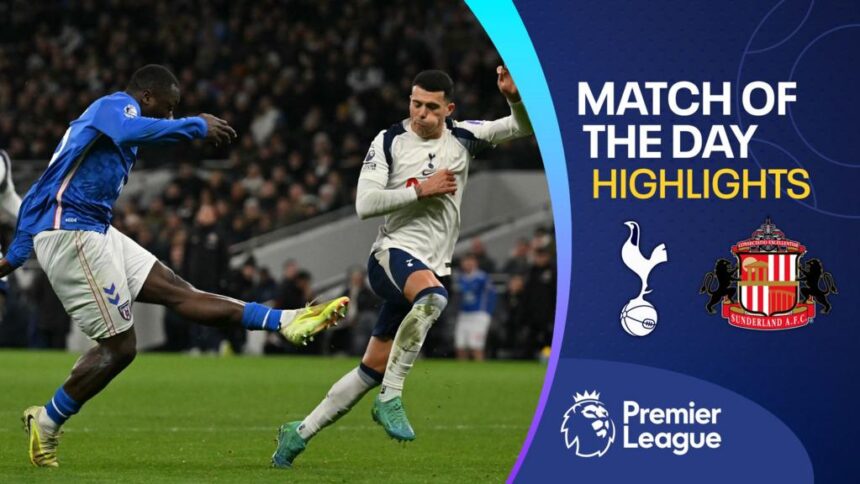
Brilliant Brobbey Stunner Steals Point for Sunderland as Spurs Booed at Bitter End
The air at the Tottenham Hotspur Stadium, so often a cathedral of thrilling football under the lights, turned toxic on a night where familiar failings resurfaced. A late, late moment of individual brilliance from Sunderland’s Brian Brobbey snatched a dramatic 1-1 draw, sparking raucous celebrations from the travelling Mackems and a chorus of boos from the disillusioned home support, with the pressure now intensifying on Spurs boss Thomas Frank.
A Tale of Two Halves and Tottenham’s Fatal Hesitation
The narrative seemed set for a classic Tottenham resurgence. After a sluggish first half where a disciplined Sunderland frustrated their attempts to play through a congested midfield, Spurs emerged after the break with renewed vigor. The breakthrough came from a familiar source: James Maddison, drifting into a pocket of space, received a clever pass from Pape Matar Sarr and, with unerring accuracy, bent a beautiful left-footed shot into the far corner. The relief was palpable. The expectation was that the floodgates would open.
Yet, they did not. Instead of pressing for a decisive second goal to kill the game, Tottenham retreated into a passive, possession-based rhythm that played directly into Sunderland’s hands. The lack of clinical edge in the final third was glaring. Time and again, promising moves broke down with a poor final ball or a hesitant finish. This indecision created a simmering anxiety in the stands that eventually transmitted to the pitch.
- Passive Possession: Spurs dominated the ball but without the penetrative pace or risk-taking to trouble a resolute back five.
- Isolated Front Line: Heung-min Son, operating centrally, was starved of meaningful service as the link between midfield and attack faltered.
- Midfield Imbalance: The double pivot of Yves Bissouma and Sarr controlled territory but lacked the creative guile to unlock a deep block.
Brobbey’s Bolt from the Blue and Sunderland’s Resilient Blueprint
As the clock ticked into the 89th minute, Sunderland, who had offered little as an attacking force, prepared for one final foray. A hopeful clearance was won in the air by the tireless Jack Clarke. The ball fell to Brian Brobbey just outside the penalty area, with his back to goal and surrounded by white shirts. What happened next was pure, unadulterated inspiration. A deft first touch to roll his marker, a sharp turn to create a yard of space, and without a moment’s hesitation, a thunderous, rising drive that arrowed into the top corner, leaving Guglielmo Vicario grasping at thin air.
It was a goal worthy of winning any match, and it utterly silenced the home crowd. For Sunderland manager Michael Beale, it was vindication of a perfectly executed defensive game plan. His side were organized, physically committed, and showed a resilience that has become their trademark. They waited, they weathered the storm, and they pounced on their one clear-cut moment of quality.
Key to Sunderland’s Point:
- Defensive Discipline: A back five, marshaled superbly by Dan Ballard, held a superb line and limited Spurs to half-chances.
- Counter-Attack Threat: The pace of Clarke and the sheer power of Brobbey provided a constant “out ball” and a lurking threat.
- Unyielding Spirit: They played for the full 98 minutes, believing a chance would come, and were rewarded spectacularly.
Pressure Mounts on Thomas Frank as Boos Ring Out
The final whistle was met with a stark dichotomy of emotion. Pure joy from the Sunderland corner, and a wave of discontent from the Tottenham faithful. The boos were not just for the dropped points, but for the manner of the collapse—a pattern that has reared its head too often this season. Thomas Frank, who arrived with a promise of proactive, front-foot football, now faces serious questions about his team’s game management and mental fortitude.
This result leaves Spurs in a precarious position in the European chase, their hopes now dependent on favours from others. The post-match discourse will focus on Frank’s in-game management. His substitutions, introducing Pierre-Emile Hojbjerg for Maddison in a move to shore up the game, were perceived as negative and contributed to the team’s loss of attacking impetus. The inability to see out games has become a critical flaw, and the manager must find solutions quickly to quell the growing unrest.
What’s Next for Both Clubs?
For Sunderland, this is a monumental point that reinforces their status as a tough, Premier League-caliber outfit. The spirit and quality shown at Tottenham will fuel belief for a strong finish and build excitement for next season. Brobbey’s goal is a signature moment in their campaign. The challenge for Beale is to harness this defensive solidity and find more consistent attacking output.
For Tottenham Hotspur, the final games of the season have become an uncomfortable audit. The summer transfer window is now under a microscope, with clear needs for a reliable, physical striker and a creative midfielder who can dictate tempo. More pressingly, Thomas Frank must reconnect with a fanbase that is losing faith. The project he was hired to lead feels stalled, and only a strong, proactive end to the season and clear signs of tactical evolution can change that narrative.
Conclusion: A Pivotal Moment in Both Seasons
Brian Brobbey’s stunning strike was more than just a late equalizer; it was a seismic event that altered the trajectory of the evening for both clubs. For Sunderland, it was a badge of honor, a point earned through unwavering belief and a flash of sublime skill. For Tottenham, it was a brutal exposure of their soft underbelly—a team that still lacks the ruthless instinct and game intelligence to compete at the very highest level.
The boos that echoed around the stadium were a message, not just about one lost lead, but about a season of promise that risks fading into disappointment. The pressure is now squarely on Thomas Frank to prove he can be the architect of a more resilient, decisive Tottenham. Meanwhile, in the North East, they will be replaying Brobbey’s rocket for years to come, a symbol of a club that refuses to know its place. The Premier League narrative took a sharp turn in North London, and the ramifications will be felt long after the final whistle.
Source: Based on news from BBC Sport.