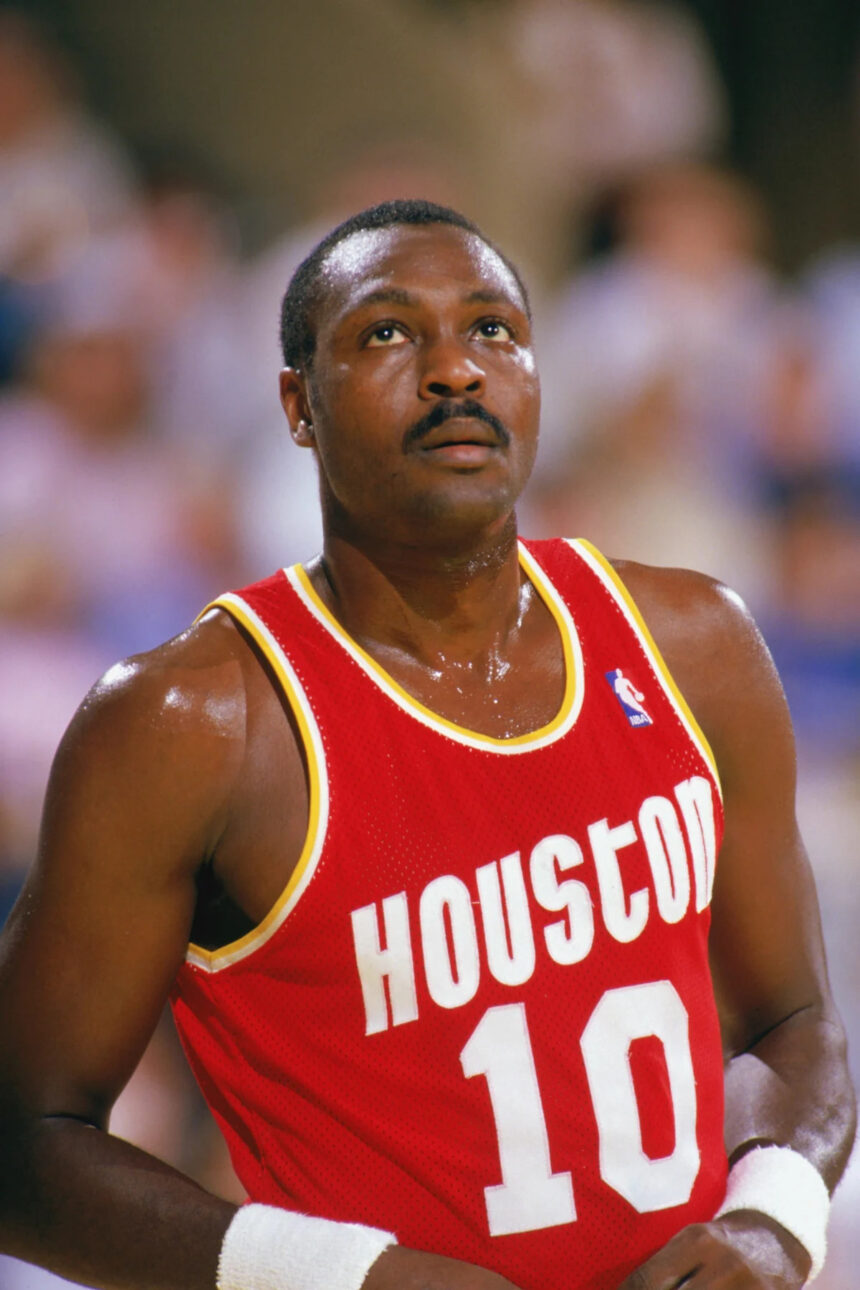
Purvis Short: The Forgotten Scorer Who Rocked Houston’s No. 10
In the storied tapestry of the Houston Rockets, certain jersey numbers evoke instant legend. Hakeem Olajuwon’s 34, Clyde Drexler’s 22, and Yao Ming’s 11 hang in the rafters, their narratives woven into the franchise’s championship DNA. But the true character of an NBA team is built just as much by the journeymen, the skilled veterans who, for a brief but memorable stretch, called Houston home. The history of Rockets jersey No. 10 is one such story—a number worn by 21 different players, from flashy point guards to defensive specialists. Yet, few who donned the digits brought a scoring pedigree quite like Purvis Short, a prolific wing whose prime in Golden State overshadowed a poignant, productive twilight in Clutch City.
From Jackson State to Bay Area Stardom: The Making of a Scoring Machine
Before Houston, there was Oakland. To understand Purvis Short’s impact with the Rockets, one must first appreciate the player he was when he arrived. Selected 5th overall in the 1978 NBA Draft by the Golden State Warriors out of Jackson State University, Short was a 6-foot-7 scoring forward with a silky-smooth jumper and an array of unguardable moves long before “unguardable” became a common scouting term. In an era defined by physicality, Short was a finesse artist. He perfected a sweeping, high-release turnaround jumper that became his signature, a shot coaches simply had to live with because there was no scheme to stop it.
His peak with the Warriors was nothing short of spectacular. In the 1984-85 season, Short averaged a career-high 28.0 points per game, finishing sixth in the NBA in scoring—trailing only legends like Bernard King, Larry Bird, and a young Michael Jordan. He was a walking bucket, capable of erupting for 40 or 50 points on any given night. For nine seasons, he was a cornerstone in Golden State, but as the team began a rebuild in the late 80s, the veteran scorer became a valuable trade piece. In 1987, the Rockets, fresh off a heartbreaking Western Conference Finals loss and hungry for more offensive firepower alongside the Twin Towers, came calling.
A New Role in Clutch City: Short’s Rockets Tenure
The trade to Houston marked a significant transition. No longer the undisputed first option, Short was asked to be a veteran scorer off the bench, providing instant offense for a team with championship aspirations led by Hakeem Olajuwon and Ralph Sampson. He embraced the role with professionalism, bringing a polished, calming presence to the second unit. Wearing Rockets jersey No. 10, Short’s game evolved. He became a more efficient, selective shooter, leveraging the defensive attention commanded by Houston’s big men to find open spaces on the perimeter.
His contributions, while less voluminous than his Golden State heyday, were vital. In his first season (1987-88), he appeared in 60 games, averaging 10.2 points in just 22.6 minutes per game. He provided crucial scoring punches during the grueling Western Conference schedule. Short’s game was characterized by:
- Elite Mid-Range Mastery: In a modern NBA obsessed with threes and layups, Short’s domain was the 15-20 foot area, where he remained deadly.
- High Basketball IQ: He moved without the ball expertly, understanding how to exploit defensive gaps.
- Veteran Leadership: On a team navigating expectations, his steady, professional approach was an asset.
Though injuries and the emergence of other players limited his role in his second season, Purvis Short’s tenure in Houston exemplified the value of a proven scorer willing to adapt for the good of the team. His time with the Rockets was the final chapter of a respected 12-year NBA career, closing with his signing with the New Jersey Nets in 1989.
No. 10’s Legacy: Where Short Stands in Rockets Numerical History
The No. 10 jersey in Houston Rockets history is a fascinating study in contrasts. It lacks the retired glory of numbers like 45 (Rudy Tomjanovich) or 23 (Calvin Murphy), but it has been worn by a diverse array of impactful players. Short’s place among the 21 to wear the number is unique. He bridges the gap between the flashy, high-flying eras of the 80s and the more methodical, post-centric style of the late 80s Rockets.
He was neither a franchise point guard like Mike Newlin (an earlier wearer of No. 10) nor a defensive specialist. He was a pure scorer in a specialist’s role. In the lineage of Rockets No. 10s, which later included players like Carl Herrera from the 1994 championship team and, more recently, Eric Gordon (who wore it during his Sixth Man of the Year campaign), Short represents the prototype of the elite scoring reserve. His tenure reminds us that championship contenders are built not just on stars, but on players who can master a singular, elite skill.
Expert Analysis: The Modern Parallel and Lasting Impact
Analyzing Purvis Short’s game through a modern lens reveals a player ahead of his time. His footwork, shot creation, and ability to score from the mid-post and elbow would make him a coveted asset in today’s NBA. Teams constantly seek wings who can create their own shot in the half-court, especially in playoff settings where offenses stagnate. Short was that player in the 1980s.
His Rockets stint, though brief, offers a critical lesson in roster construction. The most successful teams often feature a high-usage scorer on the second unit—a player who can carry the offensive load when starters rest. In many ways, Short was an early archetype for this role in Houston. The Rockets’ pursuit of him via trade signaled a clear understanding that to compete with the Lakers and Celtics of that era, they needed more offensive weapons. While injuries and roster turnover prevented that iteration of the Rockets from reaching the ultimate summit, the strategy itself was sound.
Conclusion: A Quietly Essential Chapter in Rockets Lore
The history of the Houston Rockets is a mosaic, and not every tile is a bright, central star. Some are subtle shades that complete the picture. Purvis Short’s time wearing the No. 10 is one of those essential pieces. He arrived not as a future Hall of Famer, but as a renowned scorer asked to do less for the chance to do more—to win. His adaptation and professionalism during a transitional period for the franchise embody the spirit of the countless veterans who have contributed to winning cultures across the NBA.
While his No. 10 will likely never be retired in Houston, its story is incomplete without him. In the pantheon of Rocket greats, Purvis Short may be a footnote, but in the broader, richer narrative of the 52 jersey numbers worn in franchise history, he is a compelling chapter—a reminder that before the championships, there were builders, and among them were scorers like Purvis Short, who for two seasons, brought his iconic turnaround jumper to Clutch City and helped steady the ship on its continued voyage toward greatness.
Source: Based on news from Yahoo Sports.