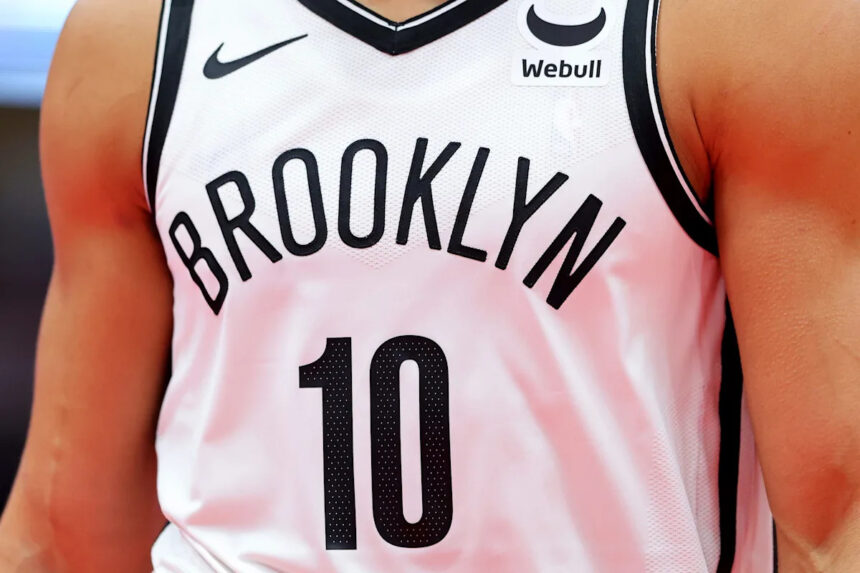
The Forgotten Net: William Cunningham and the Brief Legacy of Jersey No. 51
In the sprawling tapestry of the Brooklyn Nets’ history, woven across five decades, two leagues, and three states, certain jersey numbers resonate with iconic permanence. Others tell quieter, more transient tales. The story of jersey number 51 falls decidedly into the latter category—a digit worn only three times in franchise annals. Its second occupant, center William Cunningham, embodied the grind of professional basketball’s periphery. His tenure with the then-New Jersey Nets in 1999 was a final, fleeting chapter, a footnote in the team’s complex journey from ABA upstart to NBA mainstay. Yet, in tracing the path of Cunningham and his number, we uncover the essential, often overlooked stratum of players who filled out rosters and, in their own way, helped build the legacy we celebrate today.
From Temple to the Undrafted Grind: Forging a Path
William Cunningham’s basketball journey was defined by resilience long before he arrived in East Rutherford. A standout at Temple University under the legendary coach John Chaney, Cunningham was a defensive anchor in the Owls’ famously tough matchup zone. He left his mark as a shot-blocker and rebounder, a classic Chaney-era big man who played with physicality and intelligence. Despite a productive college career, the 1996 NBA Draft came and went without his name being called.
This began the nomadic reality for many undrafted players. Cunningham’s path was a tour of the late-90s NBA landscape:
- Utah Jazz (1996): He signed with a powerhouse team led by Stockton and Malone, appearing in just six games. The experience, however, provided a masterclass in professionalism.
- Philadelphia 76ers (1997): A return closer to his college home, he saw limited action in 20 games for a rebuilding squad.
- Toronto Raptors (1998): He joined the young expansion franchise, playing 22 games and averaging a career-high 2.3 points per game.
By the summer of 1999, Cunningham was a veteran of three teams in three seasons—a classic journeyman big man seeking a roster spot. The New Jersey Nets, under coach Don Casey, offered that final opportunity.
The 1999 Nets: A Franchise in Transition
To understand Cunningham’s lone season in New Jersey, one must contextualize the state of the franchise. The 1998-99 season was lockout-shortened to 50 games. The Nets, led by emerging star Stephon Marbury and Keith Van Horn, had snuck into the playoffs as an 8th seed. The 1999-00 season, Cunningham’s year, was about managing expectations and navigating change.
The team was offensively potent but struggled with consistency and defense. The frontcourt featured starting center Jayson Williams, whose career was tragically cut short by injury, and rookie Evan Eschmeyer. Into this mix stepped William Cunningham, wearing the seldom-seen No. 51 jersey. His role was explicitly defined: provide depth, size, and veteran practice presence. He appeared in only 11 games for the Nets, averaging 0.5 points and 1.0 rebounds in sparse minutes. His statistical impact was minimal, but his presence represented a crucial archetype—the end-of-bench veteran who helps steady a team through the marathon of an NBA season.
Jersey No. 51: A Rarefied Club in Nets History
The history of Nets jersey No. 51 is remarkably brief, making Cunningham’s place within it uniquely clear. He was just the second player to ever wear it for the franchise, following a single-game stint by Dave Feitl in the 1990-91 season. Since Cunningham, only one other player, Brian Hamilton, has worn it (for two games in 2002). This makes the number one of the most infrequently used in the team’s history.
This rarity underscores a broader truth about NBA roster construction. Numbers in the 50s are often reserved for big men and are frequently worn by players on non-guaranteed contracts, 10-day deals, or end-of-roster spots. Cunningham’s No. 51 Nets jersey is therefore a symbol of the league’s competitive fringe. It represents the dreams that persist even in limited minutes, and the professional pride of being ready when called upon, whether for a key defensive stop in practice or a few minutes of regular season action.
Legacy and Analysis: The Importance of the Journeyman
Evaluating a tenure like William Cunningham’s requires looking beyond the box score. In the 1999-2000 season, the Nets finished a disappointing 31-51, missing the playoffs. The turmoil included the mid-season trade of Stephon Marbury. Through this instability, players like Cunningham provided a steadying, if unseen, hand.
Expert analysis of such roles highlights their value. Practice players of Cunningham’s ilk—intelligent, experienced, physically imposing—are essential in preparing starters for the nightly grind of NBA competition. They are mentors for younger players, professional examples of how to stay ready. While the glory is afforded to the stars, the ecosystem of a team relies on its supporting cast. Cunningham’s legacy as a Net is woven into the fabric of that season’s daily routine, in film sessions, and in the hard fouls delivered in a scrimmage that helped toughen up his teammates.
His career ended quietly after that season, but his path from undrafted Temple alum to a player who logged minutes for four NBA teams, including a historic franchise like the Nets, is a testament to perseverance. He got farther than thousands of others who shared his dream.
Conclusion: A Permanent Thread in the Nets’ Tapestry
The history of the Brooklyn Nets is not merely a chronicle of championships and superstars. It is equally a history of players like William Cunningham—men who wore the jersey, however briefly, and contributed to the collective identity of the team. His No. 51 jersey may hang in no rafters and appear in few highlight reels, but it is a part of the numeric DNA of the franchise.
As the Nets continue to evolve in Brooklyn, celebrating their ABA roots and NBA aspirations, remembering every number and every player grounds the present in the full reality of the past. Cunningham’s journey from Augusta to Temple, through Utah, Philadelphia, and Toronto, to his final stop with the New Jersey Nets, encapsulates the relentless pursuit of an NBA dream. It is a story of resilience, a snapshot of a specific era in the league, and a permanent, if small, thread in the rich and complex tapestry of Nets history. In the grand narrative of jersey numbers, No. 51 will always have his name attached to it, a quiet reminder of the depth of talent and determination that has passed through this organization for over half a century.
Source: Based on news from Yahoo Sports.