Brundle: Happier Hamilton Can Still Win Races Amid ‘Wide Open’ 2026
The 2026 Formula 1 season is shaping up to be a potential watershed moment, and according to legendary commentator and former driver Martin Brundle, it could be the perfect stage for a revitalized Lewis Hamilton to return to the winner’s circle. Speaking exclusively on Sky Sports F1, Brundle painted a picture of a championship that remains “wide open” at the front, with Ferrari poised to make a “big step” in performance as early as the Miami Grand Prix.
As the sport prepares for a radical regulatory overhaul in 2026—focused on lighter cars, active aerodynamics, and a new power unit formula—Brundle believes the old guard is not yet ready to fade. Specifically, he sees Hamilton, now in a more positive headspace, as a genuine threat to the current hierarchy. This article dives deep into Brundle’s expert analysis, the implications for Ferrari’s development curve, and why the 2026 season could be the most unpredictable in a generation.
Why a ‘Happier’ Hamilton is a Dangerous Proposition
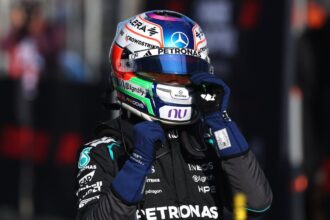
For the first time in years, the narrative surrounding Lewis Hamilton has shifted from frustration to optimism. Following a difficult 2024 season marred by Mercedes’ inconsistent W15 chassis, the seven-time world champion has publicly admitted to rediscovering his joy for racing. Brundle argues this psychological shift is the single most dangerous variable for the competition in 2026.
“A happy Lewis is a fast Lewis,” Brundle noted during the Sky Sports broadcast. “We saw glimpses of it at the end of last year, but the 2026 regulations are a reset. If he feels the car is responsive and he can trust it, there is absolutely no reason why he cannot be winning races again. The talent hasn’t gone anywhere.”
Brundle’s analysis hinges on the fact that Hamilton’s struggles have often been correlated with car instability, not raw pace. The 2026 rules, which favor a more driver-centric approach with reduced downforce dependency from ground effect, could play directly into Hamilton’s hands. Unlike the current generation of cars that require a specific, rear-limited driving style, the 2026 machines are expected to reward smoother inputs and aggressive braking—two hallmarks of Hamilton’s prime.
- Mental Reset: Hamilton has openly discussed taking a step back to recharge, a factor Brundle believes is critical for long-term performance.
- Technical Synergy: The 2026 power unit regulations will increase electrical power to 50%, which could favor Mercedes’ expertise in hybrid systems.
- Experience Factor: With a “wide open” field, Hamilton’s racecraft in mixed conditions and strategic battles becomes a decisive weapon.
Brundle’s prediction is clear: do not write off the #44. In a season where the pecking order could shift from race to race, a motivated Hamilton is a championship-caliber asset.
Ferrari’s Miami ‘Big Step’ – A Glimpse of 2026?
While the Hamilton narrative is compelling, Brundle’s most immediate headline concerns Ferrari. The Italian team, despite a strong start to the 2025 season, has struggled to consistently match Mercedes on tire degradation and high-speed cornering. However, Brundle reveals that Maranello is preparing a significant upgrade package for the Miami Grand Prix that could fundamentally alter the competitive landscape.
“Ferrari will be among the teams likely to make a big step in performance at the Miami Grand Prix,” Brundle stated. “They are targeting closing the gap to Mercedes, but more importantly, this package is a test bed for 2026. The architecture of the suspension and the cooling system are being redesigned with next year’s regulations in mind.”
This is a strategic masterstroke. By using the Miami race as a live laboratory, Ferrari can validate components that will be rolled over into their 2026 challenger. Brundle suggests that if the upgrade works in Miami—a street circuit with low-grip surfaces and heavy braking zones—it will signal that Ferrari has solved its correlation issues between the wind tunnel and the track.
Key areas of Ferrari’s Miami upgrade include:
- Rear Suspension Geometry: Revised to improve mechanical grip and tire warm-up, a known weakness.
- Sidepod Inlets: Smaller, more aggressive cooling ducts to reduce drag, a concept likely to be crucial for 2026’s lower drag targets.
- Floor Edge Redesign: Aimed at stabilizing the airflow under the car, which is critical for the 2026 active aero systems.
If Ferrari’s “big step” materializes, it could create a three-way title fight between Mercedes, Red Bull, and the Scuderia heading into the 2026 season, making the front of the grid genuinely “wide open.”
The ‘Wide Open’ 2026 Season: Why the Status Quo is Doomed
Brundle’s use of the term “wide open” is not hyperbole. The 2026 technical regulations represent the most significant power unit and chassis change in over a decade. The current dominance of Red Bull’s aerodynamics philosophy will be rendered obsolete overnight. The new rules mandate:
- Active Aerodynamics: Movable front and rear wings to reduce drag on straights and increase downforce in corners.
- Lighter Cars: A 30-40 kg weight reduction, improving agility and tire wear.
- 50/50 Power Split: The internal combustion engine and electric motor will each contribute roughly half the total power, making energy management a critical performance differentiator.
Brundle argues that this reset creates a unique opportunity for teams like Aston Martin and McLaren to leapfrog the established order. “No one has a monopoly on the 2026 regulations yet,” he said. “The teams that get the power unit integration right—specifically how the battery harvests energy under braking and deploys it on exits—will be the ones fighting for wins. It’s a blank sheet of paper.”
For Hamilton, this is the ultimate lure. A “wide open” field means that a single off-season of brilliant engineering can vault a driver from midfield contender to championship favorite. Brundle believes that Hamilton’s experience in the hybrid era—specifically his ability to manage energy deployment in the early 2010s—gives him an intangible edge over younger rivals like Max Verstappen or Charles Leclerc.
Final Prediction: A Renaissance for the Champion?
As the F1 circus heads toward the Miami heat, the narrative is no longer about who is fastest today, but who is building the best foundation for 2026. Martin Brundle’s insights suggest a perfect storm is brewing: a happier, re-energized Lewis Hamilton paired with a Ferrari team that is aggressively testing 2026 concepts in plain sight.
“Don’t be surprised if Hamilton wins a race or two before the summer break,” Brundle concluded. “But the real story is next year. If Ferrari’s Miami package works, and if Mercedes gives Hamilton a car that suits his style, then 2026 will be the most competitive season we’ve seen since 2012. It’s wide open, and that’s exactly what this sport needs.”
Prediction for Miami Grand Prix: Ferrari will be within 0.2 seconds of Mercedes in qualifying, and Hamilton will finish on the podium. The 2026 title fight will feature at least three different winners in the first five races.
Conclusion: The 2026 season is not just a technical reset—it is a psychological reset for the entire grid. Martin Brundle’s analysis confirms that a happier Hamilton is a formidable force, and Ferrari’s “big step” in Miami is a warning shot to the competition. The status quo is dead. Long live the wide open championship. For fans, the countdown to 2026 has never been more exciting.
Source: Based on news from Sky Sports.
Image: CC licensed via commons.wikimedia.org