Caf General Secretary’s Sudden Exit: A Symptom of Deeper Turmoil in African Football
The Confederation of African Football (CAF) finds itself at a critical crossroads, not on the pitch, but in the boardroom. The sudden resignation of its General Secretary, Veron Mosengo-Omba, is far more than a routine administrative change. It is a seismic event that exposes the profound structural and credibility crises shaking the very foundations of the continent’s football governance. Coming in the immediate, chaotic aftermath of the Africa Cup of Nations final and a series of controversial decisions, Mosengo-Omba’s departure signals a period of intense instability for African football.
A Resignation Wrapped in Controversy and Defiance
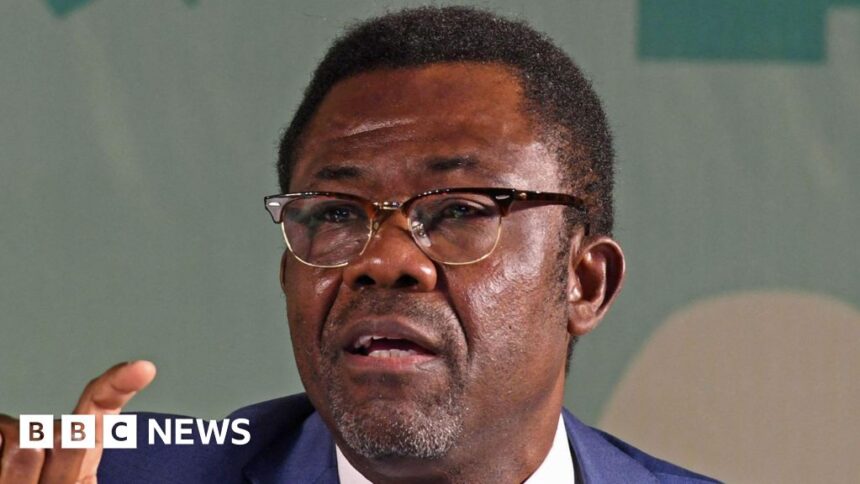
Veron Mosengo-Omba’s resignation statement, released on Sunday, was a masterclass in diplomatic defiance. While citing a peaceful retirement, the subtext was a blistering indictment of the environment within CAF. His claim to have “dispel[led] the suspicions that some people have gone to great lengths to cast on me” points directly to a tenure mired in internal political warfare and allegations. As the deputy to CAF President Patrice Motsepe, Mosengo-Omba was at the operational epicenter of the organization’s most contentious decisions in recent years.
His assertion of leaving CAF “more prosperous than ever” is a bold, and arguably contentious, final claim. It stands in stark contrast to the visible turmoil that has characterized CAF’s public image. This resignation is not a quiet farewell but a loud symptom of the pressures that have been building behind the scenes, pressures that have now boiled over into public view following a series of high-profile missteps.
The Final Straw: A Cascade of Controversial Decisions
Mosengo-Omba’s exit cannot be divorced from the specific, damaging controversies that erupted in early 2025. These incidents have severely damaged CAF’s credibility and left fans, federations, and sponsors questioning its competence.
- The 2025 Afcon Hosting Fiasco: The decision to strip Senegal of the 2025 Africa Cup of Nations hosting rights, citing preparedness concerns, was a political and logistical earthquake. It undermined years of planning and investment by the Senegalese federation and raised serious questions about CAF’s own inspection and communication processes in the years leading up to the decision.
- Last-Minute Postponement of Women’s Football: Perhaps even more damaging was the postponement of the women’s tournament at the last minute. This move sent a devastating message about the priority given to women’s football in Africa, betraying the trust of elite athletes and stunting the growth of the women’s game. The logistical and financial fallout for participating nations was immense.
- Operational Chaos Surrounding the Afcon Final: The 2023 final itself, while a spectacular match, was preceded by significant organizational issues, including ticketing problems and crowd management concerns. For the general secretary overseeing these events, the cumulative weight of these failures created an untenable position.
These events collectively represent a crisis of confidence for the governing body. They are not isolated incidents but rather indicative of systemic issues in planning, communication, and federation relations.
Expert Analysis: Unpacking the Power Vacuum and Structural Flaws
From a governance perspective, Mosengo-Omba’s resignation opens a significant power vacuum at a time when CAF can least afford it. The General Secretary is the chief administrative officer, the engine of day-to-day operations. His departure amid ongoing firestorms leaves a leadership gap that could exacerbate existing problems.
Analysts point to several deep-rooted issues:
The President-Secretary Dynamic: The relationship between a politically elected President (Patrice Motsepe) and an appointed administrative General Secretary is often fraught. Mosengo-Omba’s statement hints at being a shield for “suspicions” likely aimed at the broader leadership. His exit may be an attempt to draw a line under recent failures, but it risks being seen as merely sacrificing a high-profile figure without addressing core problems.
Chronic Instability: CAF has a history of turbulent leadership, from the long reign of Issa Hayatou to the brief, scandal-ridden tenure of Ahmad Ahmad. Motsepe’s presidency promised a new era of professionalism and commercial growth. However, these recent controversies suggest old habits of poor planning and top-down decision-making persist, undermining that promise.
Commercial and Sponsor Confidence: For sponsors and broadcast partners, consistency and reliability are paramount. The chaotic time for football on the continent, exemplified by the last-minute tournament changes, makes CAF a high-risk partner. This instability threatens the financial prosperity Mosengo-Omba cited, potentially impacting development funds and tournament quality.
The Road Ahead: Predictions for a Governing Body in Crisis
The immediate future for CAF is fraught with challenge. The search for a new General Secretary will be a defining test for President Motsepe. Will he appoint a reform-minded outsider to overhaul operations, or a loyal insider to maintain the status quo?
Key predictions for the coming months include:
- Intensified Scrutiny on Motsepe: The spotlight now shifts directly and intensely onto Patrice Motsepe. Without his general secretary, he bears sole executive responsibility for steering CAF out of this crisis. His every decision will be microscopically analyzed.
- Federation Rebellion: Member associations, particularly those like Senegal who feel aggrieved, may form blocs to demand greater transparency and consultation. The fallout over decisions could manifest in heated congress meetings and challenges to leadership authority.
- Race Against Time for 2025 and 2027: The urgent need to secure a new, credible host for the 2025 Afcon, coupled with restoring faith in the women’s game, will be an enormous logistical undertaking. Any further missteps could be catastrophic.
- Potential for External Intervention: FIFA, which has previously installed its own administrators to oversee CAF, will be watching closely. If the crisis deepens, renewed pressure or oversight from the global body cannot be ruled out.
Conclusion: More Than a Resignation – A Reckoning
Veron Mosengo-Omba’s resignation is the canary in the coal mine for African football. It is a clear signal that the internal tensions and operational failures within CAF have reached a breaking point. While he departs claiming prosperity and peace of mind, the organization he leaves behind is battling a crisis of confidence of its own making.
The true legacy of this moment will not be defined by a single resignation, but by what follows. African football possesses unparalleled passion, talent, and potential. Yet, that potential is consistently hamstrung by governance that appears reactive, opaque, and politically charged. The coming months represent a pivotal reckoning. CAF must choose between continuing a cycle of controversy and embarking on a genuine, transparent reform path that prioritizes the game, its players, and its millions of fans above all else. The beautiful game in Africa deserves nothing less.
Source: Based on news from BBC Sport.