Dan Hurley’s NBA Horizon: A College King’s Calculated Gaze at the Next Level
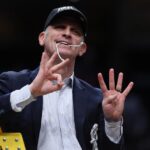
The confetti had barely been swept from the court in Glendale, the echoes of “Back-to-Back!” still ringing through the halls of Storrs, when the question inevitably resurfaced. Not about the dynasty, not about the historic season, but about the future. Dan Hurley, architect of the modern UConn basketball empire, had just cemented his legacy as a collegiate titan. Yet, in the afterglow of a second consecutive national championship, he acknowledged a door he hasn’t fully closed. For the first time with such clarity, Hurley expressed an openness to coaching in the NBA, but with a critical, telling caveat: “someday down the line.” This isn’t a coach itching for an exit; it’s a statement of ultimate career ambition, revealing a fascinating timeline and a profound understanding of his own coaching journey.
The Hurley Method: Why the NBA Beckons “Someday”
Dan Hurley is not a coach defined by a single system, but by a relentless, detail-oriented culture-building methodology. At UConn, he didn’t just recruit talent; he forged an identity of defensive terror, offensive precision, and mental toughness. This translatable process is what makes his NBA potential so intriguing. Unlike many college coaches whose success is tied to a specific scheme or overwhelming talent advantage, Hurley’s core principles are built for adaptation.
His NBA appeal rests on several pillars:
- Player Development Obsession: Hurley’s track record of transforming raw talent (Adama Sanogo, Donovan Clingan) and refining stars (Jordan Hawkins, Tristen Newton) is pure NBA currency. Front offices crave coaches who can maximize a player’s prime.
- Tactical Flexibility: While UConn’s offense is a well-oiled machine, its success stems from multiple actions and reads, not a rigid playbook. This adaptability is essential for the NBA’s pace-and-space game.
- Uncompromising Accountability: The “Hurley Standard” is legendary. In an NBA landscape sometimes criticized for softness, a coach who demands maximum effort and holds stars accountable is a high-risk, high-reward proposition.
However, the key phrase is “someday down the line.” Hurley is acutely aware that his current masterpiece at UConn is unfinished. He has a top-tier roster, a chance at a three-peat—a feat not accomplished since John Wooden—and the opportunity to build a true legacy program. Jumping now would be to leave a kingdom for a question mark.
The College vs. Pro Conundrum: A Battle of Influence
The leap from NCAA champion to NBA head coach is a canyon few have crossed successfully. The job description changes fundamentally. In college, Hurley is the undisputed CEO of UConn Basketball. He controls the roster, the schedule, the practice regimen, and the culture from the ground up. He is the face, the motivator, and the primary architect of every player’s daily life.
The NBA role is more that of a high-stakes project manager. The general manager and front office control roster construction. Superstars wield immense influence. The coaching focus shifts from holistic development to strategic management, in-game adjustments, and managing egos over a grueling 82-game season. For a control maestro like Hurley, this is the central challenge. Is he willing to trade total program control for the chance to coach the world’s best athletes and solve the ultimate Xs-and-Os puzzles? His phrasing suggests he believes he can, but only when the timing and situation are perfect.
Reading the Tea Leaves: What Would “Someday” Look Like?
Hurley’s statement was neither a declaration for the draft nor a firm commitment to stay forever. It was a strategic positioning. So, what conditions would make “someday” become “today”?
The Ideal NBA Fit: Hurley would not thrive in a franchise devoid of structure or young talent. His ideal scenario would likely mirror a situation where a talented, young roster is ready to mature—a team with a solid front office that craves a culture shock and is willing to grant significant coaching input. Think of a roster with a budding All-Star or two, missing the defensive discipline and offensive structure to make the playoff leap. He is not a rebuild coach; he is an elevation coach.
The UConn Completion Principle: The siren call of a three-peat is powerful. Completing that mission might feel like the natural conclusion to a chapter. Furthermore, with the changing landscape of NIL and the transfer portal, Hurley may want to prove he can sustain dominance in this new era, solidifying his status as the best modern college coach before considering a new challenge.
The Legacy Factor: At UConn, Hurley is already a god. In the NBA, he would start from zero. The risk to his legacy is substantial. The list of elite college coaches who flamed out in the pros is long and distinguished. He would need a situation with patience and alignment, a rarity in the win-now NBA.
Predictions and the Road Ahead
In the immediate future, expect the rumor mill to churn relentlessly. Every NBA job opening with a young core will have Hurley’s name whispered by pundits. However, a move in the next two off-seasons seems unlikely unless a truly perfect, can’t-refuse scenario emerges.
Here is the most probable trajectory:
- Short-Term (Next 2-3 years): Hurley continues to build the UConn dynasty, leveraging his success to dominate in the NIL arena and the transfer portal. He uses NBA interest as leverage to secure further investment in UConn’s facilities and support staff.
- Medium-Term (4-7 years): After establishing a prolonged run of success, potentially with another title or two, the challenge of college may begin to pale. The NBA’s puzzle, and the chance to compete against the best tactical minds like Spoelstra and Kerr, could become the new mountain to climb.
- The Wild Card: The right team, with the right young talent (a Paolo Banchero, Anthony Edwards, or Victor Wembanyama-type cornerstone) and a front office pledging a true partnership, could accelerate this timeline dramatically.
One thing is certain: Dan Hurley will never be a coach chasing a paycheck or fleeting fame. Any move will be calculated, deliberate, and on his terms. His “someday down the line” is a message to the basketball world. It tells the NBA he is intrigued but not desperate. It tells his recruits and UConn faithful that his heart remains in Storrs, fully committed to the present mission. It reveals a coach so confident in his process that he believes it can work anywhere—but only when he decides the time is right. The king of college basketball has set his sights on a future challenge, ensuring that his career narrative will be one of the most captivating stories in sports for years to come.
Source: Based on news from Yahoo Sports.
Image: CC licensed via commons.wikimedia.org