Dropping Fernandez: Rosenior’s Defining Moment of Authority or a Costly Gamble?
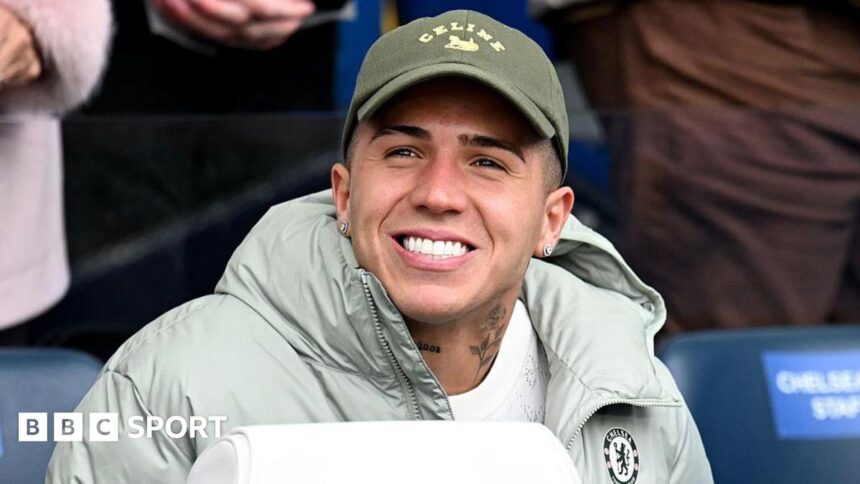
The image was as striking as Chelsea’s seven-goal scoreline was emphatic. There, nestled in the Stamford Bridge stands amongst club staff during the FA Cup rout of Port Vale, sat Enzo Fernandez. The World Cup winner, the club’s record signing, the midfield linchpin, was a spectator. His prime seat for the spectacle was not due to injury or rotation, but by decree. In dropping Fernandez for publicly flirting with Real Madrid, head coach Liam Rosenior didn’t just make a team selection; he drew a line in the Stamford Bridge turf. This bold disciplinary move presents the first major test of his nascent reign: a powerful assertion of authority that could unify the squad, or a high-stakes risk that fractures his relationship with a star player at a pivotal moment.
The Transgression: More Than Just Idle Chatter
To understand the weight of Rosenior’s decision, one must appreciate the scale of Fernandez’s indiscretion. This was not a single, off-the-cuff remark but a sustained public campaign of ambiguity.
- The Airport Comments: Fresh off the plane in Buenos Aires for international duty, Fernandez cast initial, vague doubt over his Chelsea future, setting the tone.
- The YouTuber Interview: He then expanded on these feelings in a less formal setting, allowing the narrative to build.
- The Television Appearance: The crescendo was a TV appearance with his partner, where he stated a desire to live in Madrid and praised Real Madrid icon Toni Kroos—a comment widely interpreted as a “come-and-get-me” plea.
In the modern game, where every word is dissected, this trilogy of comments represented a clear breach of protocol and a direct challenge to the club’s project. For Rosenior, a manager instilling a new culture, it was an unavoidable challenge.
The Response: A Clear Message to the Entire Dressing Room
Rosenior’s reaction was swift, decisive, and structurally significant. By issuing a two-match internal suspension—covering a winnable cup tie and the colossal Premier League clash with Manchester City—the manager achieved several things at once.
First, he demonstrated that no player is bigger than the club, a principle sometimes eroded in the era of superstar contracts. The message to the rest of the squad was unequivocal: standards are non-negotiable. This can be a galvanizing force, especially for players committed to the Chelsea cause, proving that merit and professionalism are the only currencies that matter.
Secondly, Rosenior acted in lockstep with the sporting hierarchy. This wasn’t a rogue, emotional punishment; it was a unified club stance. This alignment between the dugout and the boardroom is critical for long-term dressing room discipline and shows a cohesive front that has been lacking at Chelsea in recent years. The risk of appearing weak by ignoring the comments far outweighed the risk of dropping a key player.
The Calculated Risk: Navigating the Potential Fallout
However, authority is not exercised in a vacuum. The suspension of Fernandez for the City fixture, in particular, is a monumental sporting gamble. It voluntarily removes a world-class operator from a match where Chelsea needed every ounce of quality. A heavy defeat, rightly or wrongly, would have led to immediate questions about the cost of Rosenior’s principles.
The更大的风险 lies in the human element. Fernandez is a proud, elite athlete. How he internalizes this punishment is crucial. The optimal outcome sees him returning chastened, refocused, and ready to repay his club with performances on the pitch. This would be Rosenior’s masterstroke. The dangerous alternative is a fractured relationship, a player whose heart remains in Madrid, and a depreciating asset whose commitment is permanently in question. Managing the reintegration will be as important as the initial decision.
Furthermore, the spectacle of Fernandez in the stands creates an undeniable narrative. It fuels the very transfer speculation the punishment sought to quell. Every glance from the stands will be analyzed, every social media post scrutinized. Rosenior has bet that his strong internal message will outweigh the external noise.
Expert Analysis: A Necessary Gambit in the Modern Game
From a managerial perspective, Rosenior’s move is not just defensible; it is arguably necessary. In the early days of a project, establishing control is paramount. Former players and pundits often speak of “seeing what a manager is made of” at the first sign of player power. This was Rosenior’s moment.
Cultural foundation is everything at a club undergoing constant change. By acting decisively, Rosenior is attempting to build a culture of accountability over individuality. This resonates with fans who demand commitment to the badge and creates a clearer, more professional working environment for the squad. The short-term pain of missing a key player is weighed against the long-term gain of a cohesive, disciplined unit where such public overtures become unthinkable.
It also shifts the power dynamic. The message to Fernandez and his representatives is clear: if you wish to engineer a move, you will do so from the stands, not the pitch, and on the club’s terms. In an age where player power often dictates terms, this reassertion of club authority is a bold statement of intent.
Predictions and The Road Ahead
The immediate fallout will be clear upon Fernandez’s return. His body language in training and in his first match back will be dissected for signs of reconciliation or resentment. Rosenior’s man-management skills now face their sternest test.
- Best-Case Scenario: Fernandez returns with a point to prove, his commitment publicly reaffirmed, and his performances elevate. Rosenior’s stature soars, and the squad’s discipline is cemented.
- Worst-Case Scenario: A cold war develops, Fernandez’s form dips or he agitates for a move, and the club is forced to sell a key asset at a loss, with Rosenior’s authority ultimately undermined by a protracted saga.
- Most Likely Outcome: A professional, if not entirely warm, détente. Fernandez will likely perform to protect his own value and reputation, while Rosenior will have proven he is not to be tested lightly. The summer transfer window will then reveal the true, lasting consequences.
Conclusion: A Line in the Sand Worth Drawing
Liam Rosenior’s decision to drop Enzo Fernandez is undeniably a risk, but it is the essential kind of risk a modern manager must take. In the face of a direct, public challenge to club stability, inaction would have been a far greater danger, signaling a permissiveness that could unravel any long-term project. By choosing principle over pragmatism in the short term, Rosenior has made a definitive statement about what his Chelsea will stand for.
This episode is now a defining moment of his tenure. Whether it is remembered as the moment he secured the dressing room or inadvertently accelerated a star’s exit depends on the delicate days ahead. But in a sport where managerial authority is constantly eroded, Rosenior’s bold stance is a refreshing and necessary assertion that the team’s culture and the club’s dignity are not for sale—not even for a £100 million midfielder. The gamble is high, but the cost of not taking it, for a manager seeking to build a legacy, would have been infinitely higher.
Source: Based on news from BBC Sport.