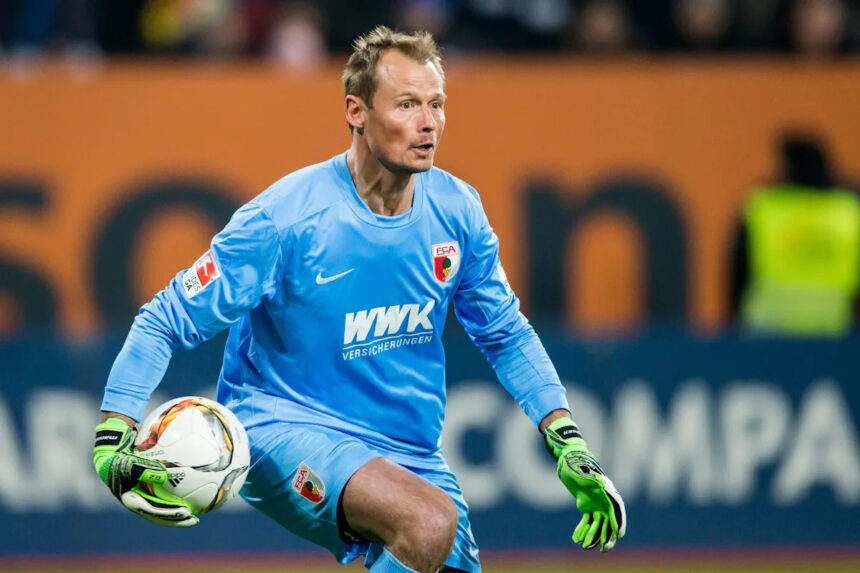
Former Arsenal and Juventus Goalkeeper Alex Manninger Dies in Tragic Train Collision
The world of football is in mourning following the tragic death of former Arsenal and Juventus goalkeeper Alexander Manninger. The Austrian international, 48, died on Thursday after the car he was driving was struck by a train at a railroad crossing in his native Salzburg, Austria. The shocking news has sent waves of grief through the clubs he represented and the nations where he forged a respected, if understated, career between the posts.
A Sudden and Devastating Loss
According to Austrian outlet OE 24, the collision occurred at a railroad crossing. Preliminary investigations indicate that after the impact, Manninger’s car was dragged by the train. First responders arrived to find the former goalkeeper had been pulled from the vehicle, but despite their efforts, they were unable to resuscitate him. The precise circumstances leading to the accident are under investigation by local authorities. The suddenness of the tragedy has magnified the sense of loss for a player remembered not just for his on-field prowess, but for his quiet professionalism and character.
Peter Schöttel, sporting director of the Austrian Football Association, paid immediate and heartfelt tribute. “Alexander Manninger was a great ambassador for Austrian football both on and off the pitch who set a benchmark in his international career and inspired and shaped so many young goalkeepers,” Schöttel said. “His professionalism, calmness and reliability made him an important part of his teams and the national team. His achievements are worthy of the highest respect and will be remembered.”
The Unsung Hero of Arsenal’s Double-Winning Campaign
While Manninger’s name may not headline the history books, his contribution to one of English football’s iconic seasons was absolutely critical. Signed by Arsène Wenger in 1997, the young Austrian arrived as an understudy to the legendary David Seaman. His moment arrived in the 1997-98 season when an injury to Seaman thrust him into the spotlight during the title run-in.
Alex Manninger’s Arsenal tenure was brief but monumentally impactful. He seized his opportunity with both hands, delivering a series of assured performances that helped secure the Premier League trophy. His most famous contribution came in a pivotal 1-0 win at Old Trafford against Manchester United, where he made several key saves to preserve a clean sheet and a vital victory.
- Key Arsenal Contribution: Played 12 consecutive league games during the 1997-98 title-winning season, keeping 6 clean sheets.
- Historic Double: His performances were instrumental in Arsenal securing both the Premier League and FA Cup that season.
- Record-Breaking Run: Was part of the Arsenal defense that set a then-club record of 10 consecutive Premier League clean sheets.
Manninger’s calm demeanor and technical ability under pressure exemplified Wenger’s early philosophy. He was a modern goalkeeper, comfortable with the ball at his feet—a trait that made him a perfect fit for the evolving game. He left North London in 2002 after 39 appearances, having etched his name into an unforgettable chapter of the club’s history.
A Journeyman’s Career of Quiet Excellence
After leaving Arsenal, Alex Manninger embarked on a well-traveled career that showcased his durability and adaptability. His move to Serie A giants Juventus in 2003 saw him serve as a reliable deputy to Gianluigi Buffon, adding a Serie B title to his medal collection during his time in Turin. This began a pattern of respected backup roles at top clubs, a specialist niche that requires immense mental fortitude.
His career path took him across Europe:
- Italy: Beyond Juventus, he played for Fiorentina, Siena, and Udinese.
- Spain: He had a stint with UD Las Palmas in La Liga.
- Germany: He enjoyed a stable period with FC Augsburg in the Bundesliga.
- England Return: He finished his playing career back in the UK with Liverpool (2016-17) and FC Southampton (2017), serving as a veteran presence and training ground mentor.
At the international level, he earned 34 caps for Austria, often competing in an era where the national team was in transition. His role was that of a steadying influence, a professional who prepared meticulously whether he was starting or not. This journeyman path, far from indicating a lack of quality, highlights the high regard in which his expertise was held by managers at Europe’s top tables.
Legacy and Lasting Impact: More Than a Backup
In the immediate aftermath of such a tragedy, the football world is forced to reflect on a legacy cut short. Alex Manninger’s story is not one of relentless headlines and superstar accolades, but of profound professionalism and crucial, timely contributions. In an era where the role of the reserve goalkeeper is increasingly scrutinized, Manninger embodied its true value.
Expert analysis of his career suggests he was a pioneer of the modern “number two” role—a player whose training standards, supportive nature in the dressing room, and readiness when called upon were exemplary. His technical ability allowed him to fit into possession-based systems at Arsenal and Juventus seamlessly. For young goalkeepers, his career is a masterclass in patience, preparation, and making an impact when destiny calls.
The predictions for his post-playing influence were likely centered on coaching or goalkeeping consultancy. His intelligence and experience made him a prime candidate to guide the next generation. His tragic death robs the sport of that potential second act. The outpouring of respect from former teammates, clubs, and federations underscores the deep impression he left as a person, not just a player.
A Final Save: Remembering Alexander Manninger
The death of Alexander Manninger is a heartbreaking reminder of life’s fragility, striking down a fit and beloved 48-year-old in the most sudden of circumstances. The football community has lost a respected figure, a man who stood tall in the goal during some of the most pressurized moments in Premier League history and who carried himself with dignity throughout a lengthy career.
He will be remembered at Arsenal as an immortal part of the 1998 Double-winning squad. At Juventus and his other clubs, he is recalled as the ultimate professional. In Austria, he is honored as a dedicated servant to the national team. But beyond the trophies and caps, he is remembered by those who knew him for his calmness, his reliability, and his quiet strength.
Our thoughts are unequivocally with his family, friends, and loved ones during this unimaginably difficult time. Alexander Manninger’s story, though ended too soon, is one of a footballer who maximized his talent, rose to the occasion when history beckoned, and earned the universal respect of the sport. That is a legacy any player would be proud to claim.
Source: Based on news from Yahoo Sports.