


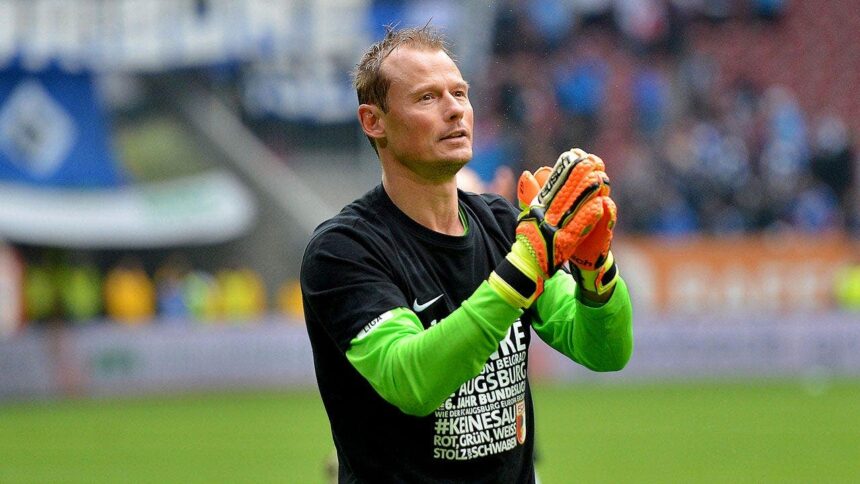
Remembering Alex Manninger: A Tragic Loss for Football and a Legacy Beyond the Pitch
The football world was united in shock and grief on Thursday as news broke of the tragic death of former Arsenal and Austrian goalkeeper Alex Manninger. The 48-year-old died after the vehicle he was driving was struck by a train at a railroad crossing in his native Salzburg. The sudden and devastating nature of his passing sent waves of sorrow through the clubs he represented and the fans who admired his distinguished, globe-trotting career. More than just a former player, Manninger was a father, a teammate, and a respected figure whose journey through the beautiful game left a lasting imprint.
A Career Forged in Resilience and Quiet Excellence
While the horrific circumstances of his death dominate the headlines, Alex Manninger’s life was defined by professional dedication and a remarkable capacity for reinvention. Born in Salzburg in 1977, his talent between the posts was evident early. His big break, however, came not in Austria, but in North London. Signed by Arsenal manager Arsène Wenger in the summer of 1997, Manninger arrived as an understudy to the legendary David Seaman. What followed was a chapter that cemented his place in Arsenal folklore.
During the 1997-98 double-winning season, an injury to Seaman thrust the young Austrian into the spotlight. Manninger didn’t just fill in; he excelled. He embarked on a record-breaking run of six consecutive Premier League clean sheets, a phenomenal feat for any goalkeeper, let alone a deputy. His composure during this period was instrumental in Arsenal maintaining their title charge. He played a crucial role in one of the club’s greatest ever seasons, earning a Premier League winner’s medal and an FA Cup winner’s medal. This period showcased his core strengths:
- Impeccable shot-stopping and safe hands under pressure.
- A calm, unflappable demeanor that belied his relative inexperience on such a stage.
- Technical proficiency that was a hallmark of Arsène Wenger’s early Arsenal sides.
Despite this success, with Seaman’s return, Manninger faced the classic dilemma of the talented backup. His career path thereafter became one of football’s most well-traveled, embodying the spirit of a true footballing journeyman with stops in Italy, Spain, Germany, and back to Austria.
The Journeyman’s Path: A Testament to Longevity and Adaptability
After leaving Arsenal in 2002, Alex Manninger embarked on a career that demonstrated his incredible adaptability and enduring quality. He didn’t seek the spotlight of being a number one at a European giant, but instead carved out a respected career as a reliable and experienced goalkeeper across the continent. His journey took him to Fiorentina and Sampdoria in Serie A, to Espanyol in La Liga, and to clubs like Red Bull Salzburg and 1899 Hoffenheim.
Perhaps his most notable post-Arsenal chapter was at FC Augsburg in the Bundesliga, where he spent four seasons. There, he transitioned into a vital leadership role, serving as a mentor to younger goalkeepers while still delivering commanding performances when called upon. His career arc is a masterclass in professional evolution. He understood that a goalkeeper’s value isn’t solely defined by years as an undisputed starter, but also by wisdom, presence, and the ability to elevate an entire squad’s defensive understanding. This phase of his career offers key insights:
- Goalkeeping intelligence and experience became his primary assets, allowing him to compete at a high level into his late 30s.
- He became a coveted “locker room” presence, valued for his perspective from winning at the highest level.
- His career choices reflected a deep love for the game itself, prioritizing playing and contributing over prestige.
Avoiding Speculation, Honoring the Man: The Void Left Behind
In the wake of such a sudden tragedy, speculation is inevitable. However, the football community has rightly focused on mourning and remembrance. Austrian police have confirmed the tragic accident at the crossing, and while the full investigation will take its course, the immediate response from his former clubs has been one of pure, unadulterated sorrow. Arsenal’s statement set the tone: “Everyone at Arsenal is shocked and deeply saddened by the tragic passing of former goalkeeper, Alex Manninger. All our thoughts are with his family and loved ones at this incredibly sad time.”
Similar sentiments poured in from Juventus, FC Augsburg, and Red Bull Salzburg, painting a picture of a man who was universally respected. This collective grief highlights a significant void. In an era where football often feels dominated by financial figures and transient superstars, Manninger represented something different: the professional’s professional. He was a link to a cherished era at Arsenal, a figure of stability at every club he joined, and proof that a fulfilling career can be built on consistency and dedication, not just headlines.
His passing is a stark reminder of the fragility of life and the human stories behind the jersey. For fans, he was the reliable deputy during a golden season. For teammates, he was a steadying influence. For his family, he was everything. The loss is felt on all these levels, and the football world’s embrace of his loved ones during this time is a testament to the bonds the sport can create.
Legacy and Reflection: More Than a Backup Goalkeeper
Alex Manninger’s legacy is multifaceted. Statistically, he will be remembered for that phenomenal clean sheet run for Arsenal and his contributions across Europe’s top leagues. But his true legacy is more profound. He exemplifies the critical importance of the squad player, the individual whose readiness and professionalism at a moment’s notice can change the course of a championship. Without his contributions during that pivotal period in 1998, Arsenal’s historic double is a far more difficult achievement.
Furthermore, his extensive career serves as an inspiration for players navigating the challenging waters of professional football outside the glaring spotlight. He proved that success and fulfillment can be found in the journey itself—in adapting to new cultures, learning new languages, and contributing to different projects. His football journey was one of resilience and quiet passion.
As the football community processes this tragedy, the focus will rightly remain on supporting his family. The story of Alex Manninger is ultimately one of a talent realized, a professional respected, and a life ended far too soon. He was not a global superstar, but he was an integral thread in the rich tapestry of European football over the last three decades. His name will forever be invoked with that incredible Arsenal double-winning squad, and his career will stand as a blueprint for longevity and professionalism. The final whistle has blown far too early, but his contribution to the game he loved will not be forgotten. Rest in peace, Alex.
Source: Based on news from Fox Sports.


