The Great Shuttlecock Shift: How a Feather Shortage is Forcing Badminton to Rethink Its Core
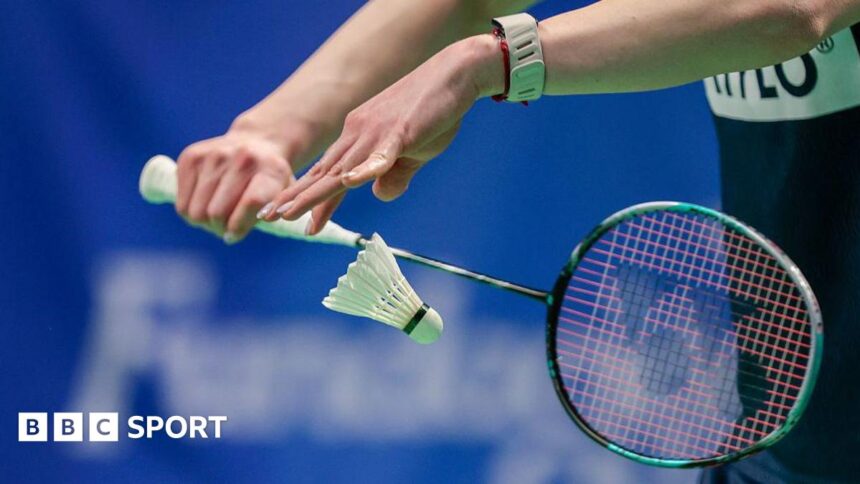
The distinctive, whispering flight of a feathered shuttlecock, its cork base trailing a skirt of sixteen perfect goose or duck feathers, is the soul of badminton. It is a sound and sight as iconic to the sport as the thwack of a tennis ball or the swish of a basketball net. Yet, that very essence is under threat. A global convergence of agricultural shifts, disease, and soaring demand has created a critical shortage of the high-quality feathers needed to keep the game aloft. In a historic move, the Badminton World Federation (BWF) has greenlit a trial of synthetic shuttlecocks in international tournaments, signaling a potential revolution in how the game is played at every level. This isn’t just a supply chain hiccup; it’s a fundamental challenge that could reshape the sport’s future.
A Perfect Storm: Why the Feathers Are Flying Away
To understand the gravity of the situation, one must look to China, the source of an estimated 70-90% of the world’s shuttlecock feathers. The delicate balance of agriculture there has been upended, creating a cascade effect felt on courts worldwide. The primary culprits are not on the badminton court, but on the farm and the dinner plate.
First, the devastating impact of **bird flu** cannot be overstated. Repeated outbreaks have led to the culling of millions of ducks and geese, drastically reducing flock sizes and the availability of the specific feathers required. The China Animal Agriculture Association reported that in 2024, duck and goose production was down a staggering 10% from 2019 levels, a deficit that directly translates to fewer shuttlecocks.
Second, a quieter dietary revolution is at play. For years, African Swine Fever devastated China’s pork industry, leading consumers to pivot to poultry as a primary protein source. Now, with **pork returning to the menu**, the economic incentive to raise large flocks of ducks and geese specifically for their feathers has diminished. Farmers are prioritizing meat production over the niche feather market.
Finally, the sport itself is a victim of its own success. The **increasing popularity of badminton**, particularly in Asia and Europe, has skyrocketed demand for equipment. When you combine surging demand with a collapsing supply, the result is inevitable: a dramatic spike in cost. High-grade feather shuttlecocks, already a precision instrument, have become a luxury item, straining budgets for national federations, clubs, and amateur players alike.
- Bird Flu Outbreaks: Massive culls have decimated duck and goose populations.
- Agricultural Shift: The return of pork reduces economic focus on feather-producing flocks.
- Soaring Demand: Badminton’s global growth outpaces the fragile feather supply chain.
- Cost Crisis: Elite feather shuttlecocks can now cost over $50 per tube, making consistent practice prohibitively expensive.
The Synthetic Solution: BWF Takes a Calculated Leap
Faced with this unsustainable reality, the Badminton World Federation is proactively exploring an alternative future. The BWF’s announcement of a formal trial for **synthetic shuttlecocks** in grade three and junior international tournaments is a carefully staged experiment. This tiered approach allows for real-world testing without immediately disrupting the pinnacle of the sport.
“The trial will include the collection of manufacturer performance data, alongside feedback from players, technical officials, and event organisers,” stated the BWF. This data-driven strategy is crucial. The federation isn’t simply looking for a cheaper alternative; it is demanding a worthy successor. The trial will scrutinize everything from flight stability and durability to player feel and acoustic signature. The core question is whether synthetic technology can replicate the unique aerodynamic properties of a feather shuttlecock, which famously tumbles and decelerates in a way no plastic skirt has ever perfectly mimicked.
This move is less about immediately replacing feathers and more about future-proofing the sport. By fostering innovation in synthetic design now, the BWF hopes to cultivate a viable, consistent, and potentially more accessible product for the long term. The success or failure of this trial will provide the blueprint for whether synthetics could one day grace the courts of the All England Open or the Olympic Games.
Feathers vs. Plastic: The High-Stakes Technical Debate
For purists and elite players, the proposed shift is contentious. The **feathered shuttlecock** is a masterpiece of natural engineering. Each shuttle is handcrafted, with feathers from the left wing of a goose or duck assembled to create a clockwise spin for consistency. Its flight is characterized by a sharp initial velocity followed by a pronounced deceleration and a clean, predictable tumble. This behavior dictates the sport’s unique rhythm, demanding extraordinary touch, stamina, and tactical nuance from players.
Historically, **synthetic shuttlecocks** have been viewed as inferior—the domain of backyard play and school gymnasiums. They are typically made from a plastic or nylon skirt and are known for being faster, more durable, and less susceptible to humidity. However, critics argue they fly “too true,” with a flatter trajectory and less dramatic deceleration, potentially favoring power play over finesse and altering the deep strategic elements that define top-level badminton.
The challenge for manufacturers is monumental: to create a synthetic shuttlecock that replicates the unique flight dynamics of feathers while offering greater consistency and affordability. Advances in materials science and aerodynamic modeling make this more plausible than ever before. The BWF trial is essentially a global laboratory to see if the latest prototypes can finally bridge this decades-old performance gap.
Predictions: The Flight Path of Badminton’s Future
Based on the current trajectory, several scenarios seem likely. In the short term, the cost of feather shuttlecocks will remain high, accelerating the adoption of synthetics at amateur and club levels regardless of the BWF trial’s outcome. For the professional game, a hybrid future is the most probable prediction.
We may see a bifurcated system where synthetic shuttlecocks are mandated for all junior and qualifying tournaments to control costs and standardize conditions, while feather shuttlecocks are preserved for premier senior events—at least until synthetic technology achieves undeniable parity. Furthermore, the crisis will likely spur innovation, leading to not one, but several grades of high-performance synthetic shuttlecocks, each tailored for different playing environments or levels of play.
The ultimate goal is sustainability—not just environmental, but economic and practical. A reliable, high-quality synthetic shuttlecock could democratize high-level practice and make the sport more resilient to the whims of global agriculture and disease. It could ensure that a child in Manila, Mumbai, or Munich has access to the same consistent equipment as an Olympic hopeful.
Conclusion: More Than Just a Bird’s Feather
The feather shortage is more than a logistical headache; it is a catalyst for evolution. It forces badminton to confront its dependencies and innovate for its survival. While the whisper of goose feathers may hold an irreplaceable romance, the future of the sport must be built on a foundation more stable than the health of a poultry flock.
The BWF’s synthetic shuttlecock trial is a responsible and necessary step. It honors the sport’s tradition by demanding excellence from any potential replacement, while boldly acknowledging that change is imperative. The journey from farm to court has never been more complex or consequential. Whether the next generation of champions will be shaped by the quill of a goose or the precision of a polymer is a question now being played out in laboratories and on trial courts. One thing is certain: the game is at a crossroads, and its flight path is about to be recalibrated.
Source: Based on news from BBC Sport.