From World Cup Hero to Water Carrier: Emily Scarratt’s New Role Spotlights the Female Coach Revolution
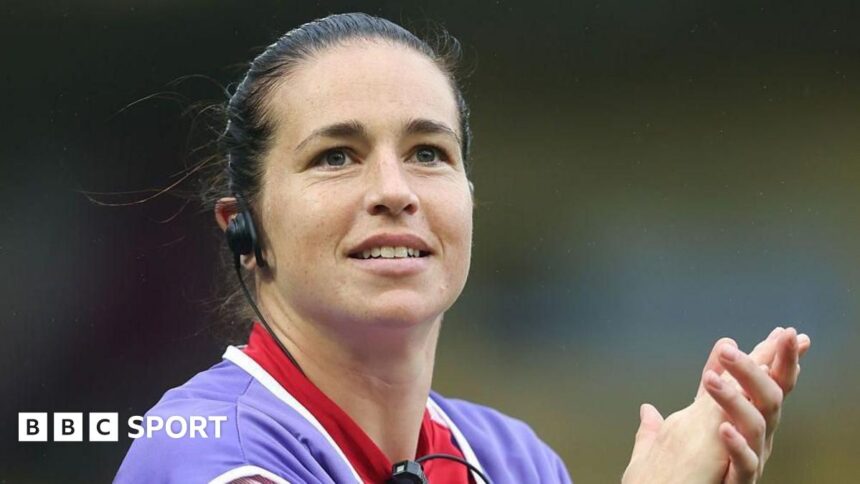
The roar of a sold-out Allianz Stadium is a familiar sensation for Emily Scarratt. Last September, that roar was for her, as she and her Red Roses teammates lifted the World Cup trophy on that very pitch. This Saturday, the sound will be the same, but her vantage point will be utterly transformed. The greatest points-scorer in England women’s rugby history will return not in cleats, but in trainers, not with a ball in hand, but with water bottles. Scarratt’s journey from iconic player to rookie coach—and even dedicated water carrier—is a powerful, living metaphor for the urgent conversation she is now championing: the transformative, yet underutilized, power of female coaches in sport.
The View from the Sidelines: A Champion’s New Perspective
Emily Scarratt’s post-retirement transition is a masterclass in humility and team-first mentality. Despite a career laden with records and accolades, her immediate role within the England setup is one of fundamental support. A persistent neck injury and the phenomenal emergence of talents like Helena Rowland and Meg Jones in the centres have reshaped the landscape. For now, Scarratt’s primary domain is the turf between the benches, ensuring players are hydrated and connected. Yet, within this seemingly simple duty lies a profound learning opportunity. She is absorbing the rhythms of Test match coaching from the ground level, studying communication, observing player body language up close, and understanding the flow of the game from a tactical, rather than an instinctual, perspective. This apprenticeship, though unconventional for a legend, underscores a critical point: coaching pathways for elite female athletes are not always clear or linear. “We need to do a better job getting women into coaching,” Scarratt has stated, and her own path highlights both the willingness to serve and the systemic gaps that exist.
Why Female Coaches Make a “Huge Difference”
Scarratt’s assertion that female coaches make a “huge difference” is not merely an opinion; it’s an observation backed by lived experience and growing evidence. The impact operates on multiple, interconnected levels:
- Representation and Relatability: For young girls and aspiring athletes, seeing a woman in a position of technical authority shatters unconscious ceilings. It normalizes female leadership in sport beyond the playing field. A female coach inherently understands the specific physiological, psychological, and often societal contexts of her female athletes.
- Diverse Leadership Styles: Diversifying coaching staff enriches the performance environment. Different perspectives lead to more innovative problem-solving, better communication strategies, and a more holistic approach to player development. It moves beyond a monolithic “this is how it’s always been done” mentality.
- Lived Experience: A former female international player brings an intimate, unspoken understanding of the unique pressures of the women’s game—from managing dual careers to navigating media scrutiny specific to female athletes. This fosters immense trust and allows for mentorship that transcends tactics.
- Changing the Cultural Fabric: Female coaches influence the very culture of a team and sporting organization. They can champion inclusive environments, challenge outdated norms, and ensure that the athlete’s voice is central to high-performance structures.
Scarratt’s player-coach role at Loughborough Lightning was a nascent step in this direction, blending her peerless game knowledge with nascent coaching acumen. It’s a model that more clubs and nations should actively foster to retain the intellectual capital of their retiring stars.
The Systemic Hurdle: Why Aren’t There More?
If the benefits are so clear, why is the pipeline for female coaches still so constricted? The barriers are deeply entrenched and require proactive, not passive, solutions.
The “Leaky Pipeline” Effect: Elite female athletes often retire later, after dedicating prime years to performance, and may immediately start families or pivot to second careers for financial stability. The traditional, grueling apprenticeship of coaching—involving years of unpaid or low-paid work, extensive travel, and anti-social hours—is often incompatible with these life stages.
Unconscious Bias in Hiring: Decision-makers, still predominantly male, may default to familiar networks or perceive a perceived “risk” in appointing a less-experienced female coach over a male counterpart with a longer (if not necessarily more successful) CV. The old boys’ network remains a significant obstacle.
Lack of Deliberate Investment: Organizations must move beyond tokenism. Creating viable pathways requires funded, structured programs: mentorship schemes linking retiring athletes with senior coaches, dedicated scholarships for coaching qualifications, and crucially, the creation of full-time, salaried assistant coach roles designed to develop female talent specifically.
Scarratt’s situation is a microcosm. Her world-class rugby IQ is undeniable, yet her coaching education is in its infancy. The system must bridge that gap intentionally, or risk losing her insight forever.
The Future: Predictions for a More Inclusive Sideline
The trajectory is promising, but acceleration is needed. The upcoming professionalization of women’s rugby in England is a game-changer, creating more stable, full-time roles within the sport. Here is what we can and should predict for the future:
- The “Scarratt Model” Will Multiply: We will see more federations formally integrating retiring legends into coaching pathways before they hang up their boots, using player-coach or specialist coach roles to ease the transition.
- Specialist Roles Will Proliferate: The first wave of female coaches may not always be head coaches. Instead, we will see a surge in female specialists in skills, kicking, defense, and strength & conditioning, areas where their expertise is undeniable.
- Mandates Will Drive Change: Governing bodies will institute soft quotas or “roster goals” for minimum female representation on coaching staffs for national teams and professional clubs, much like initiatives seen in some football federations.
- Emily Scarratt, the Head Coach: It is a compelling future headline. Given the right structured support, mentorship, and opportunity, Scarratt’s tactical mind and natural leadership could see her ascend to the top of the coaching tree within the next decade, inspiring a generation in the process.
Conclusion: More Than a Water Carrier, a Watershed Moment
Emily Scarratt carrying water is not a diminishment of her stature; it is a testament to her character and her understanding that building a championship culture starts with service. However, her presence on that sideline must be a catalyst. It is a stark, visible reminder of the wealth of untapped coaching potential sitting in plain sight. The sports world cannot afford to let the wisdom, experience, and unique insight of its greatest female athletes evaporate post-retirement. Investing in female coaches is not a box-ticking exercise in equality; it is a performance imperative. By doing a better job of ushering women like Scarratt from the pitch to the coaching box, the sport does not just change for women—it evolves for the better, becoming smarter, more inclusive, and ultimately, more successful. The difference, as Scarratt knows, will indeed be huge.
Source: Based on news from BBC Sport.