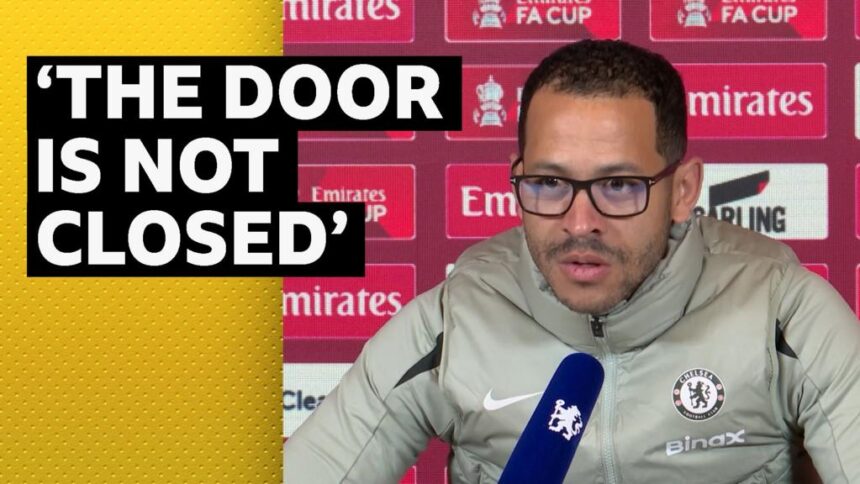
Liam Rosenior’s Firm Stance: Enzo Fernandez Sanctioned to Protect Chelsea’s Cultural Core
The modern football manager is often a CEO of culture as much as a tactician. At Chelsea, a club navigating a turbulent new era, this delicate balance between talent management and cultural preservation has been thrust into the spotlight. Head coach Liam Rosenior, in a decisive and revealing move, has dropped star midfielder Enzo Fernandez for the club’s next two pivotal matches, stating the Argentine “crossed a line” with public comments about his future. This isn’t merely a disciplinary action; it’s a public declaration of principles, a line drawn in the Stamford Bridge turf to protect something Rosenior deems more valuable than any single player: the club’s emerging culture.
The Line in the Sand: Public Comments vs. Private Ambition
While the exact nature of Enzo Fernandez’s comments remains undisclosed, Rosenior’s terminology is telling. To “cross a line” suggests a breach of an established, understood code within the squad. In the high-stakes environment of elite football, player power and public posturing can quickly erode a manager’s authority and destabilize a dressing room. Rosenior’s action sends an unequivocal message: no individual, regardless of transfer fee or reputation, is bigger than the collective project he is building.
This stance is particularly significant given Fernandez’s status. A World Cup winner and the club’s record signing, he is a cornerstone on the pitch. By sanctioning him, Rosenior demonstrates that the cultural standards he is implementing are non-negotiable. It’s a gamble, removing a key player for crucial games, but one that prioritizes long-term health over short-term gain. The calculated move underscores several key principles Rosenior is instilling:
- Unity of Message: All discussions about futures and contracts are to be handled internally, not through the media.
- Accountability: Status does not grant immunity from the standards expected of every squad member.
- Collective First: The focus must remain on the team’s immediate objectives, not individual agendas.
Rosenior’s Blueprint: Building a Culture Beyond Transfers
Since his appointment, Liam Rosenior has been tasked with a monumental challenge: forging a cohesive identity from a squad assembled at great cost but with fluctuating morale. His approach appears rooted in the lessons from his own playing career and mentorship under managers like Wayne Rooney. Culture, in this context, isn’t about motivational posters; it’s about actionable standards, consistent communication, and shared responsibility.
By taking firm action with Fernandez, Rosenior is effectively defining the culture for the entire squad. He is showing that under his leadership, actions have consequences, and that the protection of the group’s environment is paramount. This is a classic managerial tactic to win the dressing room. The remaining players see that the manager is fair, firm, and courageous enough to make tough decisions. It builds trust and sets a clear behavioral framework.
Cultural foundation in football is what turns assembled talent into a team. It fosters resilience during poor runs of form and grounds individuals during success. Rosenior’s sanction is a direct investment in that foundation, arguably more critical for Chelsea’s long-term trajectory than any single match result in the coming weeks.
The Door Remains Ajar: A Masterstroke in Man-Management
Perhaps the most insightful element of Rosenior’s statement was his clear addendum: “the door is not closed” for Enzo Fernandez. This is not an exile; it’s a timeout. This nuanced position separates Rosenior’s move from a mere punitive measure and elevates it to a sophisticated man-management strategy.
He has drawn his line, imposed a clear and tangible consequence (a two-game drop), but has immediately provided a pathway back. This achieves multiple objectives:
- It maintains the player’s value and integration potential, avoiding a point-of-no-return rift.
- It gives Fernandez a clear opportunity to reflect and realign with the team’s ethos.
- It signals to other clubs that this is an internal disciplinary matter, not an open invitation for a transfer bid.
This approach allows Fernandez to return with a clear understanding of his boundaries and his manager’s expectations. The ball, as they say, is now in the player’s court. His response in training and upon return will be the true test of whether Rosenior’s cultural recalibration has been absorbed.
Implications and Predictions: What This Means for Chelsea’s Future
The immediate fallout is clear: Chelsea will be without a key midfielder for two games. The sporting risk is undeniable. However, the long-term implications are far more profound. Rosenior has staked his authority on this decision. Its success will be measured not just by Fernandez’s reintegration, but by the broader squad’s reaction.
Player power dynamics at mega-clubs have toppled managers before. By confronting this head-on with his most high-profile player, Rosenior is attempting to reset those dynamics in his favor. We predict two potential outcomes:
1. The Successful Reintegration: Fernandez returns chastened, performs with renewed focus, and becomes a standard-bearer for the new culture. This would be a massive victory for Rosenior, solidifying his authority and proving that top talent can be managed within a strict cultural framework.
2. The Irreparable Fracture: If Fernandez or his camp perceive the sanction as disproportionate, it could lead to a lingering discontent that necessitates a summer sale. Even in this scenario, Rosenior wins a crucial point: he has shown future stars and the board that he will uphold his standards, making future acquisitions about character as well as talent.
The broader prediction is that this incident will become a defining case study in Rosenior’s early Chelsea tenure. It signals a move away from the perceived volatility of recent years towards a more structured, disciplined environment. The board’s support for this decision will also be telling; do they back the culture-building project, or will they side with the asset?
Conclusion: A Necessary Gambit for a New Chelsea
Liam Rosenior’s decision to sanction Enzo Fernandez is a bold and necessary gambit in the high-stakes game of building a winning football club. It transcends a simple disciplinary dropping. It is a strategic statement of intent, a public prioritization of cultural integrity over immediate individual talent. In the fleeting world of football management, where results are king, Rosenior has bet that a strong, unified culture is the most direct route to those results.
By drawing his line, imposing a consequence, yet leaving the door open, he has executed a textbook piece of modern management. He has protected his project, communicated his values to the entire organization, and given a world-class player a clear choice: adapt and thrive within the new Chelsea, or become an example of its non-negotiable standards. The message to the squad, the fans, and the wider football world is clear: at Chelsea, under Rosenior, the culture is now the cornerstone, and it will be protected at all costs. The coming weeks, and Fernandez’s response, will reveal just how deeply that message has been received.
Source: Based on news from BBC Sport.