Grosso’s Haunting Question: A World Cup Winner’s Stark Analysis of Italy’s Failure
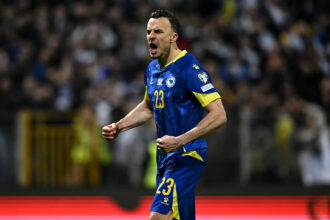
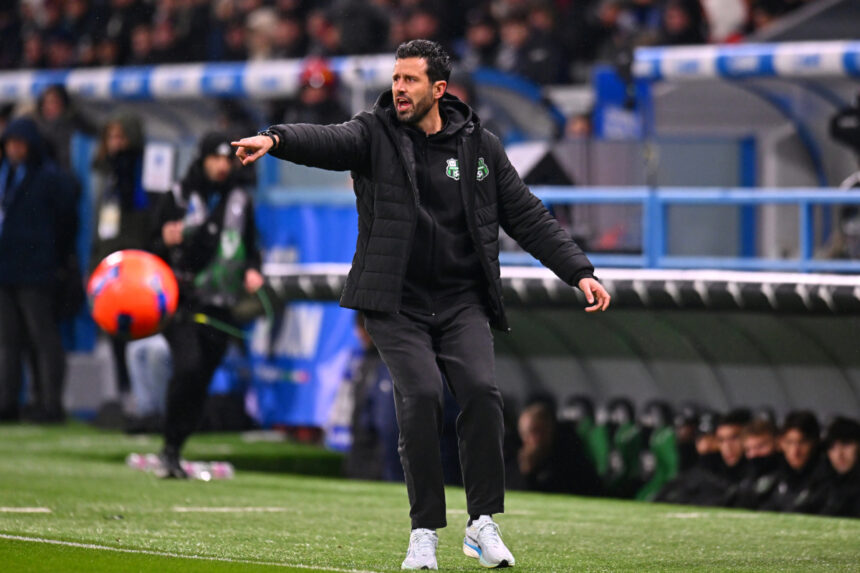
The image is seared into Italian football’s collective memory: Fabio Grosso, arms outstretched, screaming in pure ecstasy after burying the decisive penalty in the 2006 World Cup Final. Sixteen years later, the hero of Berlin now watches from the sidelines, not as a savior, but as a concerned architect of the next generation. Following Italy’s catastrophic failure to qualify for a second consecutive World Cup, the Sassuolo coach has broken his silence, not with fiery condemnation, but with a piercing, philosophical question that cuts to the very heart of the Azzurri’s systemic rot.
Beyond the Missed Chances: A Question of Footballing Philosophy
Speaking on the eve of a Serie A match, Grosso expressed the shared national sorrow. “I felt the same as other Italians: we all wanted to be at the World Cup, which we’ve been missing for a long time, but unfortunately, we didn’t make it,” he stated, via TMW. Yet, the 2006 winner quickly moved past platitudes to deliver a more profound critique. He focused on the pivotal moment in the play-off defeat to North Macedonia, where Jorginho’s earlier missed penalty against Switzerland ultimately proved fatal.
“The question I’ve asked myself is: what would have happened if Pio or Kean had scored [the second goal]?” Grosso posed, referencing late chances for the Azzurri to secure a two-goal cushion. “It might sound like a simple question, but behind it are many things to say and explain.” This is the crux of Grosso’s analysis. He is challenging the entire Italian football ecosystem to look beyond the scapegoating of a single missed penalty or a freak last-minute goal conceded. His question implies a deeper failure of process, planning, and identity.
- Scapegoating vs. Systemic Analysis: Grosso warns against the easy narrative. “We must be able to analyse what happens beyond incidents; otherwise, it will be about finding the guilty one every time.”
- The “What If” Mentality: His rhetorical question exposes a reliance on moments, not methods. A nation that should dominate through strategy found itself hoping for individual brilliance.
- From Player to Pragmatist: Having transitioned to coaching, Grosso now views the game through the lens of structure and repeatable processes, which he found lacking.
The Grosso Blueprint: “The Right People With Clear Ideas”
Grosso’s diagnosis is clear. The problem is not a lack of passion or talent, but a profound confusion at a foundational level. “We need the right people with clear ideas,” he asserted. “It’s a long road…” This statement is a direct critique of the fragmented vision that has plagued the Italian Football Federation (FIGC) and the national team’s technical direction for years. Since the triumphant 2006 campaign, Italy has cycled through coaches, formations, and playing philosophies with alarming frequency, from Conte’s 3-5-2 pragmatism to Mancini’s expansive, possession-based European Championship-winning style that later seemed to evaporate.
What does Grosso mean by “clear ideas”? It likely points to:
- A Unified Technical Vision: A coherent playing style that flows from the youth academies (the FIGC’s youth sector) through to the senior team, unaffected by managerial changes.
- Consistent Player Development: Identifying and nurturing talent that fits this system, rather than forcing square pegs into round holes during international breaks.
- Leadership Beyond the Pitch: Appointing decision-makers who share this long-term vision and can resist the panic-driven cycles of hire-and-fire.
Grosso’s own journey from World Cup hero to Serie A coach embodies this need for clarity and a new generation of football thinkers. His focus is now on developing players at Sassuolo, yet he cannot ignore the broken system from which they emerge.
From Berlin to Palermo: The Stark Contrast in Italian Football
The chasm between Grosso’s generation and the current one is not merely about skill, but about footballing culture and mentality. The 2006 squad was a band of hardened veterans, many from Serie A’s golden era, who understood how to win under immense pressure. They were masters of game management, tactical fouls, and psychological warfare—the so-called “catenaccio mentality” refined into tournament art.
Today’s Azzurri, despite their Euro 2020 triumph, have shown a fragility in the most critical moments. The inability to kill off games against Switzerland and North Macedonia—the very scenario Grosso’s question addresses—speaks to a lack of that ruthless, winning instinct. The tactical clarity of Lippi’s 2006 side has been replaced by uncertainty. Are Italy a pressing team? A possession team? A counter-attacking team? The evidence suggests they are none of the above consistently, and this identity crisis is a direct result of the unclear ideas Grosso laments.
Youth development in Italy has also failed to produce a reliable stream of top-tier, creative talent, particularly in forward positions. The national team’s scoring woes are a chronic issue, making them overly reliant on moments of individual magic that, as the play-off proved, are not a sustainable strategy.
The Long Road Ahead: Predictions and the Path to Redemption
Grosso’s closing words—”It’s a long road…”—are a sobering prediction. They are a rejection of quick-fix solutions and a call for patience in a results-obsessed culture. The road to the 2026 World Cup, now Italy’s next possible appearance, must be paved with the foundational work he describes.
So, what does this road look like? First, it requires the FIGC to commit to a long-term project, likely under a strong technical director, insulating the national team from the volatility of club football cycles. Second, it demands a revolution in coaching education and youth development, prioritizing technical proficiency and tactical intelligence over physicality alone. Finally, it needs a cultural shift where success is measured not just by qualification, but by the strength of the footballing philosophy being implemented.
The immediate future will be challenging. The Azzurri face a brutal Nations League group and the daunting task of qualifying for Euro 2024 without their iconic captain, Giorgio Chiellini, and with a squad in transition. Expect moments of frustration and setbacks. However, if Grosso’s call is heeded, these growing pains could be the birth pangs of a new, coherent Italian football identity.
Conclusion: A Hero’s Call for a New Kind of Courage
Fabio Grosso did not offer empty sympathy or explosive blame. Instead, the man who once held the nation’s dreams on his left foot has offered a quiet, intellectual dissection of its current despair. His haunting question—”what would have happened if…?”—is not about rewriting history, but about forging a new future where such questions become irrelevant because the process is sound.
The courage required now is different from the kind he showed in the Olympiastadion. It is the courage of conviction, the courage to implement a vision over multiple years, and the courage to ignore the noise of scandal and short-term failure. Italy’s football soul is not lost; the Euro 2020 victory proved the talent and spirit remain. But as Fabio Grosso, a man who has walked the longest road to the ultimate glory, insists, it needs direction. It needs the right people. And above all, it needs clear ideas. The journey back to the world’s stage begins not with a penalty kick, but with that simple, devastating question.
Source: Based on news from Yahoo Sports.