Floyd Mayweather vs. Manny Pacquiao 2: Exhibition or Pro Bout? The Netflix Dispute Explained
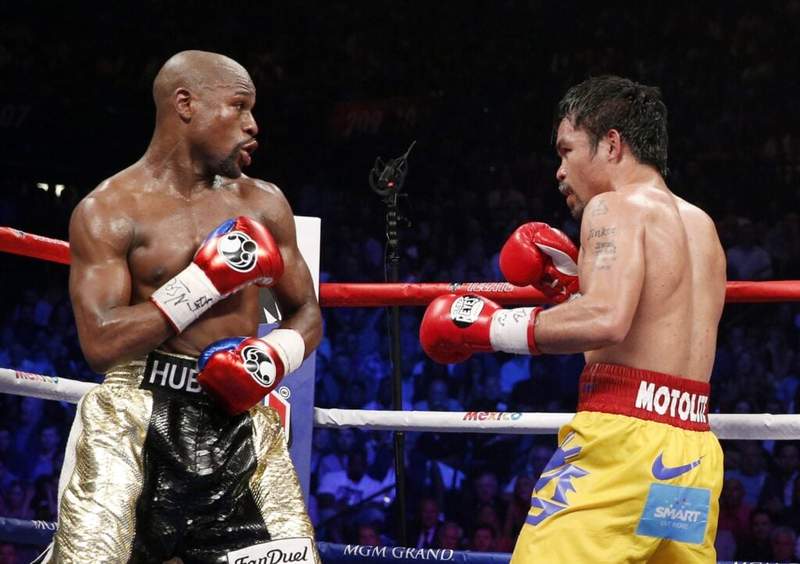
The world of boxing was sent into a familiar frenzy in February when Netflix, the streaming behemoth, announced a seismic event: the long-rumored rematch between legendary rivals Floyd “Money” Mayweather and Manny “Pacman” Pacquiao. Promoted as a global spectacle set for the futuristic Sphere in Las Vegas on September 19, the announcement promised a blockbuster professional bout to settle old scores. However, in a move that is quintessentially Floyd Mayweather, the undefeated king has stepped forward to rewrite the narrative, casting serious doubt on the very foundation of Netflix’s grand reveal and leaving fans to wonder what, exactly, they will be paying to see.
Netflix’s Blockbuster Announcement vs. Mayweather’s Reality Check
When Netflix unveiled its plans, the framing was clear and ambitious. This was presented as a major professional boxing event, a legitimate sequel to their 2015 “Fight of the Century.” The implication was a competitive, sanctioned bout that would impact legacies, with the dazzling, high-tech Sphere as its backdrop. The messaging targeted the core boxing fanbase, promising a resolution to a rivalry that, despite Mayweather’s clear decision victory nine years ago, never felt fully closed due to Pacquiao’s later revelation of a shoulder injury.
Enter Floyd Mayweather. Never one to let a narrative run without his input, the 50-0 former champion has publicly disputed Netflix’s key details. In his version, the event is not a professional fight. “It’s an exhibition,” Mayweather has stated unequivocally. This distinction is not semantic; it is fundamental. An exhibition match typically involves shorter rounds, larger gloves, no official judges, and no impact on professional records. It is, in essence, a glorified sparring session for a massive payday.
The contradiction creates immediate confusion:
- Event Type: Netflix: Professional Bout. Mayweather: Exhibition.
- Competitive Stakes: Netflix: Legacy implications. Mayweather: Entertainment spectacle.
- Regulatory Status: A professional fight requires Nevada State Athletic Commission sanctioning, with strict medicals and drug testing. An exhibition has far looser oversight.
Decoding the “Why”: Business, Legacy, and Control
To understand this public disagreement, one must look at the motivations of both parties. For Netflix, entering the live sports-adjacent arena is a strategic play. Labeling it a “professional bout” generates more significant buzz, attracts a wider audience expecting a real fight, and justifies a potentially higher price point or greater subscriber surge. It is marketed as can’t-miss history.
For Floyd Mayweather, the calculus is different. Since retiring, he has mastered the lucrative exhibition circuit, fighting influencers and former foes globally under relaxed rules. These events are low-risk, high-reward enterprises that keep his brand in the spotlight without endangering his pristine 50-0 record. By insisting this is an exhibition, he achieves several goals:
- Protects His Legacy: His “0” remains untouched. A loss, even at 47, in a professional setting would be framed as a blemish.
- Manages Expectations: He controls the narrative, lowering the athletic pressure while maintaining the financial upside.
- Asserts Dominance: This is a classic Mayweather power move, reminding everyone—promoters, networks, and even a giant like Netflix—that he is the A-side who dictates terms.
Manny Pacquiao, now a sitting senator in the Philippines and 45 years old, likely views this through a similar lens: a monumental payday for minimal physical risk, wrapped in the nostalgia of a great rivalry. His silence on the dispute is telling.
Expert Analysis: What This Means for the “Fight” and the Sport
This public spat reveals the evolving, often messy, intersection of boxing, entertainment, and streaming economics. “Netflix is approaching this like a Hollywood production—the story is the sell,” says veteran boxing analyst Lydia Garcia. “But Mayweather is the ultimate businessman-athlete. He knows his record is his most valuable asset, and he won’t let a streaming service’s marketing pitch jeopardize that, even if the actual risk is low.”
The Sphere in Las Vegas as a venue further blurs the lines. Its immersive, visual-centric design is perfect for a spectacular show, perhaps more suited to an exhibition with its focus on experience over pure sporting competition. The event is likely to be a hybrid: possessing the pomp and global reach of a super-fight but the inherent limitations of a non-competitive arrangement.
The danger for fans is a product that delivers neither the technical brilliance of a prime Mayweather-Pacquiao nor the raw, unpredictable drama of a legitimate fight. Exhibitions featuring legends often devolve into respectful, cautious affairs with a pre-determined air. Will either man, with so much pride and so little to prove, dig deep and risk their health for a result that doesn’t officially count?
Predictions: Spectacle Over Sport, and a New Model for Legends
Given the current dispute, several outcomes seem probable:
- The Final Product Will Be an Exhibition: Mayweather’s word is likely final. The event will be sanctioned as an exhibition, regardless of Netflix’s initial marketing.
- Massive Financial Success: Despite the confusion, the sheer star power and nostalgic pull will drive huge pay-per-view or subscription numbers. The curiosity factor alone is immense.
- A Fun, But Ultimately Unsatisfying, Affair: Expect a show of skills, some flashy moments, and plenty of mutual respect, but not the fierce, edge-of-your-seat competition the 2015 fight, for all its tactical nuance, provided.
- A Blueprint for the Future: This model—legendary names, exhibition rules, streaming distribution, and iconic venues—will become the standard for aging superstars. It’s a safer, more controlled, and immensely profitable retirement plan.
Conclusion: A Clash of Narratives in the Modern Boxing Era
The dispute between Floyd Mayweather and Netflix over the nature of his rematch with Manny Pacquiao is more than a simple misunderstanding. It is a microcosm of modern boxing, where perception, legacy management, and financial engineering often trump pure sport. Netflix is selling a dream—the epic second chapter of a historic rivalry. Mayweather is selling a reality—a lucrative, controlled exhibition. The truth, as is often the case in the sweet science, lies somewhere in the middle.
When the two legends finally stand across the ring at The Sphere this September, the most intriguing battle may already have been won outside the ropes. Mayweather, it seems, has landed the first punch, dictating the terms of engagement once again. Fans tuning in should prepare for a spectacular night of nostalgia and showmanship, but they would be wise to temper expectations for a war. In the end, this event underscores a new axiom in the sport: in the era of streaming spectacle, the promotion of a fight and the fight itself can be two entirely different contests.
Source: Based on news from Yahoo Sports.