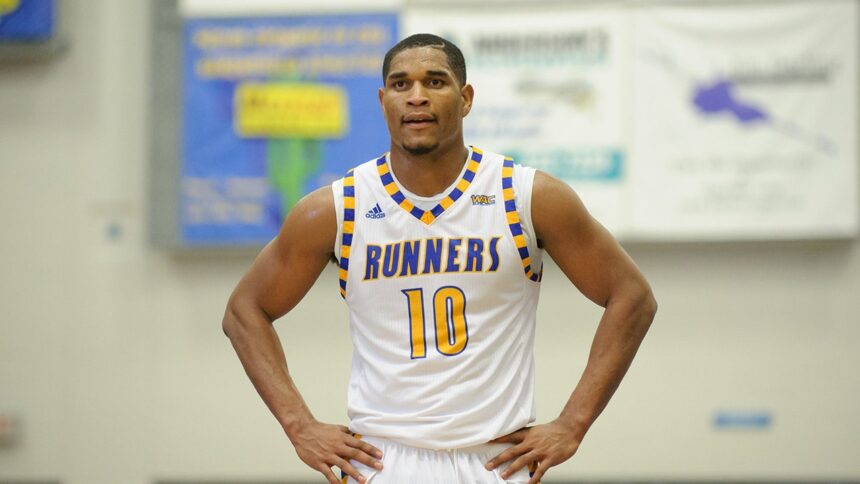
From the Hardwood to the Underworld: The Shocking Double Life of a College Basketball Coach
The world of college athletics is built on narratives of discipline, mentorship, and building character. Coaches are often seen as father figures, shaping young athletes on and off the court. That carefully constructed image has been shattered by allegations against a former coach, revealing a story so lurid it seems ripped from a crime thriller. Kevin Mays, a former assistant coach for the Cal State Bakersfield Roadrunners men’s basketball team, is accused of leading a sinister double life, transitioning from the bright lights of the Icardo Center to the dark shadows of human trafficking, allegedly operating as a pimp across four states.
The Tip That Toppled a Facade
The unraveling began not with a dramatic police raid, but with a chilling email. In August, the then-head coach of the Cal State Bakersfield Roadrunners, Rod Barnes, received a message that would send shockwaves through the program. Described as a “first warning and a final warning,” the email did more than allege misconduct; it identified a specific woman whom Mays had allegedly been trafficking for months. This wasn’t a vague rumor—it was a direct, named accusation that landed in the inbox of the man responsible for the program’s integrity.
University police were immediately notified and launched an investigation. The contrast between Mays’s public and alleged private life could not be more stark. By day, he was a college basketball coach tasked with developing young men, teaching plays, and representing an institution of higher learning. By night, according to the subsequent report, he was allegedly a pimp, exploiting women across state lines. The investigation quickly moved beyond the campus, painting a picture of a multi-state operation that leveraged the mobility and relative anonymity of his coaching travel.
Anatomy of a Double Life: How Could This Happen?
For sports psychologists and compliance experts, the Mays case presents a disturbing study in compartmentalization and institutional blind spots. The ability to maintain such diametrically opposed lives suggests a calculated effort to separate worlds that were never meant to intersect.
Expert analysis points to several potential factors that may have enabled this situation:
- The Culture of Access and Trust: College coaches hold significant sway and operate with a high degree of autonomy, especially on the road. Recruiting trips and away games can create windows of unmonitored time, a privilege Mays allegedly exploited.
- The Glare of the Spotlight vs. The Shadows: High-profile sports programs are laser-focused on NCAA compliance—grades, amateur status, training benefits. Criminal activity of this nature, occurring off-campus and outside the athletic sphere, often falls completely outside the scope of standard athletic department oversight.
- Compartmentalization: Individuals leading double lives become adept at building mental and logistical walls. The disciplined, strategy-focused mindset of a coach could, perversely, be applied to managing an illegal enterprise, with plays and game plans replaced by trafficking logistics.
“This is a catastrophic failure of character, but it also highlights a gap in how we vet the holistic lives of those entrusted with immense influence over students,” notes Dr. Elena Rodriguez, a sociologist who studies crime in institutions. “We check their coaching credentials and their NCAA history, but there is no mechanism to see the hidden life unless it surfaces, often too late.”
Fallout and Reckoning for Cal State Bakersfield
The immediate aftermath at Cal State Bakersfield was decisive. Kevin Mays was swiftly removed from his position. The university acted to protect its students and its reputation, cooperating fully with law enforcement. However, the scandal’s ripple effects are far from over.
For the players, particularly those Mays directly coached, the psychological impact is profound. A mentor figure stands accused of heinous crimes, forcing young athletes to reconcile the man who taught them defensive slides with the man depicted in police reports. The program, under Coach Barnes and now new leadership, has been tasked with the difficult job of rebuilding trust and focus amidst national notoriety.
Furthermore, the case triggers serious questions about background checks and vetting processes for support staff in collegiate athletics. While head coaches undergo intense scrutiny, assistant coaches and support staff may not face the same level of exhaustive investigation, creating a potential vulnerability that predatory individuals could target.
Predictions: A Watershed Moment for College Sports?
The Kevin Mays case is likely to become a benchmark, influencing policies and perceptions for years to come. Here are key predictions from industry observers:
- Enhanced Vetting Protocols: Athletic departments nationwide will likely review and strengthen their vetting processes for all staff, not just head coaches. This may include more extensive background searches and ongoing monitoring, though balancing security with privacy remains a challenge.
- Mandatory, Specialized Training: We predict a move toward mandatory training for all athletic department staff on recognizing signs of human trafficking, sexual exploitation, and off-campus criminal behavior among peers. Silence and ignorance are no longer tenable.
- Recruiting Narrative Shift: This scandal adds to a growing list of off-court crises in college sports. In recruiting, programs known for strong, holistic support systems and ethical leadership will leverage stability as a key selling point against programs with any whiff of scandal.
- Legal Precedent: As the case proceeds, it will be closely watched for how the legal system holds someone using a “respectable” profession as a cover for trafficking. The potential sentencing could set a new standard for severity in such hybrid cases.
Conclusion: Beyond the Sensational Headlines
The story of Kevin Mays is more than a sensational sports scandal. It is a grim reminder that predators can operate behind the most trusted facades. It exposes the vulnerabilities in systems that focus narrowly on professional performance while missing the moral decay happening in parallel. For Cal State Bakersfield, the road to recovery will be long, built on transparency and a renewed commitment to its student-athletes’ safety. For college sports, this is a jarring wake-up call. The final buzzer has sounded on the naive belief that the character of those on the sidelines is guaranteed by their title. Moving forward, integrity must be actively investigated, cultivated, and guarded with the same fervor as a championship title—because the cost of failure, as this case tragically shows, is measured in human lives, not just lost games.
Source: Based on news from Fox Sports.