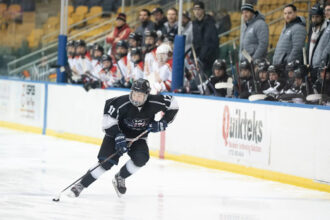
French Enforcer Pierre Crinon Suspended After Olympic Bout with Canada’s Tom Wilson
The raw, emotional undercurrent of Olympic hockey—where national pride collides with the sport’s inherent physicality—erupted into a headline-grabbing moment at the Milan Cortina Winter Games. Now, the aftermath has taken a decisive turn, with repercussions extending far beyond the ice. The French Ice Hockey Federation has suspended national team defenseman Pierre Crinon following his fierce fight with Canadian heavyweight Tom Wilson, a decision that ignites debate about discipline, identity, and the evolving soul of international hockey.
A Clash of Titans: The Milan Melee That Echoed Worldwide
While the match between Canada and France carried a predictable favorite, the tension simmered from the opening face-off. Canada, a perennial gold-medal juggernaut, faced a determined but outmatched French squad. Midway through the contest, with Canada establishing control, the game’s flashpoint arrived. A heavy, borderline hit from Wilson on a French forward sparked immediate retaliation. Crinon, known as the team’s primary enforcer, confronted Wilson. What followed was a protracted, bare-knuckle fight that halted play and captivated the arena. Both players landed significant blows before being separated and given game misconducts. The image of the two giants trading punches became one of the most circulated moments of the early Olympic hockey tournament.
For Wilson, a player whose career is synonymous with physical play and disciplinary hearings, the fight was another entry in a long ledger. For Crinon, it was a moment of defiant protection, a statement that France would not be intimidated. However, the French Federation viewed the incident through a different lens, leading to its unprecedented disciplinary action.
Federation’s Firm Stance: Upholding a “New Standard”
In a statement released Monday, the French Ice Hockey Federation (FFHG) announced an immediate, though unspecified-length, suspension for Pierre Crinon from the national team. The federation emphasized that the decision was not solely about the fight itself, but about upholding a “new standard of conduct” for French hockey on the global stage.
The key points from the federation’s rationale include:
- Image and Philosophy: A desire to distance French hockey from a “goon” identity and promote a skill-based, disciplined brand of play.
- Olympic Ideals: A reference to the Olympic Charter’s promotion of “fair play” and “respect for opponents,” suggesting the fight violated this spirit.
- Strategic Detriment: The loss of Crinon for the remainder of the crucial game hurt the team’s competitive chances, a self-inflicted wound.
“We are here to compete with heart and skill, not to engage in spectacles that belong to a different era of hockey,” a federation official stated anonymously. “While we understand the emotions, Mr. Crinon’s actions did not represent the future of French hockey.” This stance marks a significant cultural shift, prioritizing long-term development and reputation over the immediate, visceral code of on-ice retribution.
Expert Analysis: A Necessary Message or a Tone-Deaf Overreaction?
The suspension has split opinion within the hockey world. Some analysts applaud the FFHG for its principled, if difficult, stand. “It’s a bold statement,” notes former international coach and analyst, Jean-Luc Boudreau. “They are telegraphing to every young player in France that your place on the ice is earned by your skating, your passing, your hockey IQ—not your fists. In the context of growing the game in a non-traditional market, that’s a coherent long-term strategy.”
Conversely, many traditionalists and players see it as a severe misstep. “The federation has thrown its own soldier under the bus,” argues veteran enforcer and commentator, Mickaël Groleau. “Crinon was doing the job he was implicitly asked to do: protect his teammates. Tom Wilson is one of the most physically dominant players in the world. Letting that hit go unanswered could have led to a far more dangerous game for the French skill players. This suspension betrays a misunderstanding of the game’s in-the-moment ecosystem.”
The debate hinges on a fundamental question: Is the role of the enforcer obsolete in modern, especially Olympic, hockey? The International Ice Hockey Federation (IIHF) has stricter rules against fighting than North American professional leagues, but the practice persists. The Crinon-Willson fight was not an anomaly, but its formal punishment by a national federation certainly is.
Future Implications: For Crinon, France, and International Hockey
The ripple effects of this suspension will be felt on multiple levels. For Pierre Crinon, this is a profound professional setback. A national team suspension can affect his club career in the French league or abroad, branding him as a disciplinary liability. His path back to the bleu-blanc-rouge jersey is now clouded.
For French hockey, this is a defining cultural moment. The federation’s gamble could either:
- Strengthen a Skill-First Culture: Attract a new generation of finesse players and improve the nation’s technical standing.
- Create a Leadership Divide: Alienate players who believe the federation failed to support a teammate in a moment of conflict, potentially harming locker room morale.
On the international stage, this decision places a spotlight on the IIHF. Will other nations follow suit and self-police with similar severity? Or will France stand alone? It also pressures the IIHF to clarify its own stance—whether fighting, while penalized, is seen as an inevitable part of the game’s emotional fabric or a vestige to be eradicated completely.
For Tom Wilson and Team Canada, the incident is a footnote, a testament to their intimidating physical game. But it underscores how their style can directly trigger consequences for their opponents, both during and long after the final horn.
Conclusion: A Defining Fight With No Clear Winner
The bout between Pierre Crinon and Tom Wilson lasted less than a minute. The suspension and the debate it has sparked will endure much longer. This is more than a disciplinary report; it is a microcosm of hockey’s eternal struggle between its violent past and its polished future. The French Federation has drawn a line in the ice, choosing the path of principle over pragmatism, of image over instinct.
Whether history views this as a courageous step forward or a naive miscalculation depends on what follows. Can France build a winning identity without the threat of physical deterrence? Can the sport globally reconcile its need for safety and sportsmanship with the intense emotions that make it compelling? The suspension of Pierre Crinon doesn’t answer these questions, but it forces the entire hockey world to ask them. In the end, the most significant impact of the Milan melee may not be the punches thrown, but the precedent set in a federation office far from the Olympic roar.
Source: Based on news from ESPN.