Imran Sherwani: A Golden Legacy Remembered as Hockey Icon Passes Away at 63
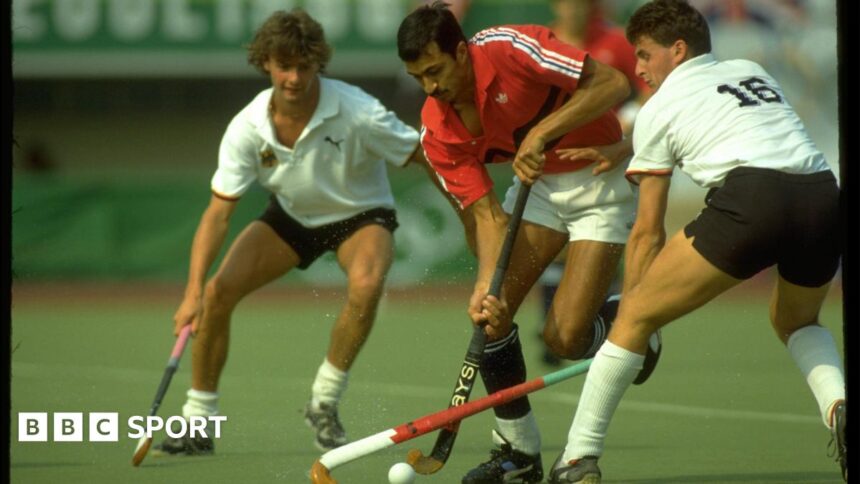
The world of hockey is in mourning following the announcement of the death of Imran Sherwani, the legendary forward whose name is forever etched in British sporting history. Sherwani, who was 63, passed away after a battle with Alzheimer’s disease, diagnosed in 2019. He was the two-goal hero of the 1988 Seoul Olympic final, a performance that secured Great Britain’s men their first hockey gold medal in 68 years—a pinnacle the team has not reached since.
The Seoul Spectacle: A Nation Holds Its Breath
To understand the magnitude of Sherwani’s achievement, one must appreciate the context. Great Britain’s men’s hockey team had not stood atop the Olympic podium since 1920. For nearly seven decades, the gold medal was a distant dream. The 1988 final in Seoul against the formidable West Germany was a classic clash of styles and wills. The British team, a mix of amateurs and semi-professionals, was the undeniable underdog.
The match was tense, locked at 1-1, when Imran Sherwani seized his moment in history. He first put Great Britain ahead with a crucial goal, but it was his second that would immortalize him. Breaking free on a swift counter-attack, Sherwani received the ball in a seemingly impossible position, only to slot it coolly past the German goalkeeper. The moment was so definitive, so utterly crushing for the opposition, that it prompted one of the most famous lines in British sports broadcasting history.
As the ball hit the back of the net, BBC commentator Barry Davies, with a mix of disbelief and jubilation, exclaimed: “Where were the Germans? But frankly, who cares!” The call was not one of disrespect, but a spontaneous eruption of joy that captured the sheer improbability of the victory and the identity of its architect. Sherwani wasn’t just a scorer; he was the man who had answered a nation’s long-held question with the sweetest of touches.
More Than a Moment: The Making of an Icon
Sherwani’s background made his success all the more remarkable. He was a state-school educated son of Pakistani immigrants, a proud Englishman and a devout Muslim who represented a Britain that was rapidly changing. His success on the world stage was a powerful symbol of integration and the rich potential of a multicultural society.
Colleagues and rivals remember him not just for his pace and lethal finishing, but for his character.
- Blistering Pace: Sherwani was one of the fastest players of his generation, a winger who could stretch any defense to its breaking point.
- Clinical Finisher: As the final demonstrated, he possessed a calmness in front of goal that belied the high-pressure environment.
- Team First Mentality: Despite his star turn, he was renowned as a humble and dedicated team player, committed to the collective cause.
Rich Beer, chief operating officer of Great Britain Hockey, perfectly encapsulated Sherwani’s legacy, stating: “Imran Sherwani will forever be remembered as one of the true icons of England and Great Britain Hockey. His contributions on the field were immense, but his character off it inspired a generation to pick up a stick.”
A Bittersweet Legacy and the Modern Game
The glory of Seoul remains a singular beacon in modern British hockey history. The fact that Great Britain has not been on the Olympic podium since that golden day in 1988 underscores just how extraordinary their achievement was. It exists in a unique space—a glorious, almost mythical peak that subsequent teams have struggled to even approach.
This creates a complex legacy. Sherwani and his teammates are the benchmark, the proof that it can be done. Yet, their success also highlights the challenges the sport has faced in the UK, often struggling for funding and mainstream attention outside of the Olympic cycle. The 1988 team, a group of “amateurs,” achieved what fully funded, professional modern squads have not. This isn’t a criticism of today’s players, but a testament to the near-perfect alchemy of talent, determination, and spirit that Sherwani embodied.
His later-life diagnosis with Alzheimer’s disease also connects his story to a wider, somber conversation in sports, particularly surrounding contact sports and long-term health. His bravery in facing the illness was characteristic of the man who never shied away from a challenge on the pitch.
The Future of GB Hockey: Can the Golden Era Be Reborn?
The inevitable question that arises when reflecting on Sherwani’s life is: when will Great Britain men’s hockey return to the podium? The women’s team has shown the way, with glorious gold in Rio 2016, proving that the system can produce world-beaters.
For the men, the path forward is clear, albeit steep. The modern game is faster, more technical, and truly global. To compete, GB Hockey needs sustained investment, a robust domestic development pathway, and the ability to convert near-misses into medal-winning performances. The current squad possesses talent, but the final piece of the puzzle is recapturing that intangible, clutch gene that players like Imran Sherwani possessed in abundance.
The prediction is one of cautious optimism. The foundation is there. The inspiration, courtesy of Sherwani and the Class of ’88, is undeniable. It is not a matter of *if* but *when* a new generation will rise. When they do, they will be standing on the shoulders of a giant—a man who, for one perfect afternoon in Seoul, was the fastest, coolest, and most iconic player on the planet.
Conclusion: An Indelible Mark on Sport and Society
Imran Sherwani’s passing is a loss felt far beyond the hockey community. He was a sporting icon whose legacy is twofold. Firstly, he is forever the two-goal hero of Seoul, the man who ended a 68-year wait and provided one of British sport’s most enduring moments. His goals were not just points on a board; they were a narrative of triumph against the odds.
Secondly, and perhaps more profoundly, he was a trailblazer. At a time of significant social tension, he represented a modern, diverse Britain on its most prestigious sporting stage. He demonstrated that national heroes come in all forms, and that passion for one’s country is a universal language. His story continues to inspire young athletes from all backgrounds to dream big.
While the poignant final commentary asked, “Where were the Germans?”, history provides a far more important answer to the question of “Where was Imran Sherwani?”. He was right where he belonged: securing his place in the pantheon of British sporting greats, and in the hearts of fans forever. His was a life not just of gold, but of true greatness.
Source: Based on news from BBC Sport.
Image: Source – Original Article