Geno Auriemma Apologizes for Sideline Meltdown: A Hall of Fame Coach’s Uncharacteristic Final Four Implosion
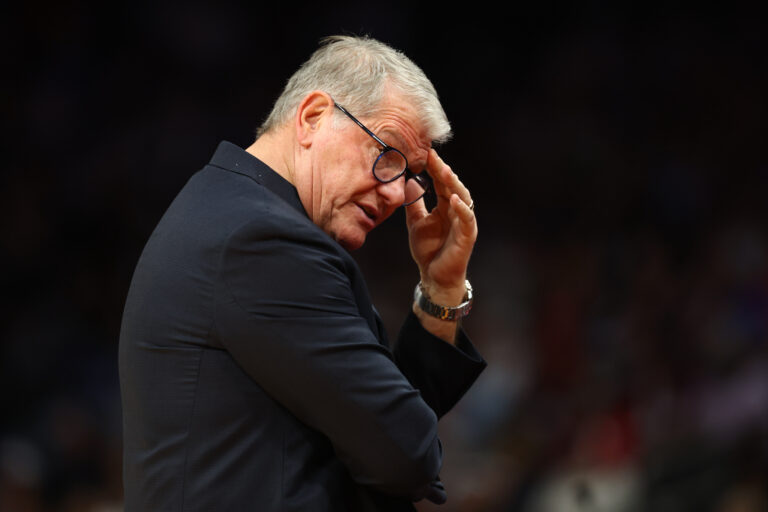
The image was jarring, a stark departure from the poised, tactical maestro we’ve come to know. In the waning moments of a season-ending Final Four loss, UConn Huskies legend Geno Auriemma wasn’t orchestrating a comeback; he was at the center of a self-inflicted firestorm. His sideline confrontation with South Carolina’s Dawn Staley, followed by a solitary, stormy exit without handshakes or consoling his heartbroken players, became the defining, uncomfortable narrative of the night. Now, after a weekend of intense backlash, the Hall of Fame coach has broken his silence with a public apology. But can words mend a moment that cracked the veneer of one of sports’ most respected figures?
The Spark and the Inferno: Breaking Down the Final Four Flashpoint
The incident unfolded with UConn’s championship hopes slipping away in the fourth quarter. Auriemma, visibly agitated, approached midcourt and engaged South Carolina head coach Dawn Staley in a heated exchange. Officials and staff quickly intervened, separating the two icons. The catalyst, as reported and later alluded to, was a perceived pre-game slight from Staley—a detail that, in the cold light of day, only magnifies the pettiness of the eruption.
This was no routine coaching disagreement. It was personal, spilling over from the locker room tunnel onto the sport’s biggest stage. The subsequent aftermath was perhaps more damning than the argument itself. As the final buzzer sounded on South Carolina’s victory, Auriemma turned and marched directly off the court at Rocket Mortgage FieldHouse. He committed two cardinal sins of sportsmanship in one move:
- No handshake with the opposing coach or team, a basic post-game ritual honoring the competition.
- No immediate consolation for his players, who had just seen their title dreams dashed and were left looking for their leader.
In that moment, the UConn meltdown was not about missed shots or turnovers; it was a complete emotional breakdown led from the top. The scene was dissected mercilessly across social media and sports talk, with ESPN’s Stephen A. Smith leading the charge, calling Auriemma’s behavior “horrible” and “unacceptable” for a coach of his stature.
The Apology: Damage Control or Genuine Contrition?
On Saturday, facing a torrent of criticism, Geno Auriemma released a statement through the university. “I want to apologize to the women’s basketball community, the fans, my team, and to Coach Staley and her team for my behavior at the end of the Final Four game,” Auriemma said. “My actions were out of line, and I deeply regret the way I handled myself. The heat of the moment and my competitive instincts are no excuse for failing to model the respect and sportsmanship that this game, and these incredible athletes, deserve.”
The apology is a necessary first step, but in the court of public opinion, it feels carefully constructed. It checks all the boxes—addressing all affected parties, taking ownership, citing the “heat of the moment” without letting it fully off the hook. However, for a coach renowned for his psychological mastery and control, the explanation rings somewhat hollow. This wasn’t a young, fiery coach experiencing his first big loss; this was an 11-time national champion with nearly 40 years of high-pressure experience. The question becomes: what competitive instinct justifies abandoning your players in their most vulnerable moment?
The apology addresses the sideline tantrum but does little to unravel the deeper issue. Was this a singular lapse, or a sign of mounting frustration from a program that, while still elite, has seen its once-unquestioned dynasty challenged like never before? The incident reeked of a coach feeling the pressure of a new era in women’s basketball, one where UConn is no longer the automatic favorite.
Expert Analysis: The Stakes of a Tarnished Legacy
To understand the gravity of this moment, one must appreciate the pedestal on which Geno Auriemma has resided. He is not just a successful coach; he is a foundational pillar of the women’s game, a standard-bearer for excellence and, ostensibly, class. His rivalry with Dawn Staley—a fellow legend and now the defining coach of this era—has been largely marked by mutual respect. This incident fractures that narrative.
“This is about more than one bad night,” says a veteran sports media analyst who requested anonymity. “Auriemma has built a brand on being the smartest, most composed person in the arena. This was a visceral, emotional loss of control that he never allows his players to have. It undermines his own teaching. The apology is crucial, but the memory is indelible. His legacy is secure, but now there’s an asterisk, a footnote about the time he lost more than just a game in the Final Four.”
The analysis points to a critical shift. For years, UConn women’s basketball under Auriemma has been synonymous with cold-blooded execution and emotional discipline. On Friday, the coach himself failed his own program’s core test. It provided a jarring contrast to Staley’s poised leadership throughout the tournament and in that very moment, a contrast that will not be lost on recruits or the broader basketball world.
Looking Ahead: Repercussions and the Road to Redemption
So, what comes next for Geno Auriemma and the Huskies? The immediate backlash will fade, but the echoes will remain.
- Recruiting Impact: While UConn will always attract top talent, competing families may now point to this incident and question the emotional environment. Dawn Staley’s proven, player-centric culture at South Carolina just received an unintentional boost.
- Internal Repair: Auriemma’s most important task is behind closed doors with his team. He must rebuild any trust that was fractured when he walked off that court. That redemption starts in the locker room, not in a press release.
- NCAA and Public Perception: The NCAA is unlikely to take disciplinary action for a post-game incident, but the court of public opinion has already rendered a verdict. Auriemma’s future interactions with Staley will be under a microscope, turning every handshake into a statement.
Prediction: The 2024-25 season becomes a redemption tour framed by this moment. Auriemma will be on his best behavior, the incident will be referenced in every UConn-South Carolina matchup preview, and the Huskies will play with a massive chip on their shoulder. However, the true measure of atonement will be seen in the next tight, season-on-the-line moment. Will we see the calculated Geno, or will the frustrations of a changed landscape boil over once more?
Conclusion: A Championship-Caliber Mistake
Geno Auriemma’s apology is the end of the beginning of this story. The Final Four meltdown was a championship-caliber mistake from a coach who rarely makes them. It revealed a vulnerability and a frustration that the great competitor usually keeps masterfully hidden. In a single night, he managed to shift the spotlight from his team’s valiant effort and South Carolina’s deserved victory onto his own uncharacteristic poor sportsmanship.
The legacy of Geno Auriemma—11 national titles, countless Olympians, a transformed sport—is unassailable. But legacies are not just about trophies; they are about the respect earned and the example set in both victory and, more importantly, defeat. His statement of regret is a start, but true repair will be a process measured in actions, not words. The greatest coach in the history of the game now faces one of his toughest coaching challenges: mending his own image and proving that Friday night was an anomaly, not the unveiling of a new, diminished reality.
Source: Based on news from Yahoo Sports.