Haaland, Kane, or R9? The Definitive Debate on the 21st Century’s Greatest Striker
The year was 1995, and the city of Maastricht was in the throes of carnival. Amid a sea of elaborate costumes, one reveller stood out—not for his clown’s disguise, but for the iconic, gap-toothed grin beaming beneath it. At just 18, Ronaldo Luís Nazário de Lima was already a global phenomenon. His smile screamed confidence; his play, sheer devastation. By the dawn of the new millennium, with a Ballon d’Or and over 200 goals already to his name, ‘Il Fenomeno’ wasn’t just the world’s best striker—he was its destiny. Then, in April 2000, his kneecap “exploded.” That cruel twist of fate didn’t just alter a career; it opened a debate that rages to this day: in his absence, who has claimed the throne as the greatest centre-forward of the 21st century?
The Phenomenon’s Shadow: Defining the Modern No. 9
To judge the best of this century is to operate in the long shadow of Ronaldo Nazário. His pre-millennium exploits set the template: a terrifying fusion of explosive power, technical sorcery, and ice-cold finishing. The modern elite striker, therefore, must be measured not just by numbers, but by their ability to dominate and define an era. The role has evolved—from pure poachers to tactical fulcrums—but the core mandate remains: decide the biggest games. Our contenders are evaluated on peak performance, longevity, trophy impact, and that intangible aura of fear they instill in defenders.
The Contenders: A Pantheon of Goal-Scoring Giants
Whittling the list to a definitive ten is an exercise in brutal exclusion. Legends like Raúl, Samuel Eto’o, and Wayne Rooney narrowly miss this cut, not for a lack of quality, but due to the sheer, sustained dominance of the following names. Here is the elite cadre vying for supremacy.
- Ronaldo Nazário (R9): The benchmark. Even a version diminished by knee injuries post-2000 won a World Cup (2002) as its top scorer, claiming a second Ballon d’Or. His peak, though tragically short, remains the highest imaginable.
- Thierry Henry: The Premier League’s revolutionary. Blistering pace, audacious creativity, and a wand of a left foot redefined the striker’s role, leading Arsenal’s ‘Invincibles’ and becoming their all-time top scorer.
- Zlatan Ibrahimović: A longevity marvel. His acrobatic brilliance and towering ego produced iconic goals across four decades and six countries, winning league titles everywhere he went.
- Robert Lewandowski: The ultimate goal machine. A model of ruthless efficiency, his five-goal-in-nine-minutes miracle epitomizes a career of relentless, record-breaking output, including a seismic 41-goal Bundesliga season.
- Karim Benzema: The masterful evolution. From provider to main event, his 2022 Champions League campaign for Real Madrid was a historic, clutch-performing masterpiece, cementing his late-career Ballon d’Or win.
- Luis Suárez: The chaotic genius. Possessed of supernatural ingenuity and ferocious will, his 2013-14 Premier League season for Liverpool and his deadly partnership with Messi & Neymar at Barcelona are the stuff of legend.
- Sergio Agüero: The defining moment. A pure, box-bound killer, his 94th-minute title-winning goal for Manchester City in 2012 is the Premier League’s most iconic strike, backed by a staggering goals-per-minute ratio.
- Harry Kane: The complete modern forward. A prolific scorer and elite playmaker, his consistency for Tottenham and England, breaking multiple scoring records, showcases a rare all-round skill set.
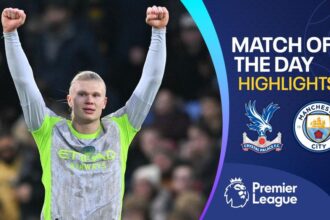
- Erling Haaland: The scoring cyborg. A physical phenomenon whose goal-a-game rate defies logic. His record-shattering debut season at Manchester City (52 goals) announced a new, terrifying era of pure penalty-box dominance.
- Kylian Mbappé: The heir apparent. While often deployed wide, his central impact for France—with a World Cup final hat-trick—and his PSG goal avalanche place him firmly in this conversation, blending R9’s power with Henry’s pace.
Head-to-Head: Peak vs. Longevity vs. Impact
The debate fractures along key lines. If we judge by pure, unplayable peak, the pre-injury Ronaldo remains untouchable. For a decade of sustained world-class dominance, Lewandowski’s robotic consistency stands alone. For transforming a league and defining a club’s identity, Henry is peerless. For clutch performances on the grandest stages, Benzema’s late-career heroics and R9’s 2002 World Cup triumph set the standard.
Where does this leave the current torchbearers? Harry Kane’s all-around game and scoring durability place him among the greats, but the lack of team trophies is a glaring hole in an otherwise complete résumé. Erling Haaland’s trajectory is meteoric, but his career is a story still in its first chapters. His challenge is to maintain this supernatural rate for a decade, as Lewandowski did, and to imprint himself on Champions League finals as Benzema did.
The Verdict and the Future
So, who claims the crown? The answer depends on the criteria. For total, career-long impact on the game, Thierry Henry gets the nod for revolutionizing English football and achieving immortality with Arsenal. For the purest, most devastating embodiment of the striker’s art at its absolute zenith, Ronaldo Nazário remains the eternal “what if” and the ultimate peak. For the relentless, decade-long execution of the role’s primary function—scoring goals—Robert Lewandowski is the unmatched machine.
Looking ahead, the future is blazingly bright. Erling Haaland is on a path to shatter every scoring record in existence. Kylian Mbappé, if he settles centrally, has the talent to challenge for the Ballon d’Or annually. They are the next generation tasked with not just winning this debate, but ending it. Yet, as we watch Haaland bulldoze through defenses or Mbappé glide past challenges, we still catch a glimpse of that same, unforgettable grin from a carnival in Maastricht—a reminder of the Phenomenon who started it all, and whose shadow makes this debate so glorously compelling. The beautiful game’s ultimate truth is that legends create the standard, and giants are forever measured against it.
Source: Based on news from BBC Sport.