Hadjar’s Barcelona Blues: Red Bull’s 2026 Prodigy Crashes in Secretive Test
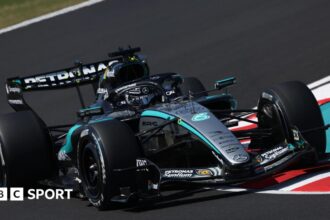
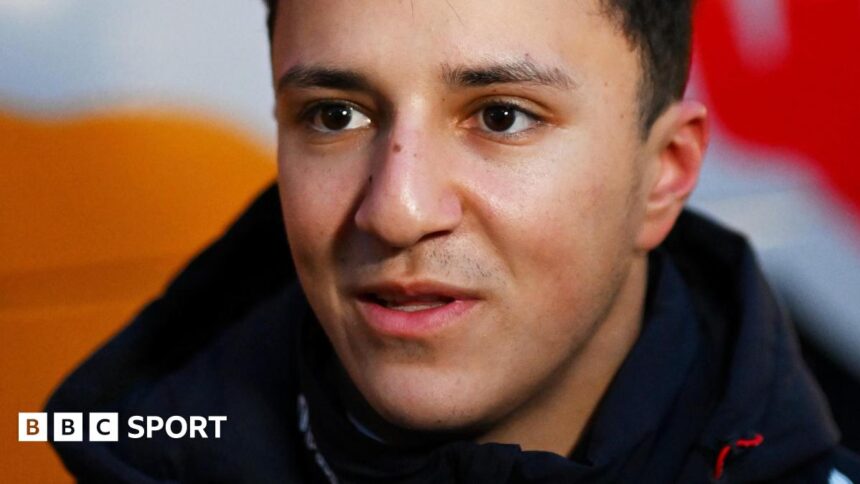
The shroud of secrecy surrounding Formula 1’s pre-season testing was pierced not by a headline-grabbing lap time, but by the sound of carbon fibre meeting Armco. In a damp and private session at the Circuit de Barcelona-Catalunya, Red Bull’s future took a literal hit as 21-year-old Isack Hadjar, the anointed successor for 2026, crashed the RB22 on just his second day of running with the senior team. The incident, occurring in the treacherous final corner, instantly shifts the narrative from quiet preparation to pointed scrutiny, raising urgent questions about pressure, progression, and the perils of a clandestine testing program.
A Crash in the Shadows: Dissecting the Barcelona Incident
Unlike the glitzy, media-saturated official tests, this private running is the sport’s true behind-the-scenes laboratory. With no independent cameras or journalists present, the full picture of Hadjar’s crash is assembled from eyewitness accounts and the immutable physics of the Catalunya circuit. The young Frenchman, embarking on a critical acclimatization year as Red Bull’s reserve and test driver before his 2026 race seat, encountered the classic Barcelona challenge: a drying track with lingering damp patches.
According to sources at the circuit, the sequence of events was a perfect storm of transition and tension. Hadjar had just switched from the full wet tyre to the intermediate compound—a change that requires a dramatic recalibration of braking points, cornering speeds, and driver confidence. The intermediate tyre, with its shallower grooves, offers more grip but is notoriously sensitive in the “half-dry” phase, where a driver can be tricked into pushing too soon.
Key Factors in the Crash:
- Tyres in Transition: Moving from full wets to inters is one of the trickiest phases in motorsport, as the car’s balance changes radically.
- The Final Corner Menace: Barcelona’s Turn 14 is a deceptively fast, long right-hander where drivers build speed for the main straight. Any error is amplified and punished by the barrier.
- Limited Running: With precious few miles in a current-spec F1 car, Hadjar’s margin for error was razor-thin.
- Private Test Pressure: The very privacy of the test amplifies pressure; every lap is under the microscope of a small, intense team garage.
Losing control at such a high-speed point suggests a momentary misjudgment of available grip, a “big moment” that escalated beyond recovery. For Red Bull, the cost is not just in repair bills but in lost track time for a driver who needs every second of experience.
From Prodigy to Pressure Cooker: Analyzing Hadjar’s Rocky Road to 2026
Red Bull’s decision to fast-track Isack Hadjar to a 2026 race seat after just a single season with their junior team, Scuderia AlphaTauri, was a bold declaration of faith. It bypassed their usual, often ruthless, extended evaluation process. The crash in Barcelona is the first significant bump in that accelerated journey, and it places the young driver under a unique form of microscope.
Expert analysis suggests this incident is less about raw talent and more about the immense cognitive load placed on a rookie in these scenarios. “A private test is arguably more stressful than a public one for a new driver,” explains a former F1 team engineer. “There are no other cars to gauge yourself against, no public lap times to hide behind. Every data trace is compared directly to Max Verstappen’s or Sergio Perez’s benchmarks. A mistake is isolated and magnified. The switch from wets to inters is a veteran’s game—it requires a feel for the car and the track that only comes with miles, and miles in an F1 car are exactly what Hadjar lacks.”
This crash will be a critical test of Hadjar’s mental resilience. The Red Bull system is famously unsentimental. The pressure to perform in every subsequent outing, whether in the simulator, in practice sessions he might partake in this year, or in next year’s tests, will now be exponentially higher. The team’s investment in him is huge, but their patience for repeated errors is historically low. How he and his engineering team debrief this incident, learn from it, and move forward will be a defining chapter in his early career.
Red Bull’s Strategy: A Calculated Risk or a Premature Promotion?
The silence from Red Bull is deafening. Their refusal to comment on the incident is standard protocol, but it underscores the secretive nature of this entire testing program. This privacy is a double-edged sword: it allows for focused development without external noise, but it also means any setback becomes a subject of speculation and rumor.
Hadjar’s promotion and this subsequent crash force a broader question about Red Bull’s driver development strategy. In securing Hadjar early for 2026, have they placed a promising talent in a pressure cooker too soon? The alternative—leaving him at AlphaTauri for multiple seasons to hone his craft—was the traditional path trodden by Sebastian Vettel, Daniel Ricciardo, and even Verstappen (briefly).
Team principal Christian Horner and his advisors have bet on Hadjar’s ceiling over a lengthier apprenticeship. This crash is the first real-world data point against that bet. The team’s internal response will be telling. Will they double down on his support, treating this as an inevitable growing pain? Or will the whispers begin about contingency plans? The 2025 driver market remains fluid, and Red Bull may have other options, like the highly-rated Liam Lawson, waiting in the wings. Hadjar’s journey just became a high-stakes narrative of its own within the team.
Looking Ahead: Implications for Hadjar and the 2026 Season
While a single crash does not define a career—Lewis Hamilton and Michael Schumacher had their share of early incidents—its timing and context give it considerable weight. The immediate practical consequence is a loss of vital testing data and track time for both car and driver development. For Hadjar, the path to 2026 now has a clear “before and after” marker.
Predictions for his trajectory now hinge on his next appearances. His performance in the official 2025 pre-season tests next winter will be intensely scrutinized. More immediately, his work in the simulator and any FP1 outings he gets this season will be judged against a new benchmark: his ability to learn from a very public private mistake.
For Red Bull, the incident is a reminder of the human element in their meticulously engineered machine. Even with a car designed to dominate, the driver remains the final, and sometimes fallible, component. As the 2026 regulatory revolution approaches, building a car that a less-experienced driver can harness effectively will be as crucial as developing the powertrain.
Conclusion: A Wake-Up Call in the Wet
Isack Hadjar’s crash in the Barcelona mist is more than a mere testing mishap. It is a stark narrative pivot in the story of F1’s next wunderkind. It underscores the brutal difficulty of transitioning to the pinnacle of motorsport, even for the most gifted. The privacy of the test may have kept the images off social media, but the impact of the incident resonates loudly through the paddock.
This moment will either become a foundational lesson in a champion’s origin story—a humble beginning before a glorious rise—or the first crack in a premature promotion. The ball is now in Hadjar’s court. His response to this adversity, guided by the famously demanding Red Bull apparatus, will determine whether this crash was a costly stumble or a crucial catalyst. For now, the dream drive for 2026 has its first, very real, scar.
Source: Based on news from BBC Sport.