Major Jones: The Unsung Workhorse of the Houston Rockets’ No. 11 Jersey
In the storied tapestry of the Houston Rockets, certain jersey numbers echo with the fame of legends. The retired jerseys hang in the rafters as monuments to franchise-defining greatness. Yet, the true character of a team’s history is often woven by the threads of the less-heralded, the grinders whose contributions are measured in grit rather than glory. Such is the story of the No. 11 jersey and one of its earliest wearers in Houston: Major Jones. In a franchise that has seen just under 500 players wear 52 different numbers, Jones’s tenure from 1979 to 1984 represents the quintessential journey of perseverance—a player who carved out a vital role through sheer determination, embodying the blue-collar spirit of the early 80s Rockets.
A Path Less Traveled: From Albany State to the NBA’s Doorstep
Major Jones’s road to Houston was anything but linear. A standout at Albany State University, a Division II HBCU in Georgia, Jones made his mark by leading the Golden Rams to consecutive SIAC championships. His prowess caught the eye of NBA scouts, leading to his selection by the Portland Trail Blazers with the 20th overall pick in the 1976 NBA Draft. However, the dream was quickly deferred. Cut by Portland, Jones faced the harsh reality that many draft picks encounter. Instead of fading away, he pivoted, showcasing his talent and resilience in the Continental Basketball Association (CBA).
This detour proved critical. For three seasons, Jones honed his game against hungry competitors, proving he belonged at the highest level. His perseverance paid off when the Houston Rockets, a team in transition looking for reliable depth, came calling in 1979. Jones didn’t just earn a roster spot; he earned a five-year stay, becoming a fixture in the frontcourt rotation during a pivotal era for the franchise.
The Blue-Collar Engine of the Early 80s Rockets
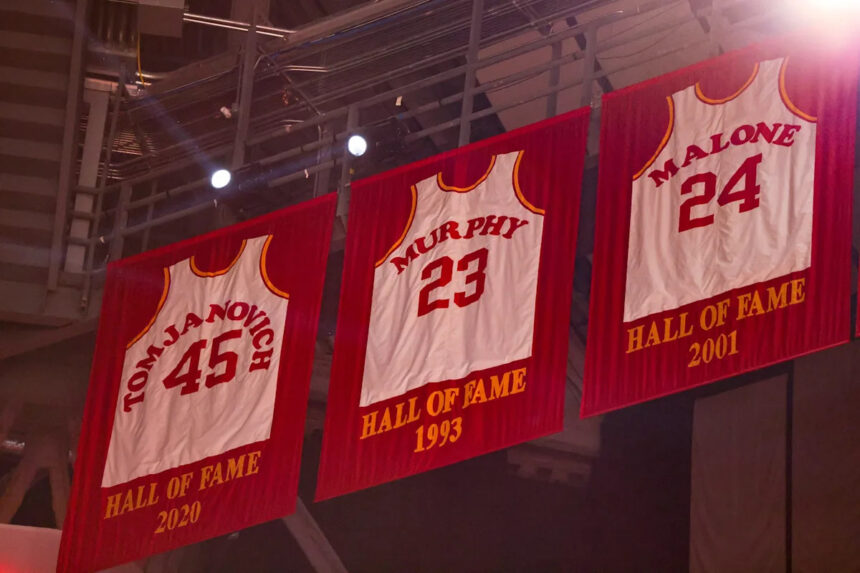
Arriving in Houston, Jones joined a team on the rise, featuring the towering duo of Moses Malone and Calvin Murphy. His role was clearly defined: provide energy, defense, and relentless rebounding off the bench. Standing at 6-foot-9, Jones was the quintessential power forward of his era—physical, tenacious, and fundamentally sound. He never sought the spotlight, but his work ethic made him an invaluable asset to coaches Del Harris and Bill Fitch.
Jones’s game was built on a foundation of effort and intelligence. He was a master of positioning, using his strength and timing to carve out space in the paint. While his statistics—averaging 4.9 points and 3.8 rebounds over his 288 games with Houston—won’t dominate a highlight reel, his impact was felt in key moments. He was the player who would secure a crucial offensive board to extend a possession, set a bone-jarring screen to free a shooter, or dive on the floor for a loose ball. In an era defined by physicality, Major Jones was more than willing to do the dirty work.
- Defensive Versatility: Jones could guard multiple frontcourt positions, providing crucial flexibility for the Rockets’ defensive schemes.
- Reliable Finisher: He possessed a soft touch around the basket, capitalizing on opportunities created by the attention paid to Malone and Murphy.
- Locker Room Presence: His journey from the CBA to a consistent NBA role commanded respect, modeling professionalism for younger players.
No. 11: A Jersey of Grit Before Glamour
Today, the Rockets’ No. 11 is most famously associated with Yao Ming, the Hall of Fame center whose global impact is immortalized in the rafters of the Toyota Center. However, the jersey’s history is a narrative of contrasts. Before Yao’s finesse and skyhook, there was Major Jones’s muscle and hustle. He was the sixth of ten players to wear No. 11 for Houston, a number that has been worn by characters as diverse as flashy guard Sleepy Floyd and steady veteran Ryan Bowen.
Jones’s legacy with the number is foundational. He helped establish an identity for that jersey in Houston—one of resilience and unselfish labor. In the 1980-81 season, his second with the team, the Rockets made a stunning run to the NBA Finals. While Malone and Murphy led the charge, it was the contributions of role players like Jones that provided the necessary depth for such a deep playoff push. His tenure encapsulates an important chapter in Rockets history: the bridge between the Cinderella Finals team and the powerhouse twin-tower era of Hakeem Olajuwon and Ralph Sampson that followed his departure.
Legacy and the Modern NBA Parallel
In today’s analytics-driven NBA, the value of a player like Major Jones is quantified and celebrated more than ever. He would be classified as a high-impact role player, a “glue guy” whose net rating and hustle stats would endear him to coaches and front offices. Modern contenders are built not just on superstars, but on players who embrace specific, energy-filled roles—much like P.J. Tucker did for the Rockets’ 2018 Western Conference contender.
Jones’s career trajectory also mirrors that of many modern players who develop in the G League (the evolution of the CBA) before securing a permanent NBA role. His story is a timeless reminder that the path to professional success is rarely a straight line, and that perseverance is a talent in itself. For undrafted free agents or second-round picks looking at Houston today, the history of No. 11 includes a blueprint written by Major Jones: maximize your minutes, master your role, and outwork everyone.
Conclusion: An Enduring Emblem of Heart
The history of a franchise is more than its MVPs and championship banners; it’s in the collective effort of every player who has donned the uniform. Major Jones, in his No. 11 Rockets jersey, represents the vital heart of that history. From the courts of Albany State to the CBA, and finally to the Summit in Houston, he earned every minute of his five-year tenure through pure determination. He contributed to one of the most unexpected Finals runs in league history and helped set a standard of professionalism during a transformative period for the franchise.
While his number may not be retired, and his name may not be the first recalled from that era, Major Jones’s legacy is secure. He is the embodiment of the unsung hero, a player whose value transcended box scores and whose journey exemplified the resilience required to live an NBA dream. In the ongoing story of the Houston Rockets’ 52 jersey numbers, the chapter on No. 11 begins not with fame, but with fortitude—a fitting tribute to a man named Major who played a minor, yet utterly essential, role.
Source: Based on news from Yahoo Sports.