The View from the Dugout: What Steve Clarke Saw in Scotland’s Ivory Coast Defeat
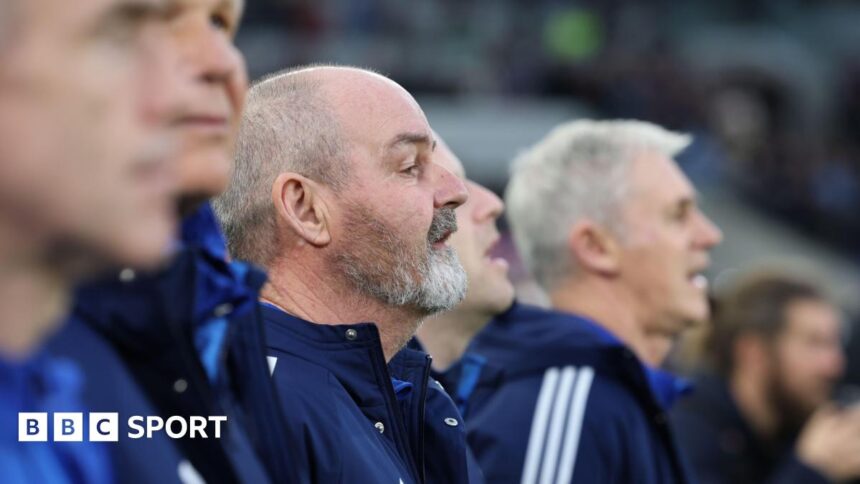
The view from the Scotland dugout at the Hill Dickinson Stadium is, by all accounts, spectacular. But for Steve Clarke on Tuesday night, the most arresting sight wasn’t the pristine pitch or the vibrant stands. It was the ghosts of managerial greatness staring back at him. Every searching glance for answers, every frustrated turn away from the action, met the immutable gaze of Scottish football royalty—David Moyes, Sir Kenny Dalglish, and Sir Alex Ferguson—looking down from their lofty perch. In that moment, the 1-0 friendly defeat to Ivory Coast became more than a result; it was a vivid tableau of the immense pressure and perpetual scrutiny that defines leading the national team.
A Theatre of Pressure Under the Gaze of Giants
There are not many bad views in the impressive Hill Dickinson Stadium. But one a few yards away from Steve Clarke is among the best for perspective, if not for comfort. The Scotland head coach spent much of the 90 minutes against the African champions looking around this place searching for answers. The search was physical—watching his side struggle to impose themselves—and metaphysical, conducted under the silent judgment of icons. This wasn’t just a friendly; it was a performance staged in a hall of fame.
The presence of Ferguson, Dalglish, and Moyes was a stark reminder of the legacy Clarke is part of, and the pedestal upon which Scottish managers are placed. These are men who achieved legendary status *outside* the international arena, in the brutal week-in, week-out crucible of club football. Their watchful eyes underscored a central tension in Clarke’s tenure: the challenge of translating a historic qualification for Euro 2024 into consistent, progressive performances against the world’s best. On this night, the performance fell short, and the view from the dugout was one of isolated concern amidst a sea of expectation.
Tactical Puzzles and Missing Pieces in the Engine Room
From a purely tactical vantage point, Clarke saw a familiar system struggling to function without its key components. The 1-0 scoreline flattered Scotland, with the Elephants dominating large stretches. Clarke’s tried-and-trusted 5-4-1 defensive structure, which has brought so much success, looked porous and reactive.
- Midfield Absence: The most glaring issue was the lack of control in midfield. Without the injured Billy Gilmour, and with Callum McGregor seeing limited action, Scotland’s engine room was overrun. The link between defense and attack, so often provided by these technicians, was severed.
- Defensive Disconnection: The back three, usually so compact, showed uncharacteristic gaps. The wing-backs, a crucial source of width in Clarke’s system, were pinned back by Ivory Coast’s pace and power, turning the formation into a flat back five.
- Isolated Attack: Che Adams cut a lonely figure upfront, feeding on scraps. The planned service from the flanks and supporting runners from midfield never materialized, making Scotland’s attack predictably blunt.
Every time Clarke turned his back on the action, it was likely to process these systemic failures. The answers weren’t forthcoming on the pitch, and the historical figures in the stands offered no whispered advice. This was a problem for the current incumbent alone to solve.
The Unseen Burden: Managing in the Shadow of Legacy
The unique pressure of the Scotland job is not just about results; it’s about stewarding a nation’s emotional relationship with the game. Clarke, a pragmatist by nature, has expertly managed that for years. But Tuesday’s friendly highlighted a new phase of his project: the transition from plucky qualifiers to established tournament competitors. The defeat to Ivory Coast, while a friendly, exposed the work still required.
The view from Clarke’s vantage point is now one of evolution. He must ask difficult questions: Does the system need a more progressive variant against top-tier nations? How does he integrate returning stars like Andy Robertson and Kieran Tierney while maintaining balance? What is the plan B when the low-block and rapid counter-attack are neutralized?
The watching legends embodied different managerial archetypes—Ferguson’s relentless drive, Dalglish’s unifying spirit, Moyes’ structured resilience. Clarke’s challenge is to synthesize his own successful formula with the need for growth. The defeat served as a clear, if painful, diagnostic tool. He saw a team lacking in physicality, technical confidence, and creative spark against elite opposition—all issues that must be addressed before the Euros.
Looking Ahead: Predictions for the Euro 2024 Crucible
So, what does this mean for Germany this summer? The view from the Hill Dickinson Stadium, while sobering, should not be apocalyptic. Friendly matches, especially at the end of a long season, are laboratories. Clarke likely learned more in this defeat than in several routine victories.
Key predictions and focus areas emerging from this game include:
- Midfield Reinforcements: The health and form of Gilmour and McGregor will be non-negotiable. Their ability to retain possession under pressure is Scotland’s lifeline.
- Tactical Flexibility: We may see Clarke adopt a more midfield-centric 5-3-2 or a 3-5-2 in Germany to bolster the center of the park, especially against a host nation like Germany in the opener.
- Mental Reset: The magic of qualifying has worn off. Clarke’s main task is to rebuild the “we against the world” mentality that fueled their success, using games like this as a motivational tool.
The goal in Germany remains progression from a brutal group. That ambition is still alive, but the Ivory Coast game proved it is fragile. Clarke will need his full squad, tactical acuity, and a large slice of the fighting spirit that defines Scottish football at its best.
Conclusion: A Necessary Reality Check Before the Main Event
In the end, the most telling aspect of Scotland’s defeat in the Hill Dickinson Stadium was the vantage point itself. Steve Clarke, caught between the immediate disappointment on the grass and the immortalized success in the stands, received a stark reminder of his role. He is the bridge between Scotland’s proud history and its ambitious future. The friendly against Ivory Coast was a necessary reality check, a high-definition snapshot of the gaps that still exist between this squad and football’s true elite.
The stares from Moyes, Dalglish, and Ferguson were not accusatory, but emblematic. They represent the standard, the dream, and the relentless demand for excellence that comes with the role. Clarke, a man of few words and practical solutions, will have left the stadium with a clear-eyed assessment. The view was uncomfortable, but it was crystal clear. The work to ensure Scotland’s Euro 2024 story is defined by more than just participation starts now, with the lessons from this defeat as the foundational text. The giants are watching, and the nation is waiting.
Source: Based on news from BBC Sport.