From Malaga to Marrakech: How Brahim Díaz Became Morocco’s AFCON Icon
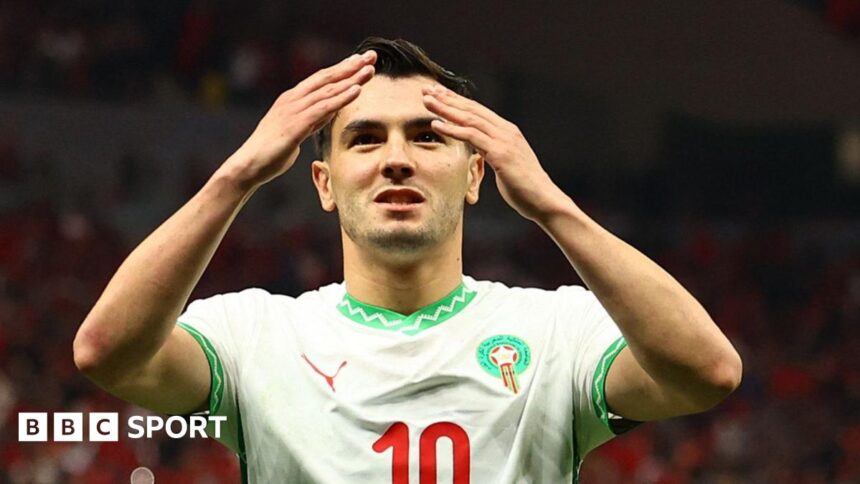
The roar that greets his name in Ivory Coast’s stadiums is not just for a prolific striker; it is the sound of a nation embracing a son who chose them. As Morocco prepares for the Africa Cup of Nations final, their quest for a second continental crown, 40 years in the making, is being spearheaded by a 26-year-old from Malaga. Brahim Díaz, the Real Madrid maestro with a silken touch, is the tournament’s top scorer and its most resonant symbol of modern identity. His journey from the Costa del Sol to the heart of the Atlas Lions is a profound narrative of dual heritage, personal conviction, and footballing artistry that has culminated on Africa’s grandest stage.
A Tapestry of Identity: Forged Between Two Shores
To understand Brahim Díaz’s choice is to understand the geography of his soul. Born in Malaga, his identity was woven from threads stretching across the Mediterranean. His mother, Patricia, is Andalusian, from a city historically shaped by the ebb and flow of cultures. His father, Sufiel, was born in Melilla, the Spanish enclave on the North African coast, into a family of Moroccan origin. This was not a theoretical heritage; it was lived.
From an early age, Brahim’s world was deliberately plural. Family trips to Nador, Morocco, to visit his grandmother were regular pilgrimages. There, he was not a tourist from Spain but a grandson immersed in tradition. In cherished family photographs, a young Brahim stands beside his grandmother, adorned in a traditional Moroccan veil, a visual testament to his seamless belonging. This upbringing instilled in him a powerful, non-binary view of self. “I have always felt 100% Spanish and 100% Moroccan,” he has often stated, a simple declaration that defies the often-assumed necessity of a singular allegiance.
His footballing path, however, began squarely in Spain. A prodigy at Malaga CF and later Manchester City, his senior international debut came for Spain in 2021. Yet, that solitary appearance felt incomplete. When the call from Morocco—the land of his father, his grandmother, and a piece of his heart—came with the opportunity for the 2022 World Cup, a deeper pull took hold. His 2023 switch was not a rejection, but an affirmation of his whole self.
The Futsal Forge: Crafting a Unique Footballing Weapon
Long before he faced the dilemma of international football, Brahim Díaz was solving puzzles in confined spaces. His technical genius, now on full display against Africa’s best defenders, was honed not on sprawling grass pitches but on the hard courts of futsal. From the age of four or five, the game became his first teacher.
The influence of futsal is the Rosetta Stone to decoding Brahim’s style. It is visible in every daring dribble and decisive finish in Ivory Coast:
- Close Control in Chaos: Futsal forces players to operate with zero margin for error. This cultivated Brahim’s supernatural ability to keep the ball glued to his foot in crowded penalty areas, a skill that translates perfectly to breaking down packed AFCON defenses.
- Explosive Acceleration: The small court demands quick bursts over short distances. Díaz’s ability to shift from a standstill to top speed in two steps is a classic futsal trait, allowing him to create separation where none seems to exist.
- The Toe Poke Finish: Perhaps the most distinctive signature. In futsal, with goalkeepers close and time scarce, players often shoot with the toe for speed and surprise. Brahim’s crucial goals in this tournament have frequently been emphatic, toe-driven strikes, a direct import from his indoor roots.
This unique skillset, forged in Malaga’s sports halls, has made him the perfect tactical weapon for Morocco. In a tournament where space is a luxury, a player bred to thrive in tight confines becomes invaluable.
The Catalyst: Transforming Morocco’s AFCON Dream
Brahim Díaz’s integration into the Moroccan national team has been nothing short of transformative. His arrival coincided with a team riding the historic high of a World Cup semi-final but craving the continental glory that has eluded them since 1976. He has not just filled a position; he has elevated an entire attacking concept.
As AFCON’s top scorer, his contributions are quantifiable. But his impact is qualitative. He provides the creative link between a disciplined midfield and the attacking threat of players like Hakim Ziyech and Youssef En-Nesyri. His willingness to receive the ball between the lines, turn, and drive at petrified defenders has broken the low-block strategies many opponents use against Morocco.
More importantly, his choice has resonated on a cultural level. In embracing Morocco, he has become a symbol for a global diaspora that navigates multiple identities. His joy while celebrating goals draped in the Moroccan flag feels deeply authentic, cementing his status as a national icon, not just a footballing mercenary. He represents a modern, confident Morocco that looks to its global citizens as sources of strength.
Beyond the Final: Legacy and the Future of a Dual Heritage
Regardless of Sunday’s result, Brahim Díaz has already etched his name into Moroccan football lore. His story, however, points to a broader future for international football. In an increasingly interconnected world, players with legitimate claims to multiple heritages are becoming the norm, not the exception. Díaz’s journey demonstrates that such a choice can be made with respect and profound emotional truth, enriching the sport’s tapestry.
For Morocco, his commitment is a landmark moment. It signals that the national team can be a destination for top-tier talent drawn by cultural connection, not just regulatory eligibility. This could pave the way for other dual-nationality stars to see representing African nations not as a fallback, but as a proud first choice.
Expert analysis suggests Díaz’s role will only expand. At 26, entering his prime years at Real Madrid, his confidence and technical mastery will be central to Morocco’s ambitions not just in this AFCON, but at the 2026 World Cup. He is the new creative heartbeat of a golden generation.
Conclusion: A Unifying Symbol in a Divided World
The image of Brahim Díaz, born in Malaga, scoring for Morocco in an AFCON final, is a powerful antidote to narratives of division. It is football at its most beautiful and human: a story of family, memory, and the beautiful game’s power to bridge worlds. He did not choose between Spain and Morocco; he chose to honor the entirety of his story. In doing so, he has given Morocco a new hero and the football world a compelling blueprint for a modern, inclusive identity. As he steps onto the pitch for the final, he carries not just the hopes of a nation, but the proof that one can belong wholly to two worlds, and excel in the beautiful tension between them. His feet, schooled in Spanish futsal halls, now dance for the roar of North Africa, and in that synthesis, a legend is being born.
Source: Based on news from BBC Sport.