Conquering the Abyss: How Team GB’s Winter Olympians Master Their Fear to Chase Glory
The air is thin, the silence deafening. At the top of the superpipe or the crest of the big air jump, the world falls away. Below, a vertiginous drop onto a canvas of hard-packed snow and ice. For a Winter Olympian, this moment of suspended animation before the descent is where careers are forged—not just in muscle memory and technique, but in the brutal, intimate battle against a primal adversary: fear. What do you do if you fall 40 feet? You pick yourself up. But first, you must conquer the voice that screams at you not to drop in at all.
The Millimeter Margin: Where Triumph and Trauma Collide
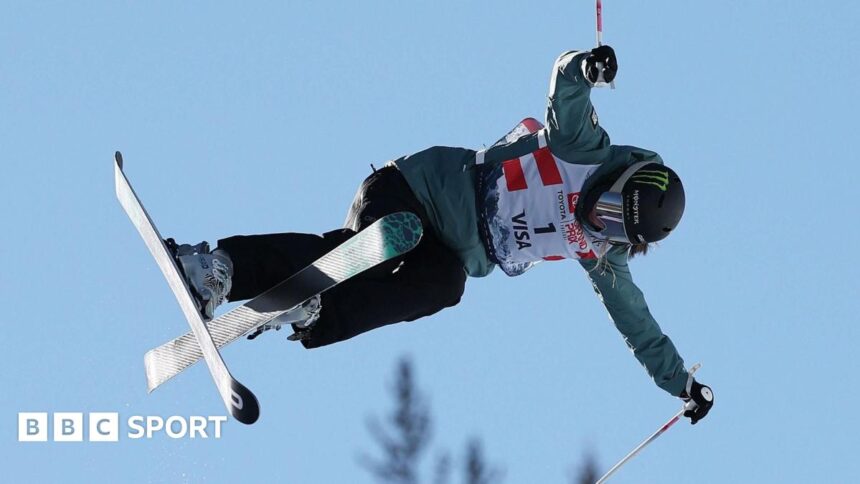
Winter sports exist on a razor’s edge unseen in most athletic arenas. The margin for error isn’t measured in seconds, but in millimetres. A slight over-rotation on a quad cork, a fraction of a second late on a ski slalom turn, a landing absorbed an inch too far back—these microscopic miscalculations delineate the podium from the hospital bed. The jeopardy is not theoretical; it is a constant, cold companion. As athletes barrel toward the Milan-Cortina 2026 Winter Games, pushing the envelope of physics and human capability, they are also engaged in a profound psychological arms race against themselves.
This is the unique crucible of the winter athlete. “The biggest challenge of my sport is definitely overcoming the fear,” confesses freestyle skier Zoe Atkin, a Team GB medal hopeful for her second Games. Her statement is a rare public glimpse into the mental chasm every elite competitor must bridge. The skill is honed in the gym and on the snow, but the courage is forged in the mind. It’s a critical performance skill, as vital as any technical drill.
The Anatomy of Fear: From Primal Instinct to Performance Tool
For these athletes, fear isn’t an enemy to be eradicated—a fool’s errand given the objective dangers they face. Instead, the process is about acknowledgement, management, and channeling. Sports psychologists working with winter sports elites break it down into a systematic process.
- Cognitive Reframing: Transforming “I’m scared I’ll crash” into “This sensation means I’m alert and ready to execute.” Fear is reinterpreted as focused arousal, a necessary fuel for peak performance.
- Process Over Outcome: Athletes are trained to narrow their focus to the immediate sequence: “Spot the landing” not “Win the medal.” By concentrating on controllable technical cues, they bypass the paralyzing “what if” narrative.
- Visualisation Mastery: This goes beyond seeing success. Athletes mentally rehearse the entire run, including the feeling of speed, the sound of edges on ice, and crucially, how to react if a trick goes awry. They pre-live the fear and their response to it, building neural pathways of control.
- Progressive Exposure: You don’t attempt a triple cork on day one. Elite winter athletes build up incrementally, mastering each progression, proving to their subconscious that the next step is within their expanded capability. Each small victory builds mental resilience.
This toolkit allows an athlete like a skeleton racer, hurtling head-first at 80+ mph, or a snowboarder launching into the stratosphere, to exist in a state of controlled aggression. The fear is in the passenger seat, observed but not driving.
Team GB’s Mind Games: Building Mental Fortitude for the Italian Peaks
For Team GB, a nation without sprawling alpine ranges, producing winter sports stars requires a particular breed of grit and innovation. This extends profoundly to psychological preparation. The British system invests heavily in creating robust support networks around athletes. It’s a holistic approach where coaches, physios, and psychologists work in unison to build not just a better competitor, but a more resilient individual.
Athletes have access to cutting-edge sports psychology resources, often using simulation technology and biofeedback to understand stress responses. But perhaps more importantly, they foster a culture where discussing fear is destigmatized. When a teammate like Zoe Atkin speaks openly about it, it creates permission for others to address their own vulnerabilities, turning a solitary struggle into a shared challenge. This environment cultivates a unique British mentality—one of calculated daring, where the underdog status morphs into a freedom to innovate without the weight of overwhelming expectation.
Milan-Cortina 2026: Predictions Forged in Nerve
As the world turns its gaze to Italy, the games will be won as much in the mind as on the mountain. Watch for the athletes who exhibit pre-start rituals of intense focus—those are likely moments of active fear management. The winners will be those who have made peace with the millimeter margin.
For Team GB, look to the freestyle skiing and snowboarding camps, where athletes like Atkin operate on that fine line. Their medal potential is directly tied to their ability to consistently land on the right side of it. Newcomers who have rapidly progressed through the ranks may face their first true Olympic-sized confrontation with fear; how they handle that debut will define their trajectory. Veterans, meanwhile, will draw on a deep well of past confrontations, each a mental reference point proving they have navigated this inner turmoil before.
The most captivating performances may not always be gold-medal runs, but the comeback after a crash, the decision to throw a trick in the finals when safe play is an option, or the serene composure in the start gate of a dangerous event. These are the visible manifestations of the invisible war already fought and won.
The Universal Takeaway: Embracing the Drop-In
The journey of a Winter Olympian offers a stark, powerful metaphor for human endeavour. We all face our own “40-foot drops”—daunting career changes, personal challenges, leaps of faith. While our physical safety may not be at stake, the psychological paralysis is familiar.
The lesson from the slopes is clear: Mastery requires acknowledging the fear, not denying it. It involves breaking down the terrifying whole into manageable processes, preparing meticulously, and building confidence through small, successive victories. It is about listening to that primal voice, respecting its warning, and then using refined skill and practiced focus to move forward regardless.
When the Team GB athletes launch themselves into the Italian sky at Milan-Cortina, they carry more than the hopes of a nation. They embody the timeless human struggle to transcend self-imposed limits. They remind us that courage isn’t the absence of fear, but the judgement that something else is more important. For them, it’s the pursuit of a dream, etched on a millimeter margin, at the very edge of what is possible. And in that breathtaking pursuit, they show us all how to pick ourselves up, and try again.
Source: Based on news from BBC Sport.