


Dyche’s Common Sense vs. Guardiola’s Scales: A Festive Clash of Football Philosophies
The Premier League’s festive fixture list is a spectacle of endurance, a test of squad depth, and, as it turns out, a barometer for managerial philosophy. In one corner, the meticulous, high-pressing artistry of Pep Guardiola. In the other, the pragmatic, no-nonsense grit of Sean Dyche. As Nottingham Forest prepared to host Manchester City, the pre-match narrative took an unexpected turn from tactical setups to bathroom scales, serving up a delicious slice of Premier League contrast.
A Festive Feast or a Calculated Calorie Count?
The spark was ignited when Pep Guardiola revealed his post-Christmas plan: weighing his Manchester City squad upon their return to training. In a regime where marginal gains are sacred, the idea is to ensure the players’ physical metrics—and by extension, their razor-sharp fitness—haven’t dropped during a period synonymous with indulgence. It’s a practice emblematic of City’s modern, data-driven machine, where every heartbeat, sprint, and, apparently, pound is monitored in the pursuit of perfection.
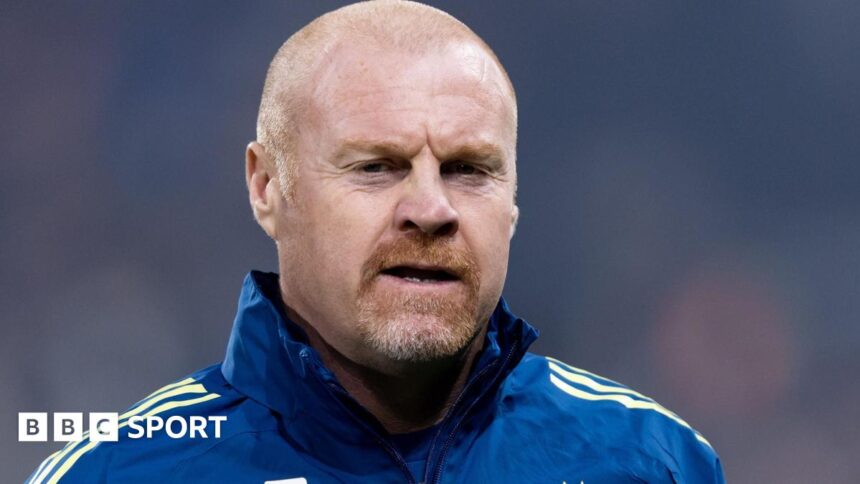
Enter Sean Dyche. When asked if he would implement a similar policy at Nottingham Forest, the response was pure, unadulterated Dyche. With a wry smile, he deflected with a joke before laying out his own credo. “Is Pep weighing himself, do you think?” he quipped, before affirming his trust in player professionalism. “I don’t mind them having a Christmas dinner,” Dyche stated, advocating for a balance between enjoyment and responsibility. His method? Not a digital scale, but a call for old-fashioned “common sense” and the implicit trust that his players understand the demands of their profession.
Trust vs. Technology: The Managerial Divide
This exchange is far more than a humorous soundbite; it’s a window into the foundational beliefs that guide these two successful managers. Guardiola’s approach is rooted in control and verification. In a squad of global superstars, leaving nothing to chance is paramount. The scale is a symbol—a tangible checkpoint in a culture of relentless accountability. It’s not about punishment, but about maintaining the pristine condition required for his intricate, physically demanding style of play.
Dyche’s philosophy, conversely, is built on a different kind of foundation: collective responsibility and human judgment. His management style has historically thrived on building resilient, unified squads where players are treated as adults. The implied message is clear: if you want to perform on the pitch against the best, you must prepare accordingly off it. This dichotomy highlights a central tension in modern football:
- Data-Driven Precision: Guardiola represents the zenith of football’s analytics revolution, where objective metrics govern decisions.
- Man-Management Instinct: Dyche champions the enduring importance of psychology, morale, and trusting the group’s culture.
Both are valid. A Guardiola team without peak physical conditioning would be incapable of executing his vision. A Dyche team without total buy-in and self-policing camaraderie would lack the fight he instills.
The Premier League’s Grueling Christmas Test
The context of this debate is what makes it so pertinent. The Premier League’s Christmas schedule is uniquely brutal. While other leagues pause, English football plunges into a whirlwind of matches where recovery time is minimal. A player’s physical and nutritional discipline during this window can have a direct, tangible impact on performance and injury risk. Guardiola’s method is a pre-emptive strike against complacency in this high-stakes period. Dyche’s method is a stress test of his squad’s maturity and commitment.
This isn’t to say Dyche ignores fitness. His teams are famously among the hardest-working and fittest in the league. The difference is in the monitoring process. Dyche likely relies on the evidence of the training pitch—the lung-busting runs, the sharpness in drills, the output in match-day metrics—to judge a player’s condition. The weigh-in is a pre-emptive diagnostic; the training ground is Dyche’s courtroom.
Prediction: Philosophy Meets the Pitch at The City Ground
As Forest hosted City, this clash of ideologies moved from the press room to the turf. On paper, it was a mismatch of resources, but football is rarely that simple. Dyche’s call for common sense was, in part, a psychological play—a reinforcement of “us against the world” and a subtle distancing from the perceived clinical coldness of the elite.
We predicted a match defined by this very contrast: City’s orchestrated, possession-heavy rhythm against Forest’s disciplined, physically imposing block. The key battles would be won or lost in the margins Guardiola measures and the duels Dyche demands. Would City’s machine-like precision, honed by festive vigilance, break down a Forest side relying on grit and unity? Or would the hosts’ collective strength, built on trust and responsibility, disrupt the champions’ flow?
The result, a hard-fought affair, ultimately reflected these philosophies. While City’s quality often tells, a Dyche side is never a soft touch. The match served as the ultimate proof of concept for both managers’ festive approaches.
Conclusion: More Than Just a Number on a Scale
Sean Dyche’s refusal to wield the scale is not a rejection of fitness, but an affirmation of a different value system. In an era increasingly dominated by data points and biometric feedback, his stance is a compelling reminder of the human element in sport. Player trust, squad morale, and personal responsibility remain intangible yet critical components of a successful team.
Guardiola’s method is the future, and it is brilliantly effective. Dyche’s method is timeless, and it is equally effective in its own context. The Premier League is richer for housing both. The “weigh-in” debate ultimately underscores that there is no single formula for success. Whether through the cold certainty of a scale or the warm trust in a player’s common sense, the goal is the same: to field a team ready for battle. This festive period, as always, revealed that the path to preparedness is as varied as the managers who walk it.
Source: Based on news from BBC Sport.
