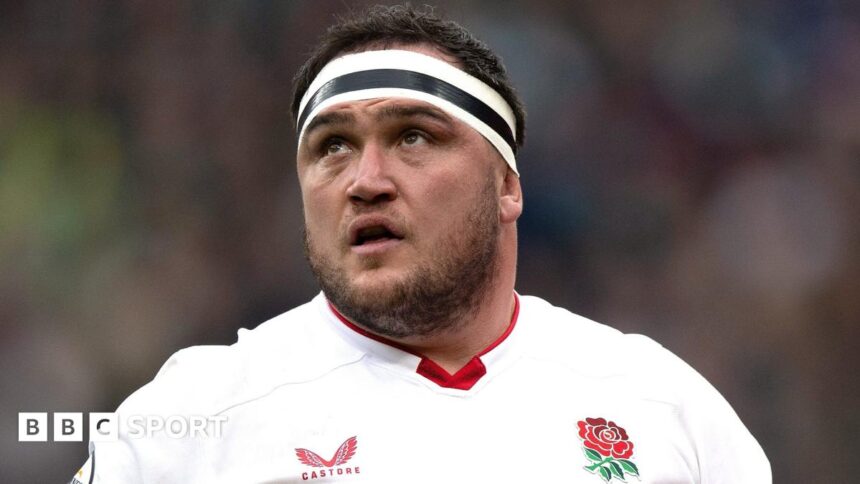
‘I Feel Very Safe Now’: Jamie George on Rugby’s Evolving Concussion Culture
The image of the rugby player is one of unyielding toughness: mud-streaked, bloodied, and defiant. For generations, the sport’s culture demanded that players “shake off” knocks and see head injuries as a badge of honor. But as the game’s physicality has escalated, so too has the sobering understanding of its consequences. Now, a new conversation, led from within the dressing room, is reshaping rugby’s very soul. England and Saracens hooker Jamie George, a veteran whose career spans the seismic shift in concussion awareness, offers a powerful perspective: “I feel very safe now, I haven’t always.”
This candid admission, made to BBC Sport ahead of a new documentary fronted by his former international teammate Ben Youngs, is more than a personal reflection. It is a testament to a sport in the throes of necessary, if painful, evolution. George’s career, from his Saracens debut in November 2009 to captaining England today, provides a living timeline of rugby’s changing relationship with brain health.
From “Shake It Off” to Stop: A Career Spanning Two Eras
When Jamie George entered the professional arena, the rugby landscape was markedly different. The concussion protocols were rudimentary, and the long-term risks of repeated head impacts were not the central topic they are today. The emphasis was on resilience, often at a profound cost. “I haven’t always [felt safe],” George acknowledges, a simple phrase that speaks volumes about the experiences of his and preceding generations of players.
The turning point has been a confluence of scientific advancement, high-profile legal cases, and courageous testimony from former players suffering from neurodegenerative diseases. This has forced the sport’s governing bodies, clubs, and players to confront an uncomfortable truth. What was once considered “getting your bell rung” is now understood as a traumatic brain injury with potentially lifelong implications. George’s career has straddled this divide, allowing him to witness firsthand the implementation of Head Injury Assessments (HIAs), independent concussion spotters, and a gradual but fundamental shift in dressing room attitudes.
The Player-Led Revolution: Youngs’ Documentary and Changing Mindsets
Central to this shift is the emergence of player-led advocacy. The new BBC documentary, fronted by England’s most-capped male player Ben Youngs, represents a significant moment. George praises his former teammate, stating, “I’m really proud of Ben to be exploring this conversation and he’s perfectly suited to do that.” This endorsement from a current international captain is crucial. It signals that discussing brain health is no longer a sign of weakness but of leadership and care for the sport’s future.
The documentary’s existence underscores a new transparency. It moves the conversation from medical journals and courtrooms into the living rooms of fans and the minds of aspiring players. This player-driven dialogue is accelerating cultural change faster than any top-down mandate could. When legends and current stars speak openly, it dismantles the outdated “warrior culture” that once silenced concerns. Key changes driven by this new mindset include:
- Strict return-to-play protocols enforced by independent medical personnel.
- The use of instrumented mouthguards to measure head impact forces in real-time.
- A greater emphasis on tackle technique coaching to reduce head-to-head contact.
- An environment where players are encouraged, not vilified, for reporting symptoms.
Safety vs. Spectacle: The Future Tension of the Professional Game
While George expresses feeling “very safe” under the current protocols, the sport faces an existential tension. How does it maintain its brutal, captivating appeal while making player safety, particularly regarding the brain, its non-negotiable cornerstone? The future will likely see further technological and regulatory interventions. We can predict:
Increased Technology Integration: Wearable tech, like mouthguards, will become standard, providing data to immediately remove players who sustain high-force impacts, even if no immediate symptoms are present.
Law Evolution: The laws of the game will continue to be tweaked to lower the legal tackle height and further disincentivize any contact with the head. The recent “orange card” trial is a prime example of this ongoing adjustment.
Lifetime Player Care: A greater institutional focus on post-career health monitoring and support for former players will become a mandatory ethical duty for governing bodies and clubs.
However, the biggest challenge remains cultural, extending beyond the professional game to the amateur and grassroots levels. The “trickle-down effect” of professional attitudes is vital. When children see their heroes prioritize their long-term health, it establishes a new normal for the next generation.
A Legacy Beyond the Pitch
Jamie George’s statement is a powerful barometer of progress. For a 35-year-old front-row warrior, whose position is at the heart of the game’s most brutal collisions, to state he feels “very safe” is a profound endorsement of the changes implemented. It suggests that the sport is moving toward a model where career longevity and post-career quality of life are valued as highly as the trophy in the cabinet.
The journey is far from over. Rugby union remains a fiercely physical collision sport, and risk can never be entirely eliminated. But the conversation has irrevocably changed. The legacy of players from George’s generation may well be defined not just by their on-field triumphs, but by their role in steering the sport toward a more sustainable and humane future. By supporting Ben Youngs’ documentary and speaking openly, George and his peers are ensuring that the next player making their debut in 2024 will feel safe from day one, and, more importantly, for all the days that follow long after the final whistle has blown. The true test of rugby’s evolution will be a future where no player ever has to say, “I haven’t always felt safe.”
Source: Based on news from BBC Sport.