ICE Officials to Play Security Role at Milan Cortina Olympics: A Deep Dive into the Unprecedented Move
The road to the Olympic Games is often paved with logistical marvels, geopolitical maneuvering, and intense security planning. For the 2026 Milan Cortina Winter Olympics, a new and unexpected player has entered the arena: U.S. Immigration and Customs Enforcement (ICE). A recent report confirming that ICE agents will assume a security support role in Italy has sent ripples through the worlds of international sport, diplomacy, and security, raising questions about scope, precedent, and the intricate dance of sovereignty on the world’s biggest athletic stage.
Beyond the Border: Unpacking the Reported ICE Role in Italy
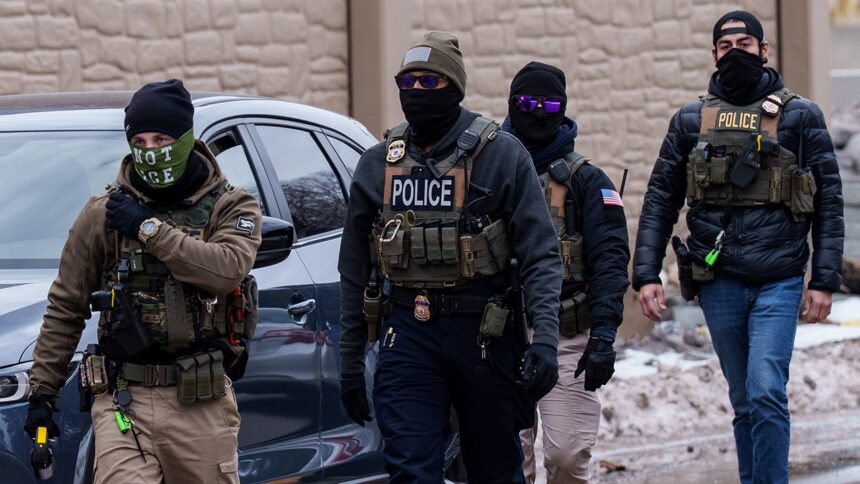
According to a report from The Associated Press, U.S. Embassy officials clarified that a contingent of ICE agents will be deployed to Italy in 2026. Their mission, however, is explicitly not one of immigration enforcement on Italian soil—a point of crucial diplomatic and legal significance. Instead, these personnel will be embedded within the diplomatic security details protecting official U.S. delegations, athletes, and facilities associated with the American presence at the Games.
This represents a specialized application of ICE’s lesser-known but critical capabilities. While publicly associated with domestic immigration operations, ICE’s Homeland Security Investigations (HSI) division is a global investigative arm with a broad mandate. Their expertise that could be leveraged in Italy includes:
- Counterterrorism intelligence coordination with international partners.
- Investigating transnational criminal threats, including human trafficking and smuggling networks that often exploit large events.
- Combating cybercrime and intellectual property theft, such as the proliferation of counterfeit merchandise.
- Providing protective services and secure logistics for high-profile individuals, a function that aligns directly with the reported role.
In essence, the move signals a utilization of ICE/HSI as a force multiplier for U.S. security abroad, leveraging their specific investigative and protective skill sets in a high-visibility, multi-national environment.
A Diplomatic Tightrope: Sovereignty, Perception, and Precedent
The insertion of ICE into an Olympic security plan, even in a support capacity, is not without its complexities. The announcement arrives against a politically charged backdrop where ICE’s domestic operations remain a deeply polarizing topic. This context ensures the move will be scrutinized through both a security and a political lens.
From a diplomatic standpoint, the Italian government’s approval is paramount. Host nations retain ultimate sovereignty and security responsibility for the Olympics. The presence of any foreign law enforcement agents, especially from an agency as symbolically potent as ICE, requires meticulous bilateral agreements. U.S. Embassy officials were quick to emphasize the limited, non-enforcement nature of the role, a necessary clarification to respect Italian jurisdiction and preempt any concerns about overreach.
However, public perception is a force of its own. The image of ICE agents—even those focused solely on protective duties—operating in the peripheral vision of Olympic festivities could become a focal point for activists or critics. It introduces a unique element of geopolitical symbolism into an event that strives, at least officially, for unity and apolitical celebration. The precedent set here is significant: will other nations with specialized investigative agencies seek similar supportive roles at future Games, potentially creating a more complex patchwork of international security actors on host soil?
Expert Analysis: Security Pragmatism or Political Statement?
To understand this development, one must separate the agency’s domestic reputation from its international operational capabilities. Security experts note that modern Olympics are among the most challenging security environments on earth, requiring a fusion of intelligence, technology, and human resources from across the globe.
“Viewing this solely through a domestic immigration policy lens misses the point,” suggests a former senior advisor for Olympic security coordination, who spoke on background. “HSI agents are some of the most widely deployed federal law enforcement officers overseas. They have established liaison relationships with Italian authorities for years. Tapping that existing network and their specific investigative expertise for protective intelligence makes pragmatic security sense.”
Yet, the political dimension is inescapable. The report emerged alongside commentary, such as that from Fox News contributor Guy Benson, discussing former President Donald Trump’s advocacy for a robust response to violence. This frames ICE within a broader narrative of law and order politics. The deployment, therefore, can be interpreted in two ways: as a straightforward, apolitical utilization of best-available resources, or as a symbolic projection of a particular approach to security and border enforcement onto a global stage. The truth likely resides in a blend of both, a reality that defines much of international security cooperation.
Predictions and Implications for the 2026 Games and Beyond
As the Milan Cortina Olympics draw nearer, several developments will be worth watching closely.
First, the operational transparency from both U.S. and Italian officials will be critical. Clear communication about the number of personnel, their exact duties, and their rules of engagement will help mitigate misunderstandings or potential incidents.
Second, the potential for protests or symbolic actions targeting the U.S. security presence is elevated. Organizers and intelligence agencies will need to factor this new variable into their threat assessments and crowd management plans.
Finally, the success or failure of this integration will set a strategic precedent. If the ICE support role is deemed a seamless and effective contribution to overall security, it may become a model for future U.S. participation in mega-events abroad. If it becomes a source of diplomatic friction or public controversy, it may be an isolated experiment.
- Enhanced Protective Detail: U.S. athletes and dignitaries may receive security support from personnel with deep investigative ties, potentially allowing for more proactive threat identification.
- Intelligence Fusion: ICE/HSI’s connectivity with global law enforcement databases could enrich the overall security intelligence picture for the Games.
- Reputational Challenge: The Games’ organizers now inherit the task of managing the narrative around a politically sensitive agency’s presence.
Conclusion: A New Chapter in Olympic Security
The inclusion of U.S. ICE personnel in the security apparatus for the Milan Cortina Olympics is far more than a logistical footnote. It is a multifaceted decision that sits at the intersection of high-stakes security, delicate diplomacy, and potent symbolism. It reflects the evolving nature of threats to global events, where cybercrime, trafficking, and terrorism require a networked, specialist response that transcends traditional borders—both geographic and bureaucratic.
While the agency’s domestic role ensures the move will be controversial, its international mandate provides a legitimate, expertise-driven rationale. The ultimate test will be on the ground in Italy in 2026: whether this unprecedented collaboration operates as a silent, effective layer of protection, fading into the background of athletic triumph, or whether it becomes a visible, contentious subplot in the Olympic story. One thing is certain: the playbook for Olympic security cooperation has just added a new, and unexpectedly complex, chapter.
Source: Based on news from Fox Sports.