Shubman Gill’s Shocking T20 World Cup 2026 Omission: A Strategic Axe or a Form-Induced Fall?
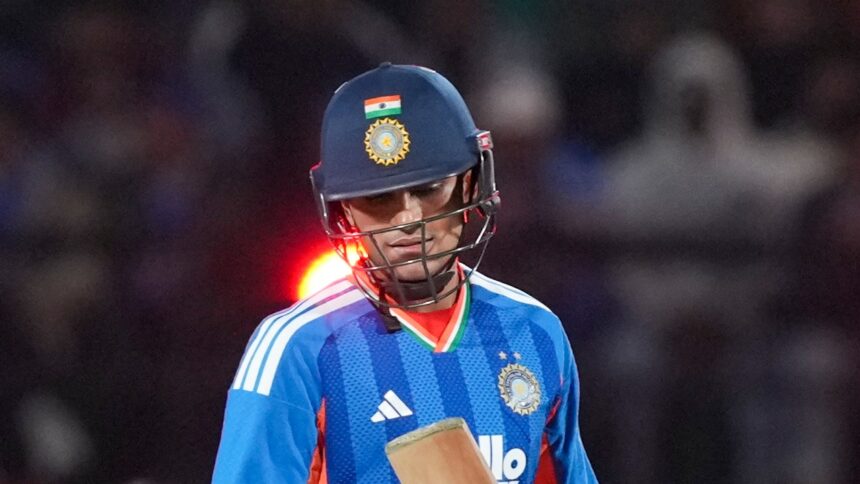
The tectonic plates of Indian cricket have shifted with a quiet, seismic jolt. In a decision that has sent shockwaves through the cricketing fraternity, the Board of Control for Cricket in India (BCCI) has omitted Shubman Gill from its provisional squad for the T20 World Cup 2026. This isn’t just a squad rotation; it’s the sudden sidelining of a player anointed as the heir apparent to India’s batting throne. The move, reportedly decided even before the final T20I against Australia in Ahmedabad, signals a dramatic late-course correction by the Rahul Dravid-led think tank, prioritizing current form and specific role clarity over long-term investment. The spotlight now falls on Sanju Samson and Ishan Kishan, as Gill’s sudden exit becomes the defining narrative of this World Cup cycle.
The Ahmedabad Signal: A Decision Made in the Shadows
While the official announcement came this week, the BCCI selection committee had seemingly made up its mind far earlier. According to a PTI report, the signs were evident during the recent Australia T20I series. Gill, named vice-captain for the series, was set to miss the fourth T20I in Lucknow due to a minor foot injury. The critical detail, however, was the management’s decision to not push for his participation in the series finale in Ahmedabad, despite the injury not being deemed serious. This was not merely workload management; it was a silent verdict. The team management was already “looking the other way,” using the injury as a convenient pivot to assess alternatives without the pressure of dropping a designated leader. This pre-meditation reveals that Gill’s T20 World Cup 2026 axe was not a spur-of-the-moment reaction but a calculated, strategic move, brewing through the latter half of 2025.
Decoding the Drop: Form, Fitness, and a Crowded Field
Several converging factors have led to this drastic call. Analysts point to a trifecta of concerns that ultimately eroded the management’s confidence in Gill as their T20 World Cup opener.
- Inconsistent T20 Form: While Gill’s pedigree in ODIs and Tests is unquestioned, his T20I numbers have failed to mirror that dominance. His strike rate, often hovering in the 130s, has been deemed insufficient for the modern powerplay mandate, especially when compared to the explosiveness of his peers.
- Role Congestion at the Top: The rise of Yashasvi Jaiswal as a left-handed, aggressive foil to Rohit Sharma (or his successor) created a logjam. With Virat Kohli also in the mix, the top-order became inflexible, forcing the management to seek more dynamic and versatile combinations.
- Fitness and Running Between Wickets: Lingering concerns over Gill’s agility and speed between the wickets in the shortest format have been a quiet critique. In a format where converting ones into twos is paramount, the management may have favored more nimble athletes.
- The Samson & Kishan Resurgence: Crucially, viable and in-form alternatives emerged. Sanju Samson’s blistering domestic and IPL form, coupled with his ability to keep wicket, offered unmatched flexibility. Ishan Kishan, a left-hander with a proven track record as an opener, presented the perfect contrast and a direct replacement for the role Gill was auditioning for.
The New Vanguard: Samson and Kishan Step into the Breach
Gill’s exit is not just a subtraction; it’s a recalibration of India’s T20 philosophy. The likely promotion of Sanju Samson as the opener is a bold, attacking gambit. Samson’s high-risk, high-reward approach at the top could give India the explosive starts they’ve often craved in global tournaments. His secondary skill as a wicketkeeper also allows the team to pack an extra batter or bowler, optimizing the balance of the playing XI.
Meanwhile, Ishan Kishan as the alternative provides a like-for-like left-handed option at the top. Kishan’s experience and fearless style make him a formidable contender, ensuring there is no drop in intent. This shift indicates a clear preference for players who can dictate terms from ball one, a lesson seemingly ingrained from previous World Cup near-misses. The management is betting on proactive stroke-makers over accumulators, even if it means sacrificing a player of Gill’s classical caliber.
Expert Analysis: A Ruthless but Necessary Pivot?
From a pure cricketing logic perspective, the decision is defensible, even if it feels ruthless. “Sentiment has no place in modern team selection, especially for a World Cup two years out,” says a former national selector on condition of anonymity. “This sends a powerful message: past reputation guarantees nothing. The timeline to 2026 is now a clean slate, a direct competition between Samson, Kishan, Jaiswal, and any other domestic powerhouse.”
However, the psychological impact cannot be ignored. How Gill responds to this public vote of no-confidence will define his career trajectory. Will it break him, or will it fuel a monstrous run in other formats and the IPL to force an undeniable comeback? The risk for the BCCI is mismanaging a generational talent. Yet, the potential reward is crafting a T20 unit with a clear, aggressive identity, unburdened by having to fit a square peg into a round hole.
Predictions and the Road to 2026
This decision sets the stage for a fascinating two-year audition.
- The IPL Will Be King: Performance in the 2025 and 2026 IPL seasons will be the ultimate determinant for all contenders. Gill will be under immense pressure to not just score runs, but to score them quickly and reinvent his T20 game.
- Flexibility is Non-Negotiable: The players who succeed will be those who offer multiple skills—wicket-keeping, bowling a few overs, or batting in various positions. Pure, one-dimensional openers are an endangered species.
- Gill’s Redemption Arc: Do not write off Shubman Gill. This setback could be the catalyst for a dramatic evolution. If he can marry his exquisite timing with a more expansive power game, the door to the 2026 squad is not permanently shut. The competition just got fiercer.
Conclusion: A Bold Stroke in the Name of Evolution
The exclusion of Shubman Gill from India’s T20 World Cup 2026 plans is more than a selection headline; it is a statement of intent. It underscores a drastic call by the Indian management to prioritize specific role performance over overarching talent. While the shock is understandable, the rationale points towards a hard-nosed, data-driven approach to building a champion T20 side. The message is clear: the journey to the 2026 World Cup begins with tough choices, and no one, regardless of stature, is immune. The baton has been passed, for now, to Sanju Samson and Ishan Kishan. Their task is to validate this bold gamble. Gill’s task is to render it a forgotten footnote with a torrent of runs. In this high-stakes drama, Indian cricket stands to benefit from the fierce competition it has just ignited.
Source: Based on news from India Today Sport.