The Unseen Boundary: How India vs Pakistan Became a Political Arena
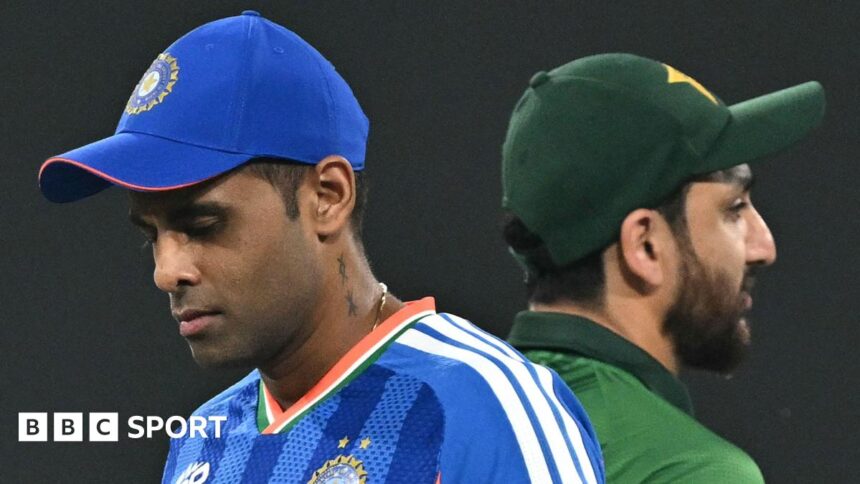
The coin spun in the humid Colombo air, a brief, glinting moment of neutrality before it settled. But the real story wasn’t which side it favored. It was the two meters of empty space between the captains, a chasm filled not with competitive tension, but with a cold, deliberate silence. No words were exchanged. No hands were offered. This was the toss for India vs Pakistan, cricket’s most storied rivalry, now reduced to a meticulously choreographed display of political discord. The match that followed was a one-sided affair, but the victory on the scoreboard felt secondary. The real contest had already been won and lost in that pre-game void, confirming a grim new reality: the clash is no longer defined by sport, but by statecraft.
The Chilling Protocol: When Silence Speaks Louder Than Cheers
For decades, the electric anticipation of an India-Pakistan match was rooted in the sporting spectacle—the duel between bat and ball, the individual brilliance under crushing pressure. The narrative has decisively shifted. Now, the pre-match handshake, a universal symbol of sporting respect, has become the most scrutinized event. Its absence is a calculated political statement. In Colombo, the awkward standoff at the toss between Suryakumar Yadav and Salman Ali Agha was not a spontaneous moment of animosity; it was the execution of a policy. These players are no longer just athletes; they are de facto ambassadors, their every interaction dictated by diplomatic frost.
This transformation was starkly evident in the lead-up to the T20 World Cup. Pakistan’s initial threat to boycott the tournament in solidarity with Bangladesh—who refused to play in India—was a geopolitical gambit, not a sporting one. While they eventually relented, the shadow of that decision lingered over Colombo’s grey skies. The political rivalry had successfully hijacked the schedule, the narrative, and finally, the most basic human interactions on the field. The game itself becomes almost a subplot to the larger theater of non-engagement.
From Sporting Passion to Geopolitical Proxy
To understand this shift, one must look beyond the boundary rope. The relationship between India and Pakistan is uniquely complex, where cricket has historically served as a rare conduit for connection. However, in recent years, escalating political tensions, cross-border incidents, and a breakdown in diplomatic dialogue have seeped irreversibly into the sporting arena. The sport has become a proxy battleground, where victories are framed as national vindication and losses as existential threats. This pressure cooker environment forces players into a impossible position: they must be warriors, not cricketers.
The consequences of this politicization are profound:
- Erosion of Sporting Ethos: The spirit of cricket, built on respect and camaraderie, is the first casualty. The deliberate avoidance of customary courtesies undermines the very foundation of the game.
- Immense Player Burden: Athletes carry the weight of bilateral relations on their shoulders. A dropped catch or a poor shot is no longer a sporting error; it is analyzed as a national failing.
- Fan Experience Polarization: For fans, the joy of sporting contest is poisoned by jingoism. The focus shifts from appreciating skill to demanding dominance as a form of political one-upmanship.
- Logistical Hostage-Taking: As seen with Bangladesh and Pakistan’s stance, tournaments and fixtures can be held hostage to political demands, damaging the global structure of the sport.
The Colombo toss was a perfect microcosm. Those two long minutes of shared, silent staging for the cameras were not about cricket. They were a performance of division, a message sent to billions. The cloud lurking over the build-up was not just meteorological; it was the heavy fog of politics.
The Inevitable Trajectory: What Does the Future Hold?
If the current trajectory continues, the future of India-Pakistan cricket is bleak and predictable. We are moving towards a model of complete sporting segregation, where the teams only meet in neutral, ICC-governed events like World Cups, and even then under a cloud of strained protocol. Bilateral series, once the lifeblood of the rivalry, are a distant memory. The encounters will become rarer, more charged, and even less about the sport itself.
Predicting the on-field winner in future matches is a straightforward cricketing analysis. Predicting the off-field “winner” is more complex. The political narrative will be shaped by:
- Which side can claim greater moral high ground from the non-interactions?
- Which media ecosystem can more effectively spin the silence as strength?
- Whether the ICC will ever have the fortitude to enforce codes of conduct that mandate basic civility, risking the financial windfall the match generates.
The tragic irony is that the contest loses its magic when stripped of genuine, human rivalry. The respect between a Wasim Akram and a Sachin Tendulkar was what made their battles legendary. Today, we are left with a hollow spectacle—a political rivalry masquerading in cricket whites.
Conclusion: Reclaiming the Game, or Surrendering the Field?
The Colombo silence was a deafening alarm. India vs Pakistan stands at a precipice. It can continue down this path, becoming a sterile, state-directed exhibition of hostility, a mere appendage to the foreign ministries of both nations. Or, there is a faint hope for reclamation. That hope lies in remembering that the true power of this rivalry always came from its ability to momentarily transcend politics, not embody it. It came from the shared language of a cover drive, the mutual appreciation of a lethal yorker.
The responsibility now falls on the game’s administrators, the former players who are now commentators and analysts, and the sensible majority of fans on both sides. They must loudly champion the spirit of cricket over the dictates of nationalism. They must celebrate the sport, not the snub. The alternative is to surrender the field entirely to politicians, leaving us with nothing but the echo of a coin hitting the pitch, and the profound silence of what used to be the greatest game on earth.
Source: Based on news from BBC Sport.