Injured Russian Soldiers Cleared for Future Paralympics, IPC President Confirms Amidst Ongoing Boycott
The International Paralympic Committee (IPC) finds itself navigating a political and ethical minefield once again. On the very day of the Winter Paralympics opening ceremony in Italy, IPC President Andrew Parsons confirmed to BBC Sport that Russian soldiers injured in the ongoing war with Ukraine will be eligible to compete at future Paralympic Games. This announcement, set against a backdrop of a multi-nation boycott, has ignited a fierce debate about the separation of sport and politics, the integrity of the Paralympic movement, and the profound transformation of athletes from combatants to competitors.
A Ceremony Overshadowed: Boycotts and a Controversial Stance
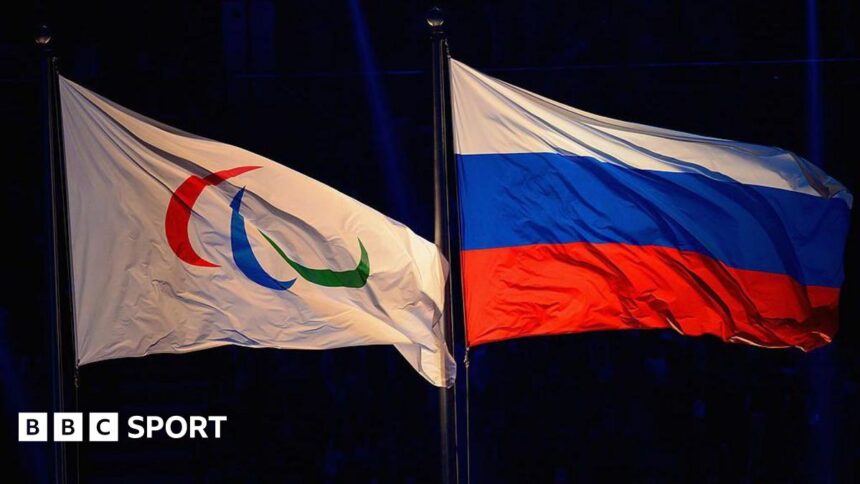
The 2026 Winter Paralympics in Milan-Cortina should have been a moment of pure sporting anticipation. Instead, the event’s opening was clouded by the absence of seven national teams, including a deeply symbolic boycott from Ukraine. Their protest is a direct response to the IPC’s decision to allow Russian and Belarusian athletes to participate as neutrals, under the Paralympic flag and without their national anthems. This “neutral” status, however, is proving to be a fragile compromise, shattered by Parsons’ subsequent revelation regarding wounded soldiers.
The IPC’s stance is that athlete eligibility is based on sporting merit and compliance with the anti-doping code, not the circumstances of an individual’s impairment. “We are a sports organization. We are not in a position to ask a person how they acquired their impairment,” Parsons stated. This principle, while foundational, collides violently with the geopolitical reality of an active invasion. For Ukraine and its supporters, the prospect of facing athletes whose impairments were acquired in a war against their homeland is an unconscionable moral breach.
- Neutral Status Under Fire: The Russian flag has not been flown at a Paralympic Games since 2014 due to the state-sponsored doping scandal. The current “neutral” model is an extension of that suspension, but critics argue it is meaningless when the athletes are openly sourced from the military.
- The Ukrainian Boycott: Ukraine’s decision to withdraw is a powerful, painful statement. For its athletes, many of whom have also been directly affected by the war, competing alongside Russians is not a political choice but an existential betrayal.
The Fast-Track from Frontline to Finish Line
Parsons’ comments did not occur in a vacuum. They follow a disturbing investigative report by the Poland-based outlet Vot Tak, detailed by the Moscow Times, which uncovered a systematic Russian effort to fast-track soldiers wounded in Ukraine into Para-sports. The investigation suggests a coordinated pipeline, where rehabilitation and athletic training are merged with clear patriotic overtones.
The Russian Paralympic Committee (RPC) itself has reportedly acknowledged that “at least 70” such veterans are now competing in national-level teams across various sports. This rapid integration points to a state-level program that blurs the line between veteran rehabilitation and sports development. The implications are stark:
- Weaponizing Rehabilitation: While rehabilitating wounded soldiers through sport is universally laudable, the context transforms it. When these athletes are funneled directly into the international arena representing a nation waging war, their participation becomes an extension of state propaganda.
- A New Class of Athlete: This creates a category of Paralympian whose impairment is directly and recently linked to a specific, ongoing geopolitical conflict. It challenges the IPC’s ability to remain apolitical, as the very origin of the impairment becomes the central, inescapable issue.
Expert Analysis: The Unraveling of “Neutrality”
From a sports governance perspective, Parsons and the IPC are clinging to a classic doctrine: sport as a neutral, separate sphere. Yet, experts in sport ethics and geopolitics see this position as increasingly untenable. “The IPC is attempting to apply a peacetime framework to a wartime reality,” notes Dr. Anya Petrova, a scholar in sport and international relations. “By allowing these athletes, regardless of the neutral flag, the IPC is inadvertently validating Russia’s use of Para-sport as a tool for normalization and morale-building domestically.”
The core tension lies between two noble Paralympic ideals: inclusion and peaceful competition. The IPC’s mandate is to be inclusive and not discriminate based on impairment origin. However, the Paralympic movement was also founded on the ideals of peace, unity, and fair play. The inclusion of athletes from a military actively engaged in creating new Paralympians in a neighboring country eviscerates the spirit of peaceful competition.
Andrew Parsons’ leadership is now under a microscope. His decision prioritizes a strict, bureaucratic interpretation of the rulebook over the palpable moral anguish of a significant portion of the Paralympic community. This risks a permanent schism within the movement, potentially devaluing the very medals awarded in future Games.
Predictions: A Fractured Future for the Paralympic Movement
The path forward is fraught with difficulty. Based on current trajectories, several outcomes seem probable:
- Escalating Boycotts: If the IPC maintains this course for the 2026 Games and beyond, the boycott in Milan-Cortina will not be an isolated event. More nations may join, and the credibility of the medals won will be perpetually questioned.
- Increased Scrutiny on Athlete Origin: There will be intense pressure on the IPC to amend its rules to allow for consideration of the geopolitical context of impairment acquisition. This would be a monumental shift, moving the IPC closer to the political judgments it seeks to avoid.
- A Propaganda Victory for Russia: Regardless of medal counts, Russia will leverage the participation of its soldiers-turned-athletes as a narrative of resilience and national strength, using the Paralympic platform to shape global perception of the war’s human cost.
- Grassroots Revolt: The athlete community itself may fracture. We could see protests on podiums, refusals to compete in heats containing Russian athletes, and public statements that further undermine the IPC’s authority.
Conclusion: At the Crossroads of Principle and Reality
The International Paralympic Committee stands at a defining crossroads. President Andrew Parsons’ confirmation that injured Russian soldiers can compete has forced a painful, public examination of what the Paralympic movement represents in a world of conflict. The principle of inclusion is colliding with the imperative for moral clarity.
While the IPC’s desire to see only athletes, not soldiers or political symbols, is philosophically pure, the world is not. The wounds of these prospective athletes are not abstract; they are fresh, and they are directly tied to a war that is simultaneously creating Ukrainian Paralympians. To pretend otherwise is a fiction that insults the victims and compromises the soul of the Games. The future of the Paralympics now hinges on whether its governing body can find a way to uphold its principles without becoming an arena for the sanitization of war’s consequences. The neutrality of sport is a beautiful ideal, but when the playing field is stained by contemporary bloodshed, that neutrality can become a form of complicity. The IPC’s next move will determine if the Paralympic spirit can survive this ultimate test.
Source: Based on news from BBC Sport.