Beyond the Fairways: The New Architects Reshaping Golf’s Future
The roar that echoed through Augusta National’s pines as Rory McIlroy finally captured his Masters crown was more than a celebration of a career Grand Slam. It was the exclamation point on a seismic year for golf. 2025 delivered unforgettable theatre: McIlroy’s cathartic victory, Scottie Scheffler’s metronomic dominance, and a European Ryder Cup triumph for the ages. Yet, while history was written on the course, a parallel—and perhaps more consequential—story was unfolding in boardrooms and offices. A changing of the guard at the highest levels of the sport’s administration is setting the stage for an era of rapid evolution, positioning golf to capitalize on a surging, newfound cultural cachet.
The New Guard: A Blueprint for a Unified Vision
For years, professional golf’s landscape was defined by entrenched institutions and, more recently, by fractious division. The arrival of a cohort of new leaders across key organizations signals a pivotal shift. These are not mere caretakers; they are strategic operators stepping into roles at a moment of both fragility and immense opportunity. Their mandate is clear: harness the sport’s competitive renaissance and translate it into a cohesive, growth-oriented future.
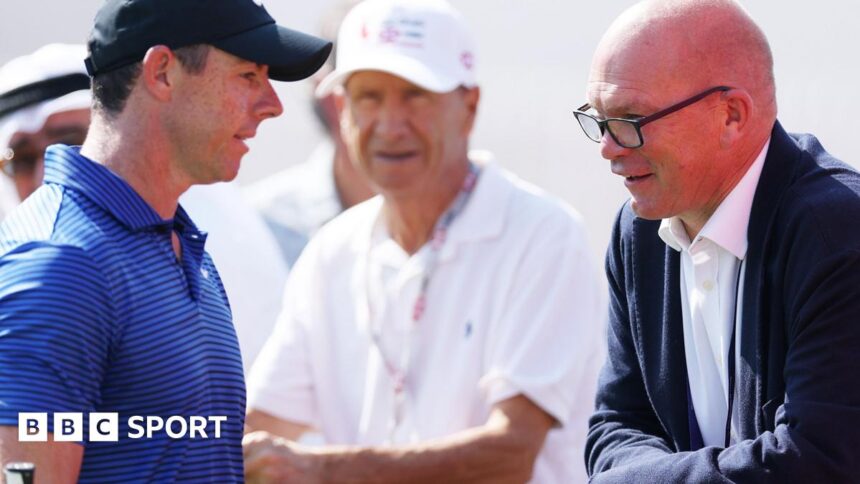
At the helm of the DP World Tour, Guy Kinnings embodies this pragmatic new approach. A seasoned insider with deep player relationships, Kinning’s strategy is straightforward yet profound: “We know that the world’s best players create captivating sport.” His immediate focus on enticing stars like McIlroy to feature more regularly in European events is a direct application of that principle. It’s a move away from institutional inertia and towards a fan-centric, product-first mentality. This philosophy is echoed in similar leadership transitions across the golf ecosystem, suggesting a collective readiness to modernize structures that have often seemed resistant to change.
- Strategic Pragmatism: New leaders are prioritizing fan engagement and star power over tradition for tradition’s sake.
- Collaborative Potential: Fresh perspectives at the top could thaw previous cold wars, opening doors for more unified scheduling and storytelling.
- Commercial Innovation: A focus on making golf “cool again” is driving discussions on format experimentation, digital content, and global market growth.
Capitalizing on the “Cool” Factor: Golf’s Cultural Moment
Golf is experiencing a cultural resurgence. No longer perceived as a staid pastime, it’s attracting a younger, more diverse audience through avenues like popular entertainment, athlete style, and social media. The dramatic narratives of 2025—McIlroy’s quest, Scheffler’s excellence, the Ryder Cup’s team passion—are catnip for a generation raised on compelling sports drama. The challenge and opportunity for the new administration is to institutionalize this cool factor.
This means moving beyond hoping for organic buzz to actively engineering it. Expect these new bosses to champion:
Short-form and alternative formats that provide digestible, high-action entry points for casual fans. Enhanced digital and betting integration that deepens engagement for the connected viewer. A deliberate emphasis on player personality and access, breaking down the fourth wall that has traditionally existed in golf coverage. The goal is to build a sport where the off-course storylines and athlete charisma are as meticulously curated and promoted as the on-course leaderboards, much like other successful modern sports leagues.
Predictions: The Evolution (and Possible Revolution) Ahead
The groundwork being laid today will manifest in tangible changes. Based on the direction set by this new leadership class, we can anticipate several key developments in the coming 24-36 months.
First, a streamlined and logical global calendar is likely. The era of conflicting flagship events and player tug-of-wars is unsustainable. The new bosses have the chance to collaborate on a schedule that respects historic events while creating clear pathways and crescendos, benefiting players, tours, and fans alike.
Second, technology and data will become central to the fan experience. From more advanced shot-tracing and ball-flight analytics integrated into broadcasts to personalized viewing apps, golf will finally leverage its data-rich nature to make viewing more immersive and interactive.
Most boldly, we may see the introduction of team-based franchise leagues running concurrently with the traditional stroke-play season. The success of the Ryder Cup proves the format’s visceral appeal. New leaders, less wedded to the “way it’s always been,” may be the ones to finally crack the code on a sustainable team model that attracts new investment and a different demographic.
The Final Putt: A Legacy Defined by Change
The historic action of 2025—McIlroy’s green jacket, Scheffler’s awards, Europe’s Ryder Cup glory—provided the perfect catalyst. It reminded the world of golf’s unparalleled capacity for drama and heroism. Now, the baton has been passed. The legacy of golf’s new faces in administration will not be measured by the tournaments they preserve, but by the innovations they dare to implement.
Their task is to build a framework that is as dynamic and compelling as the athletes they oversee. They must balance reverence for history with an appetite for the future, ensuring the sport’s structures evolve to match the excitement its players generate. If they succeed, the narrative of 2025 will be remembered not just as a year of legendary winners, but as the dawn of a new, unified, and explosively popular era for golf. The revolution may not be televised; it will be live-streamed, data-enhanced, and championed by a fresh set of architects who understand that in modern sports, standing still is the only true hazard.
Source: Based on news from BBC Sport.