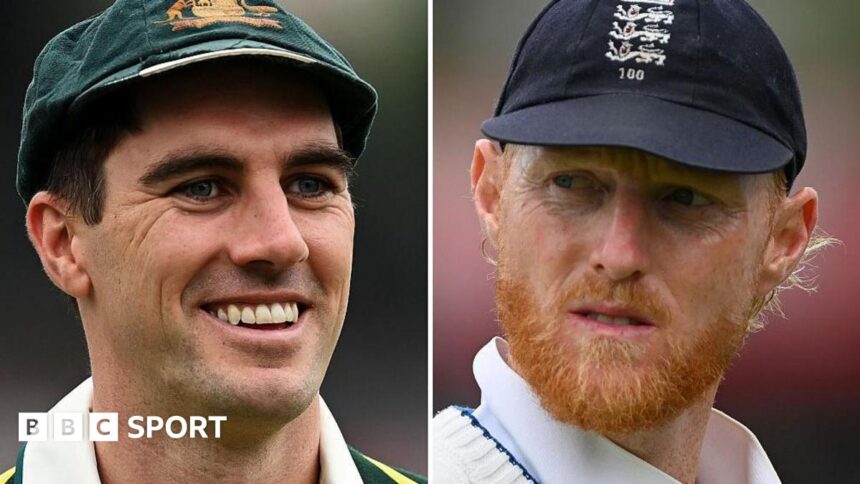
Khawaja Axed as Cummins Returns for Pivotal Ashes Battle Stokes Labels ‘Most Important’
The Ashes, cricket’s oldest and most storied rivalry, has reached its moment of truth. As the teams converge on the Adelaide Oval for the day-night third Test, the narrative is no longer just about a sporting contest; it is a high-stakes examination of leadership, legacy, and survival. In a bold selection call that underscores their ruthless intent, Australia have confirmed the return of captain Pat Cummins but have left the in-form Usman Khawaja out, setting the stage for what England’s Ben Stokes has dramatically termed the “most important game” of his captaincy tenure.
The Brink: England’s Ashes Survival Hangs by a Thread
England’s predicament is stark and unenviable. Trailing 2-0 after comprehensive defeats at the Gabba and the MCG, history and statistics form a formidable wall against them. No team in Ashes history has ever recovered from a 2-0 deficit to win the series. A defeat in Adelaide would not only surrender the urn with two Tests to spare but would etch a new chapter of English despair down under. It would confirm a fourth consecutive series loss in Australia, extend the run without the Ashes to at least 12 years, and trigger an inquest of seismic proportions.
The pressure has crystallized squarely on the leadership trio installed to revive England’s red-ball fortunes. The positions of captain Ben Stokes, head coach Brendon McCullum, and managing director Rob Key would be plunged into a state of intense scrutiny. Their aggressive ‘Bazball’ philosophy, which revitalized England’s summer, now faces its ultimate audit on the hardest examination paper of all. As Stokes himself framed it, this is not just another match; it is an existential fixture for his project.
Selection Gambles: Australia’s Ruthless Clarity vs. England’s Forced Hand
The team sheets reveal the contrasting mindsets of the two camps. Australia’s decision, while surprising to some, is a masterclass in cold, logical selection.
- Pat Cummins Returns: The world’s premier fast bowler and captain resumes his post after missing the second Test due to COVID-19 protocols. His leadership and relentless accuracy are monumental additions.
- Usman Khawaja Omitted: This is the headline-grabber. Khawaja, who scored twin centuries in his last Test in Sydney, cannot force his way back in. It underscores Australia’s commitment to the incumbent top order and the proven success of the current lineup.
- Marcus Harris Retained: Despite modest returns, the faith in Harris signals long-term planning and stability, a luxury afforded by a 2-0 lead.
England, meanwhile, are forced into changes by injury and poor form. The absence of the injured Ollie Robinson is a significant blow to their attack. The likely inclusion of Mark Wood offers a crucial point of difference with raw pace. The biggest question hangs over the batting order, with the struggles of Haseeb Hameed and the form of senior players like Joe Root and Ben Stokes themselves becoming a pressing concern. Their selection will be reactive, while Australia’s was proactive and confident.
Expert Analysis: The Adelaide Crucible
Adelaide Oval under lights presents a unique challenge. The pink ball, the twilight session, and the drop-in pitch create a tactical puzzle. For England, this is both a threat and an opportunity.
Australia’s strength lies in a bowling attack perfectly engineered for these conditions. Cummins, Mitchell Starc, and Jhye Richardson (or Scott Boland) with the pink ball is a daunting prospect. Nathan Lyon’s record at the venue is exceptional. Their batting, led by the immovable Marnus Labuschagne and the relentless David Warner, knows how to build match-winning totals here.
England’s hope rests on a dramatic reversal of mentality. They must find a way to blunt the new ball, survive the deadly evening session, and post a total that allows their bowlers to attack. The pink ball can assist swing, offering James Anderson and Stuart Broad a window. However, this requires a discipline and patience that has been conspicuously absent from their top-order batting. The aggressive approach must be tempered with situational wisdom.
The psychological warfare is equally critical. Stokes’ “most important game” declaration is a deliberate pressure multiplier, aimed at galvanizing his own troops. Australia, by contrast, exudes a calm, almost merciless assurance. They have the luxury of playing for a draw, knowing it secures the urn. England must force a win, a mandate that can lead to either glorious liberation or catastrophic overreach.
Predictions: A Legacy-Defining Outcome
The stakes could not be higher, and the predictions hinge on which team better handles the immense weight of the occasion.
- If Australia wins or draws: The Ashes are retained. England’s leadership undergoes a brutal review. The ‘Bazball’ experiment is labeled a fair-weather philosophy. Australian dominance on home soil is reaffirmed for another cycle.
- If England wins: The series is ignited. Belief floods back into the touring camp. The pressure subtly shifts onto Australia to close out the series. Stokes and McCullum are hailed as miracle workers, and the final two Tests become a blockbuster finale.
Given the conditions, Australia’s settled side, and the palpable pressure on England’s brittle top order, the smart money must lean towards the hosts. Australia’s bowling attack in a day-night Test is a formidable weapon, and their batting lineup is brimming with confidence. Expect a tense, attritional battle for the first two days, with Australia’s depth and home advantage ultimately proving decisive.
Conclusion: More Than a Game, A Tipping Point
The third Ashes Test in Adelaide transcends the boundary ropes. It is a tipping point. For Australia, it is a chance to clinically secure the urn and cement this team’s legacy as one of the great Ashes sides. For England, it is the final stand to save a series, a philosophy, and perhaps several careers.
Pat Cummins’ return fortifies a juggernaut. Usman Khawaja’s omission is a statement of that strength. Ben Stokes’ solemn pronouncement is a recognition of the abyss that awaits. In the Adelaide twilight, under the glow of the pink ball, we will witness more than cricket. We will witness a verdict. The most important game, indeed, is upon us.
Source: Based on news from BBC Sport.