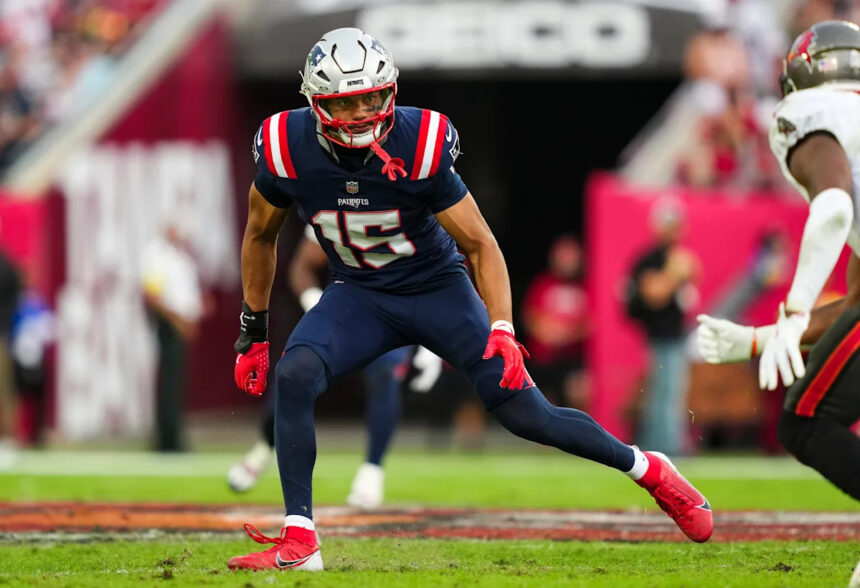
Instant Grades: Breaking Down the Patriots’ Trade of Marte Mapu to the Texans
In the NFL, the line between a sunk cost and a savvy salvage operation is often razor-thin. The New England Patriots, navigating the early stages of a profound rebuild under new head coach Jerod Mayo, provided a textbook case study on Tuesday. Just hours from reportedly releasing linebacker Marte Mapu, the 2023 third-round pick, the Patriots pivoted. Instead of a straightforward cut, they engineered a trade with the Houston Texans, sending Mapu and a 2027 seventh-round pick to Houston in exchange for a 2027 sixth-round selection. It’s a minor transaction on the ledger, but it offers a revealing glimpse into two franchises operating from very different blueprints. Let’s put an instant grade on this deal for both sides.
A Deal Born from Necessity, Not Leverage
To understand the grade, you must first understand the context. Marte Mapu’s tenure in New England was, by any measure, a disappointment relative to his draft capital. Selected 76th overall out of Sacramento State, the hybrid safety/linebacker was a hallmark pick of the Belichick era—a versatile, athletic project for a defense that prized multiplicity. However, the project never got off the ground.
A confluence of factors derailed Mapu’s development:
- Injury Struggles: A torn pectoral muscle suffered pre-draft slowed his initial integration. Further injuries limited his practice and game availability, a critical setback for any rookie.
- Scheme Instability: Mapu played for three different defensive play-callers in as many seasons (Steve Belichick, Jerod Mayo, and now DeMarcus Covington). For a player learning a complex hybrid role, consistent coaching is paramount.
- Roster Evolution: The new Patriots regime, led by Mayo and de facto GM Eliot Wolf, is sculpting a different defensive identity. With the acquisition of veteran linebackers like Sione Takitaki and the drafting of promising rookie Jaheim Bell, Mapu became expendable.
The Patriots were prepared to absorb the total loss, to simply release Mapu and move on. That the Texans were willing to offer even a nominal draft pick upgrade transformed the narrative from a total write-off to a minor asset recovery.
Patriots Grade: A Pragmatic Salvage Job
Grade: B-
Evaluating this trade requires a dual lens: the macro view of the failed 2023 investment, and the micro view of the transaction itself. On the macro level, this is an undeniable failure. Using a third-round pick on a player who contributes minimally for two seasons before being traded for a marginal draft bump is poor asset management. That stain remains on the ledger of the previous regime.
However, grading the trade in a vacuum, the current Patriots front office executed a competent piece of business. Their hand was tipped—the entire league knew Mapu was on the chopping block. Yet, they managed to:
- Turn a $0 return (a release) into a future draft asset.
- Move up roughly 15-20 spots in the 2027 draft order, a small but tangible improvement.
- Clear a roster spot for a player who better fits their current vision, without simply giving the asset away to a competitor.
This is the essence of pragmatic roster management during a tear-down. You cannot undo past mistakes, but you can minimize their lingering impact. The grade isn’t an “A” because the return is undeniably small, reflecting Mapu’s diminished league-wide value. But it’s a solid “B-” for turning an imminent negative into a faint positive. It’s a small win in a long-term rebuilding strategy.
Texans Grade: A Low-Risk, High-Reward Flier
Grade: B+
From the Houston Texans’ perspective, this move is all upside. GM Nick Caserio, familiar with Mapu from his New England days, is betting on a change of scenery and superior organizational stability unlocking the player’s potential. The cost was virtually nothing—a move down a handful of spots in a draft seven years from now.
The Texans’ defense, orchestrated by the brilliant DeMeco Ryans, is an ideal landing spot for a player like Mapu. Ryans’ system thrives with versatile, intelligent linebackers who can play in space. If healthy and properly coached, Mapu’s athletic profile could allow him to compete for a sub-package role as a coverage linebacker or big nickel defender.
Consider what Houston is investing:
- Minimal Draft Capital: A fractional slide in a distant future round.
- Low Financial Cost: Mapu’s contract is cheap and manageable.
- A Roster Spot: The only real commodity spent.
In return, they get a former top-100 pick who is still just 26 years old, with a potential schematic fit. If he doesn’t pan out, the cut is painless. If he rediscovers his collegiate form, Caserio looks like a genius for acquiring a contributor for pennies. This is the type of shrewd, low-risk maneuver that deep, ambitious teams like the Texans can afford to make.
Looking Ahead: Implications and Predictions
This trade reverberates differently in each team’s ecosystem. For New England, it underscores a clear, unsentimental approach under the new leadership. No player is safe based on past draft status. The move also subtly signals a shift in defensive philosophy away from the ultra-hybrid prototypes of the past toward more defined roles, at least in this instance.
For Marte Mapu, this is a career reset. He goes from a team in the foundational phase of a rebuild to a legitimate AFC contender with a defensive-minded head coach. The pressure to live up to his third-round billing is lessened, but the pressure to perform and carve out a niche is immediate. His path to playing time is challenging but clearer within Ryans’ defined system.
For the Houston Texans, this is a classic “why not?” acquisition. It does not prevent them from making other moves, but it adds a layer of competition and potential depth to a defense with championship aspirations. Watch for Mapu to be deployed initially on special teams, with a chance to earn defensive snaps if he impresses in camp.
Prediction: Mapu will make the Texans’ 53-man roster, primarily due to his special teams ability and the investment of a trade. He will contribute in specific defensive sub-packages by mid-season, becoming a useful, if not star-level, piece for Ryans. The Patriots will largely forget the move, but that 2027 sixth-round pick will represent a small victory in asset accumulation—a reminder that in the NFL, something is almost always better than nothing.
Conclusion: A Transaction That Suits Both Sides
The trade of Marte Mapu is not league-altering, but it is instructive. It highlights how smart franchises operate at the margins. The New England Patriots, faced with a sunk cost, managed to recover a sliver of value, demonstrating a pragmatic approach to their rebuild. The Houston Texans, leveraging their stability and schematic advantage, took a calculated gamble on a reclamation project with virtually no downside.
Ultimately, this is a rare transaction where both teams can reasonably feel they achieved their objective. The Patriots get a minor draft upgrade for a player they had zero use for. The Texans get a lottery ticket for a price that barely registers. In the grand calculus of NFL roster building, that’s a successful deal. The grades reflect the differing starting points: a B- for New England’s salvage job and a B+ for Houston’s intelligent flier. The true final grade, however, will be written by Marte Mapu himself on the fields in Houston.
Source: Based on news from Yahoo Sports.