Ukraine’s Vladyslav Heraskevych: Carrying the Fallen on a Helmet of Remembrance
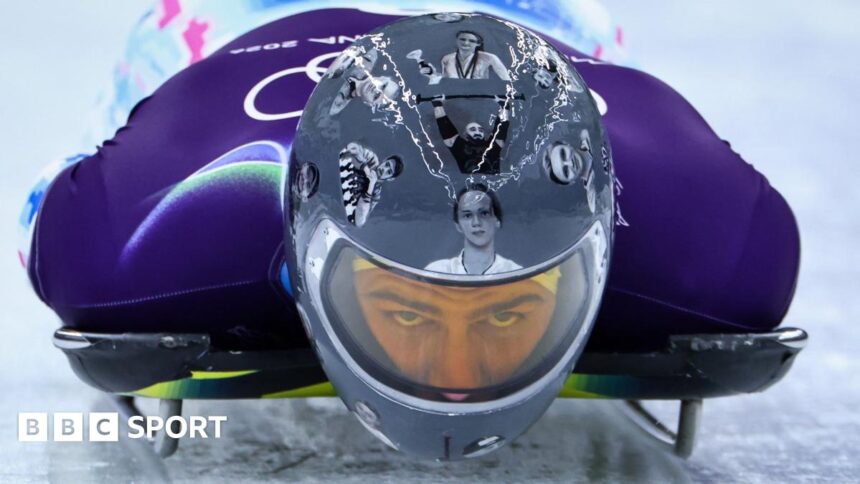
The thunderous roar of a skeleton sled ripping down the icy chute of Cortina’s historic track is a sound of pure, unadulterated speed. For Ukrainian athlete Vladyslav Heraskevych, that sound in the lead-up to the Winter Olympics was also a cry of remembrance. As he trained, hurtling face-first at 80 miles per hour, his helmet was not adorned with sponsors’ logos or personal motifs. Instead, it bore the solemn, silent faces of those lost to war—a mobile memorial to friends, athletes, and countless victims of the conflict ravaging his homeland. In a sport measured in hundredths of a second, Heraskevych introduced a powerful, human dimension of timeless grief and unwavering protest.
More Than an Athlete: The Evolution of a Protester
Vladyslav Heraskevych is no stranger to using the global sports stage as a platform for conscience. His journey from elite competitor to poignant advocate has been as deliberate as his runs down the ice. Long before the Cortina training sessions, he had already etched his name into Olympic history not just for his athletic performance, but for his courage. At the Beijing Games, following a run, he held up a small sign to the cameras that read “No War in Ukraine.” It was a simple, stark message that cut through the celebratory atmosphere, a necessary reminder of reality back home.
This act set a precedent. Heraskevych transitioned from an athlete who happens to be Ukrainian to a Ukrainian athlete with a mission. The helmet in Cortina was not a spontaneous gesture but the next, deeply personal chapter in his advocacy. “I had promised before the Games to use the event as a platform to keep attention on the conflict,” Heraskevych stated. By placing the faces of the fallen on his own protective gear—the very item that safeguards his life in his dangerous sport—he created a profound metaphor: he carries them with him, into battle, on the field of play.
A Helmet of Faces: The Personal Cost of War
The power of Heraskevych’s tribute lies in its heartbreaking specificity. These were not anonymous stock images; they were faces with names, dreams, and connections to the young man wearing them.
- Alina Peregudova: A teenage weightlifting talent, her potential extinguished by the war.
- Pavlo Ishchenko: A fellow elite athlete, a boxer who represented Ukraine on the world stage.
- Oleksiy Loginov: An ice hockey player, a comrade in the world of winter sports.
“Some of them were my friends,” Heraskevych told Reuters, a statement that grounds a global tragedy in intimate, personal loss. This transforms the helmet from a symbol into a personal reliquary. Each face represents a universe of stolen futures, a family shattered, and a contribution to Ukrainian society that will never be realized. For the global audience, it forces a reckoning: behind the headlines of troop movements and political rhetoric are individuals like Alina, Pavlo, and Oleksiy. Heraskevych forces us to look them in the eye, even as he rockets past in a blur.
Expert Analysis: The Impact of Protest in Modern Sport
Sports sociologists and communications experts see Heraskevych’s actions as a masterclass in effective, dignified protest within the constrained environment of international sport. Unlike a verbal outburst that can be edited out or a gesture that can be banned, the helmet is an integral part of his equipment, worn throughout training and potentially in competition. It is a constant, visible testament that cannot be easily dismissed.
“He has weaponized his visibility in a profoundly respectful way,” notes Dr. Anya Petrova, a professor of Eastern European Studies and sports culture. “He is not disrupting the competition for others; he is layering his participation with meaning. The International Olympic Committee, with its often-strict rules on political demonstration, finds itself facing a protest that is also an act of profound mourning. It’s difficult to sanction grief, especially when it is so visually tied to the athlete’s own national identity and personal safety.” Furthermore, as Ukraine’s flagbearer in the opening ceremony, Heraskevych was already a designated symbol of his nation, making his subsequent tribute a continuation of that representative duty.
His protest also leverages the unique nature of skeleton. The athlete’s face and helmet are in clear view during the start and in media close-ups, making it the perfect canvas for a message. In a sport of individual courage, he has redefined bravery to include moral fortitude.
The Future of Advocacy and the Athlete’s Burden
What does Heraskevych’s path portend for the future of athlete activism, particularly for those from nations in crisis? His actions suggest a new, sustained model of advocacy.
- Sustained Narrative: Rather than a one-time gesture, he has created a continuing story—from the sign in Beijing to the helmet in Cortina.
- Personalization of Politics: By focusing on specific individuals, he makes an incomprehensible war comprehensible and emotionally resonant.
- Integration into Performance: The protest is not separate from his athletic identity; it is woven into it, making his very presence on the track a statement.
We can predict that Heraskevych will continue to find subtle, powerful ways to keep the world’s eyes on Ukraine. Future competitions may see other tributes, perhaps to destroyed cities or cultural landmarks. He has also set a precedent for other Ukrainian athletes and those from conflict zones worldwide, showing that their identity and their nation’s story are inseparable from their sporting journey. The burden of representation is heavy, but Heraskevych carries it with a solemn grace that commands respect far beyond any podium finish.
Conclusion: The Weight of Remembrance and the Speed of Defiance
Vladyslav Heraskevych will be timed down to the thousandth of a second in his races. History, however, will measure him by the weight of the faces on his helmet and the strength of his conviction. In the adrenaline-fueled, often apolitical world of elite winter sports, he has carved a space for memory and moral clarity. His helmet is more than equipment; it is a shield bearing the fallen, a canvas of collective pain, and a banner of peaceful resistance. As he rockets down the ice, he does not race away from the war, but directly into the world’s consciousness, ensuring that with every run, the victims are remembered, the conflict is not normalized, and the spirit of his friends and fellow Ukrainians flies, defiantly, at incredible speed.
Source: Based on news from BBC Sport.