Iran Confirmed to Play at World Cup: Infantino’s Firm Stance Amid Political Storm
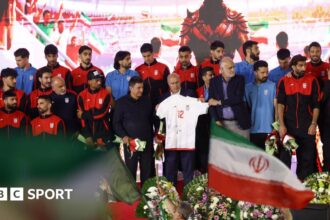
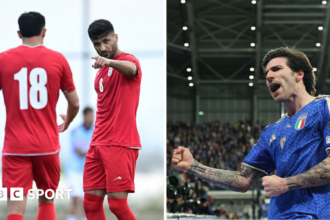
The 2026 FIFA World Cup is shaping up to be the most politically charged tournament in modern history, and the latest flashpoint involves one of Asia’s most storied football nations. Despite a conspicuous absence from FIFA’s annual Congress in Miami, Iran has been officially confirmed by FIFA President Gianni Infantino to take its place on the world’s biggest stage. This declaration comes as a thunderbolt of clarity amid a swirling fog of diplomatic tensions, visa disputes, and security concerns that threaten to overshadow the beautiful game.
- The Empty Chair: What Iran’s Absence from FIFA Congress Really Means
- Infantino’s Red Line: Why FIFA Rejected Iran’s Venue Change Request
- US Secretary of State Marco Rubio’s Warning: The IRGC Issue
- Expert Analysis: The Cross-Border Nightmare of a 48-Team World Cup
- What This Means for the Tournament: A Precedent for Future World Cups
- Strong Conclusion: The Beautiful Game Meets the Brutal Reality
Infantino’s unequivocal statement—that Iran will play its matches in the United States—cuts through weeks of speculation. The decision is not merely a logistical update; it is a high-stakes political chess move that tests the limits of sport’s ability to transcend geopolitical conflict. For journalists and fans alike, this is a story about power, principle, and the precarious line between national security and global sport.
The Empty Chair: What Iran’s Absence from FIFA Congress Really Means
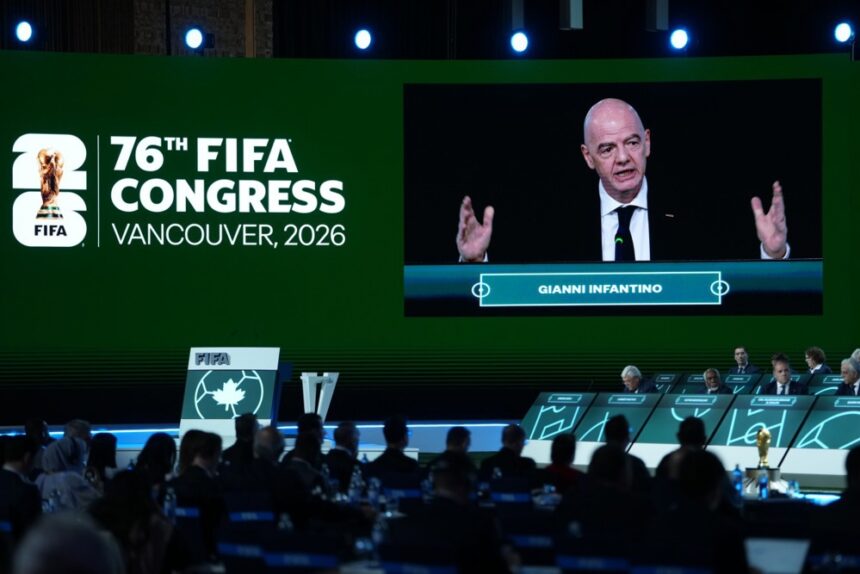
Thursday’s FIFA Congress in Miami was a spectacle of global unity—except for one glaring absence. The Iranian delegation did not attend, leaving an empty chair that spoke louder than any speech. While FIFA officials politely noted it as a “scheduling issue,” the subtext was unmistakable: Iran’s relationship with the tournament’s host nations is fractured.
This absence deprived the Congress of direct representation from a country whose presence at the 2026 World Cup is already shaping behind-the-scenes discussions. The issue is particularly acute given the tournament’s cross-border nature. The expanded 48-team World Cup, cohosted by Canada, the United States, and Mexico, will require teams, officials, and support staff to move repeatedly between jurisdictions. This raises the prospect that visa restrictions or diplomatic frictions could complicate planning for certain nations.
For Iran, the stakes are existential. The country has qualified for the tournament on merit, but their participation has been fraught since the start of the US-Israel war on Iran. Tehran had requested alternative venues for matches on US soil, citing safety concerns for players and staff. That request was flatly rejected by FIFA, with Infantino insisting the schedule would stand. The message is clear: the World Cup is bigger than any single political conflict.
Infantino’s Red Line: Why FIFA Rejected Iran’s Venue Change Request
FIFA President Gianni Infantino is no stranger to walking a tightrope between diplomacy and sport. However, his handling of the Iran situation suggests a calibrated strategy: zero tolerance for political interference in the match schedule. When Tehran proposed moving their group-stage matches to a neutral country, FIFA’s response was immediate and firm. The governing body argued that altering venues for one team would set a dangerous precedent, potentially unraveling the logistical framework of a three-nation World Cup.
Behind closed doors, sources indicate that FIFA’s legal team reviewed every possible loophole. The conclusion? The tournament’s integrity depends on strict adherence to the host nation’s sovereignty. If Iran wants to play in the World Cup—and Infantino has confirmed they do—they must play in the United States. This is not just a sporting decision; it is a legal and contractual obligation signed by every participating federation.
The Iranian Football Federation’s argument centered on the safety of its delegation amid the US-Israel conflict. However, FIFA’s security assessment, conducted with US federal agencies, concluded that standard World Cup security protocols—including armed escorts, secure hotels, and restricted-access training facilities—are sufficient to mitigate any risks. Infantino’s public insistence that “football must never be held hostage by politics” is a direct rebuke to Tehran’s stance.
US Secretary of State Marco Rubio’s Warning: The IRGC Issue
While FIFA has cleared the path for Iran’s players, the US government has drawn a very specific line in the sand. US Secretary of State Marco Rubio stated last week that Washington had no objections to Iranian players participating in the World Cup. However, he added a critical caveat: the players would not be allowed to bring with them people with ties to the Islamic Revolutionary Guard Corps (IRGC).
This is the quiet earthquake beneath the surface. The IRGC, designated a terrorist organization by the United States, has deep ties to Iran’s sports infrastructure. Many team officials, medical staff, and even some coaches have connections to the organization. Rubio’s statement effectively means that any Iranian delegation member flagged by US intelligence as an IRGC affiliate will be denied a visa. This could decapitate the team’s support structure just days before the tournament begins.
The practical implications are severe. Consider the following potential scenarios:
- Coaching staff disruption: If the head coach or key assistants are linked to the IRGC, Iran could enter the tournament without their tactical brain trust.
- Team morale crisis: Players may be forced to choose between their national duty and loyalty to powerful domestic institutions.
- Logistical chaos: Last-minute visa denials could leave Iran scrambling to find approved replacements for medical, security, and administrative roles.
Iran’s government has not publicly responded to Rubio’s statement, but insiders suggest Tehran views this as a deliberate provocation. The IRGC is not just a military entity; it is an economic and social pillar of the state. Asking Iran to sever that connection for a football tournament is, in many ways, asking them to compromise their national identity. This is where the rubber meets the road for Infantino’s “football first” policy.
Expert Analysis: The Cross-Border Nightmare of a 48-Team World Cup
The Iran situation is a microcosm of a much larger problem. The 2026 World Cup is the first to be hosted by three nations, requiring unprecedented cooperation between governments with often conflicting foreign policies. Canada, the US, and Mexico have different visa regimes, different security protocols, and different political relationships with countries like Iran.
For Iran, the logistical puzzle is daunting. Their group-stage matches could be spread across cities in the US, but travel to Canada or Mexico for later rounds would require multiple visa applications and border crossings. US Customs and Border Protection has already indicated that Iranian nationals will face enhanced scrutiny, including mandatory biometric checks and background interviews.
FIFA’s solution, according to sources close to the organizing committee, is to create a “World Cup bubble” for teams from high-risk nations. This involves dedicated charter flights, secure corridors between airports and hotels, and 24/7 security details. However, this bubble is only as strong as the weakest diplomatic link. If the US State Department revokes a visa at the last minute, the bubble bursts.
Predictions from diplomatic analysts suggest that Iran will ultimately field a team, but with a significantly reduced delegation. The players themselves are expected to receive visas, as Rubio explicitly stated there is no objection to them. However, the support staff will be heavily vetted, and it is likely that several key figures will be replaced by individuals with no IRGC ties. This creates a “B-team” scenario for Iran’s backroom operations, which could impact performance on the pitch.
What This Means for the Tournament: A Precedent for Future World Cups
Infantino’s confirmation that Iran will play is a victory for the principle of universality in sport. However, it is a hollow victory if the players are isolated, understaffed, and psychologically burdened. The Iranian team will enter the tournament with a target on their backs—not from opposing fans, but from geopolitical forces beyond their control.
For the US, this is a test of its commitment to the World Cup as a unifying event. Rubio’s IRGC stipulation is a clear signal that national security will always trump sporting diplomacy. For Iran, the message is equally stark: you can play, but you will play on our terms.
Looking ahead, the Iran case will set a binding precedent for future World Cups. If a team can be forced to sever ties with its own government institutions to participate, the line between sport and politics becomes blurred beyond recognition. Other nations with similar tensions—such as Russia, North Korea, or Syria—will be watching closely.
Strong Conclusion: The Beautiful Game Meets the Brutal Reality
Gianni Infantino has drawn his line in the sand. Iran will play in the United States. The schedule stands. The World Cup will go on. But this is not the end of the story—it is the beginning of a high-wire act that will test the very foundations of international football.
The Iranian players, who have done nothing wrong, will carry the weight of a nation’s hopes and a government’s fears on their shoulders. They will step onto pitches in New York, Los Angeles, and Dallas knowing that their every move is scrutinized not just by 90,000 fans, but by intelligence agencies and diplomats.
For the sport, this is a moment of truth. Can football truly transcend politics, or is it merely a stage on which the world’s conflicts are played out in cleats and jerseys? The answer will be written in the 2026 World Cup, one visa stamp, one security clearance, and one match at a time. Iran is confirmed, but the real game has only just begun.
Source: Based on news from Yahoo Sports.