Is Levi’s Stadium Grass or Turf? The Critical Super Bowl 60 Playing Surface Explained
As the New England Patriots and Seattle Seahawks prepare to clash in Super Bowl 60, the spotlight isn’t solely on the star quarterbacks or defensive masterminds. Beneath their cleats lies a factor that could subtly tilt the balance of the Lombardi Trophy: the playing surface at Levi’s Stadium. In an era where the NFL scrutinizes player safety with unprecedented intensity, the age-old grass vs. turf debate has evolved from fan chatter to a central league concern. The type of field these athletes compete on influences traction, speed, and, most critically, injury risk. For a single-game championship where every snap is immortalized, the condition of the ground is as vital as the game plan. So, what awaits these two storied franchises in Santa Clara? Let’s dig into the sod and synthetic fibers to uncover the truth about the Super Bowl 60 battlefield.
The Levi’s Stadium Verdict: A Hybrid Grass Pioneer
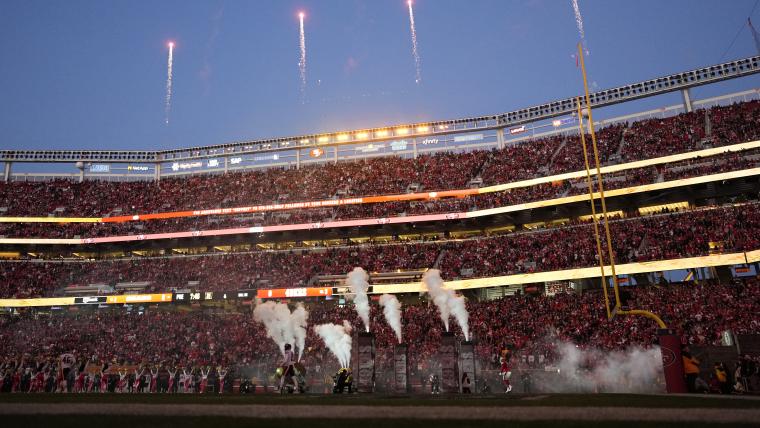
Levi’s Stadium, home to the San Francisco 49ers and the host of Super Bowl 60, does not feature traditional grass, nor does it use conventional artificial turf. Instead, it employs a state-of-the-art hybrid grass system. This innovative surface, known as Bandera Bermuda grass, is reinforced with synthetic fibers.
The technology, specifically the Hellas Matrix Turf system, involves stitching over 20 million polypropylene fibers into the natural soil base. These fibers are spaced about three-quarters of an inch apart, creating a resilient lattice that anchors the natural grass root structure. The result is a surface that offers the natural feel and playability of grass with the durability and stability of an artificial system. This is crucial for a venue that hosts not only NFL games but also concerts and other major events, requiring a field that can recover quickly and maintain consistency.
For the Patriots and Seahawks, this means a predictable, firm, and consistently even surface—a far cry from the potential mud bowls or worn-out patches that have characterized some historic NFL clashes. The league’s mandate for Super Bowl fields is perfection, and the hybrid system at Levi’s is engineered to deliver just that.
The Grass vs. Turf Debate: Safety, Speed, and Strategy
The NFL’s playing surface landscape is a patchwork quilt of different technologies, and the debate over which is superior is fueled by data, player testimonials, and, unfortunately, injury reports. Now more than ever, the NFL keeps a close eye on injuries to its players and how to prevent them, with playing fields being a significant variable in their research.
Natural Grass has long been the gold standard for many players. It is generally perceived as softer, leading to fewer non-contact lower-body injuries. It provides natural give, which can be kinder to joints on impact. However, grass is a living surface. It can become chewed up, muddy, and uneven, especially in inclement weather or late in a season, potentially creating its own set of hazards.
Artificial Turf (specifically next-generation slit-film surfaces) offers unparalleled consistency. It provides a faster, truer bounce and allows for explosive cuts regardless of weather. The primary critique revolves around its hardness and higher reported rates of certain non-contact injuries, including knee and ankle issues, due to excessive friction and less give.
The hybrid system at Levi’s Stadium aims to be the best of both worlds. The synthetic fibers reduce divoting and surface shear, enhancing stability for cutting athletes. Meanwhile, the natural grass component provides cushioning and cools the surface temperature—a significant factor in a sunny California venue. For a tactical chess match like Super Bowl 60, this consistency allows both teams to execute their schemes at high speed without adapting to unpredictable field conditions.
Super Bowl 60 Matchup: How the Surface Impacts Patriots vs. Seahawks
Every playing surface interacts uniquely with team philosophies. The Levi’s Stadium hybrid field will present specific implications for the Patriots and Seahawks.
- For the Seattle Seahawks: Historically a team built on explosive, athletic defense and a zone-running game, the stable, fast surface could play to their strengths. A defense that relies on rapid pursuit and sure-footed tackling will appreciate the reliable footing. Offensively, crisp route-running and the ability for receivers to plant and drive on their breaks will be enhanced.
- For the New England Patriots: Coach Bill Belichick’s game-plan-specific approach will be aided by a predictable field. Whether they choose to deploy a power-running attack or a precision short-passing game, the even surface reduces one variable from their complex equation. For a defense that excels at taking away an opponent’s primary weapon, the ability to trust their footing in man-coverage situations is invaluable.
The key battle may be in the trenches. The hybrid surface’s firmness could favor powerful, technical linemen who can leverage their strength without fear of the ground shifting dramatically beneath them. This could turn line play into a pure contest of skill and power, with fewer surprises from the turf.
Predictions and Player Safety Outlook for Super Bowl Sunday
Expect the Levi’s Stadium surface to be a non-story in the lead-up to the game—and that’s the ultimate compliment. The field will be immaculate, green, and uniform, offering no built-in excuse for either side. The hybrid technology virtually guarantees no major divots or torn-up sections, even by the fourth quarter. This sets the stage for a clean, fast-paced game where the outcome is decided by execution, not poor footing.
From an injury prevention perspective, the hybrid surface represents the NFL’s preferred direction. While long-term studies are ongoing, the league views these reinforced systems as a promising compromise. For Super Bowl 60, the most significant injury risk factor likely won’t be the field type, but rather the immense speed and collision force generated by two elite teams playing for a championship. The surface’s job is to not add any unnecessary risk, and the Levi’s Stadium system is designed specifically for that mandate.
Look for special teams play to be particularly sharp. Kick and punt returners, often operating at full tilt in traffic, will benefit from the consistent traction. A field goal attempt from 50-plus yards won’t be complicated by an uneven spot or soft hold.
Conclusion: A Modern Field for the Modern NFL
When the Patriots and Seahawks take the field for Super Bowl 60, they will be competing on one of the most advanced stages in professional sports. Levi’s Stadium’s Bandera Bermuda hybrid grass is a testament to the NFL’s ongoing pursuit of optimal playing conditions that balance performance with player safety. It moves the conversation beyond the simplistic grass vs. turf debate and into an era of engineered solutions.
This surface ensures that the narratives emerging from Super Bowl 60 will be about legendary coaching, breathtaking athleticism, and strategic brilliance—not about a muddy quagmire or a slick, artificial track. In the ultimate one-game season, where a single slip can define a legacy, the league has invested in providing a foundation that is as fair and reliable as possible. The championship will be won by the team that best masters the game, not the ground beneath them, and that is exactly how it should be.
Source: Based on news from Yahoo Sports.