Is Omarion Hampton Playing vs. Patriots? Analyzing the Chargers RB’s Slow Start and Playoff Status
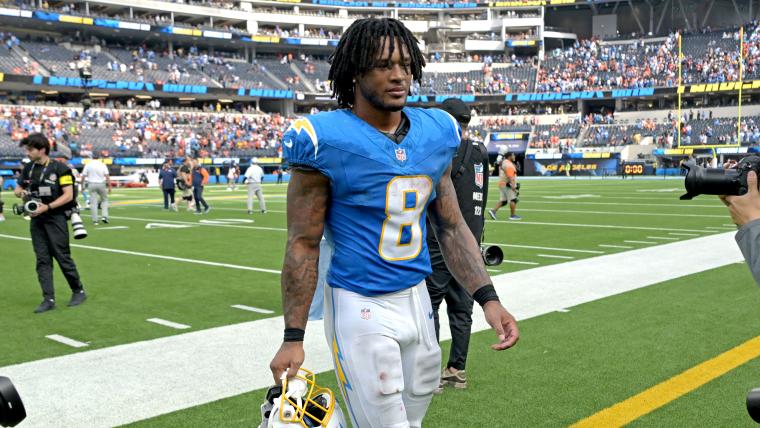
The Los Angeles Chargers entered their AFC Wild Card showdown with the New England Patriots facing a familiar January foe: the injury report. All eyes were on the backfield, where rookie sensation Omarion Hampton, after a record-setting regular season, found his status in question due to an ankle injury. While the team officially welcomed him back for the playoff clash, his absence on the field during critical early moments told a more nuanced story. Hampton’s late-season stumble and playoff availability raise pressing questions about his role and the Chargers’ offensive strategy in the high-stakes postseason atmosphere.
The Ankle Saga: A Race Against the Playoff Clock
Omarion Hampton’s ankle injury, sustained in Week 17, couldn’t have come at a worse time. The dynamic runner, who electrified the league with his blend of power and breakaway speed, was forced to sit out the Chargers’ relatively meaningless Week 18 finale. The entire week leading up to the Patriots game became a medical marathon. Limited practices, game-day testing, and final clearance from the training staff created an aura of uncertainty around the Chargers’ offensive catalyst.
Officially, Hampton was active for the wild-card game. He suited up, went through warm-ups, and was cleared to play. However, “active” does not always mean “fully operational,” especially in the brutal context of playoff football against a Bill Belichick defense. The Chargers’ coaching staff, led by head coach Brandon Staley, made a strategic decision to not thrust Hampton into the fire immediately. This cautious approach, evident when veteran backup Joshua Kelley took the first series, signaled two things: a lack of full confidence in Hampton’s health and a planned, managed workload for their prized rookie.
Decoding the Slow Start: Beyond the Injury Report
While the ankle injury is the immediate culprit for his playoff ramp-up, examining Hampton’s slow start requires a broader lens. His production notably dipped in the final quarter of the season, a trend that began before the ankle issue became public.
Several key factors contributed to this slowdown:
- Defensive Adjustments: Opposing coordinators dedicated entire game plans to stopping Hampton. They stacked the box with eight defenders, daring quarterback Justin Herbert to beat them through the air, and used more aggressive run-blitz packages.
- Offensive Line Fluctuations: The Chargers’ front five battled injuries of their own, disrupting the continuity and run-blocking chemistry that fueled Hampton’s early-season success. A rookie runner relies heavily on consistent lanes.
- The “Rookie Wall”: The NFL season is a grueling physical and mental marathon. Hampton, carrying a significant load, may have hit the proverbial wall, where the cumulative effect of weekly punishment impacts burst and efficiency.
- Game Script: The Chargers found themselves in more negative game scripts—playing from behind—which naturally led to a pass-heavy approach, reducing Hampton’s opportunities.
This perfect storm of challenges transformed Hampton from a weekly lock for 100+ yards to a more contained, though still dangerous, weapon.
Strategic Implications for the Chargers’ Playoff Run
Hampton’s limited or managed role against the Patriots forced a significant strategic pivot for the Chargers’ offense. Without their bell-cow back at full capacity, the offense had to evolve.
The immediate burden fell on the shoulders of Justin Herbert. The Patriots’ defense, knowing Hampton was compromised, could focus even more intently on limiting explosive plays in the passing game. This placed a premium on Herbert’s precision, decision-making, and ability to exploit the intermediate areas of the field. The screen game and quick passes to playmakers like Keenan Allen and Mike Williams became even more critical as extensions of the run game.
Furthermore, the Chargers had to embrace a true running back by committee approach. Joshua Kelley and change-of-pace back Isaiah Spiller saw increased snaps. This kept the Patriots’ defense guessing but also removed the singular, home-run threat that Hampton provides. The Chargers’ offensive identity, built on balance, was tested. Their ability to manufacture rushing yards through scheme and committee would be a major determinant of their playoff longevity.
Expert Analysis and Looking Ahead
From a tactical standpoint, the Chargers’ handling of Hampton was prudent but risky. In the win-or-go-home playoffs, holding back your best weapon is a delicate gamble. The potential upside—a healthier, more explosive Hampton in the fourth quarter or a potential Divisional Round—must be weighed against the immediate cost of a sputtering offense.
Moving forward, Hampton’s trajectory depends heavily on two factors:
- Health and Recovery: Can the ankle heal sufficiently during a short playoff week? His practice participation will be the ultimate tell.
- Coaching Creativity: Even at less than 100%, Hampton demands defensive attention. The Chargers’ offensive staff must find creative ways to get him the ball in space—through designed outside runs, swing passes, and screens—to maximize his impact while minimizing punishment between the tackles.
The Patriots’ defensive scheme, known for eliminating an opponent’s primary strength, was the ultimate test for a limited Hampton. If the Chargers advance, future opponents will certainly employ a similar “stop Hampton first” blueprint.
Conclusion: A Defining Challenge for a Rising Star
The question “Is Omarion Hampton playing?” has a layered answer. Yes, he was active against the Patriots, but his presence was conditional, a testament to the significant hurdle his ankle injury presented. His slow start is not an indictment of his talent, but rather a reflection of the harsh realities of an NFL season, where defensive adjustments, attrition, and bad timing can converge.
For Omarion Hampton and the Los Angeles Chargers, the playoffs represent a reset button and a formidable challenge. Hampton’s rookie season was spectacular, but his legacy will be shaped by how he responds to this adversity. Can he adapt, regain his explosiveness, and become the game-breaking force the Chargers need to make a deep postseason run? His journey from the injury report to the spotlight of January football is now the central storyline for a franchise with championship aspirations. His performance under these constraints will reveal not just his physical recovery, but the mental fortitude of a player destined to be a cornerstone of the league for years to come.
Source: Based on news from Yahoo Sports.