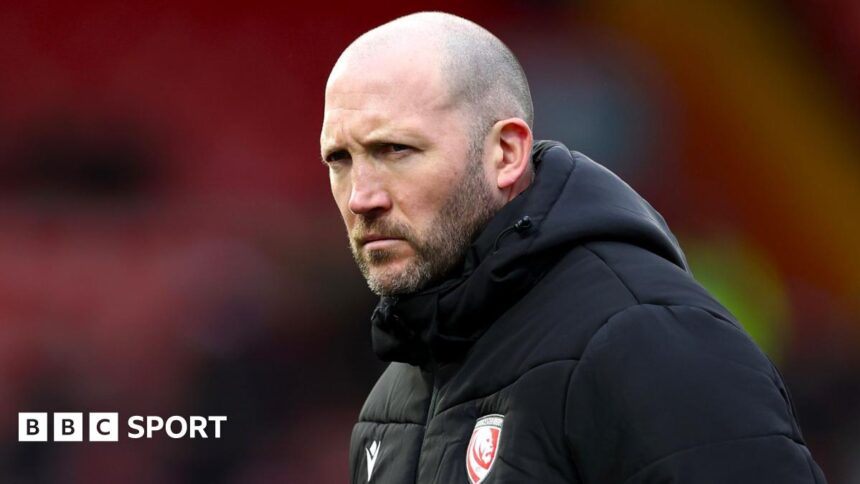
‘It Hurts, It Hurts a Lot’: Inside George Skivington’s Gloucester Coaching Agony
The final whistle at Kingston Park echoed not just around the stadium, but deep into the soul of Gloucester Rugby. Another defeat, this time to the Newcastle Red Bulls, has plunged the famous Cherry and Whites into a crisis of confidence. At the eye of this storm stands head coach George Skivington, a man whose honest admission of pain has laid bare the raw emotion at Kingsholm. “It hurts and it hurts a lot,” Skivington confessed, encapsulating a slump that is testing the very foundations of his project.
A Dream Unraveling: From Play-Off Brink to Premiership Basement
Just months ago, the trajectory at Gloucester appeared promising. Skivington, who arrived in July 2020 with a strong reputation forged as London Irish’s forwards coach, had steered the club to within a whisper of the Premiership play-offs last season, missing out by a mere two points. The hard-nosed, physical identity he preached seemed to be taking root. Fast forward to the present, and the landscape is bleak. Gloucester’s miserable form has seen them lose eight of their opening nine league matches, leaving them anchored to the foot of the table. This isn’t a minor blip; it’s a precipitous collapse that has shocked supporters and pundits alike.
The statistics make for grim reading. The defensive resilience has evaporated, while the attacking structure has looked devoid of ideas. For Skivington, this constitutes the hardest spell of his decade-long coaching career. The pressure is palpable, a heavy cloak that weighs on every post-match interview and training ground decision. The project he was building has stalled catastrophically, and the man in charge is feeling every blow.
Anatomy of a Crisis: Where Has It Gone Wrong for Gloucester?
Dissecting Gloucester’s slump requires looking beyond simple effort. Several key factors have converged to create this perfect storm:
- Injury Catastrophe: Gloucester’s squad has been decimated by injuries to key, experienced players. This has robbed Skivington of consistency in selection and leadership on the pitch, forcing younger, less seasoned players into the fray week after week.
- Loss of Close-Game Mentality: Last season, Gloucester found ways to win tight matches. That crucial skill has inverted; now, they are finding heartbreaking ways to lose. Narrow defeats erode belief faster than heavy beatings.
- Systemic Pressure: The modern director of rugby responsibilities are vast, encompassing recruitment, long-term strategy, and media duties, alongside coaching. For a relatively young head coach, this holistic burden can dilute focus from the immediate fix: preparing the team to win on Saturday.
Skivington’s candid admission of pain is significant. It rejects cliché and shows a leader who is emotionally invested, not a detached tactician. However, in the ruthless world of professional sport, empathy only extends so far. Results are the ultimate currency, and Gloucester are bankrupt.
Structural Shifts: The Imminent Backroom Reinforcements
In a clear response to the escalating crisis, the Gloucester hierarchy is acting. The club is close to bringing in a new figure above Skivington. This strategic move is designed to alleviate the immense pressure of the director of rugby role, allowing Skivington to retreat to what he does best: coaching.
This incoming figurehead is expected to handle the broader strategic and administrative load, providing a buffer and allowing Skivington to focus intensely on the day-to-day coaching, man-management, and tactical minutiae that can turn a season around. It is both a vote of confidence in Skivington’s coaching ability and a stark admission that the current structure is not working. This lifeline could be transformative, but it also comes with an implicit deadline: performance must improve once the support system is in place.
The Road Ahead: Predictions for Gloucester’s Season of Reckoning
So, where does Gloucester go from here? The immediate future hinges on two parallel paths:
Short-Term Survival: The next block of Premiership matches is now about survival in every sense. It’s about scrapping for a single win to break the psychological dam. The focus will shift entirely to simplifying the game plan, rebuilding defensive cohesion, and restoring a shred of confidence. The Challenge Cup may offer a welcome respite and a chance to build momentum away from the relentless Premiership glare.
Long-Term Rebuild: The arrival of a new Director of Rugby will define the club’s medium-term future. This appointment must be a perfect fit—a seasoned operator who can support Skivington without undermining him, and who can make shrewd recruitment decisions to address glaring squad deficiencies. The remainder of this season becomes an audition, not just for players, but for Skivington’s ability to rally under new guidance.
Prediction: The structural change will bring initial stability, but a rapid upturn in results is unlikely. Gloucester’s season is now a battle to avoid finishing last and to lay groundwork for 2024/25. Skivington’s tenure likely depends on showing clear signs of improvement by season’s end.
Conclusion: Pain as the Precursor to Progress or Change?
George Skivington’s heartfelt admission, “It hurts, it hurts a lot,” is more than a soundbite; it is the human core of professional sport’s brutal reality. The pain of Gloucester’s slump is shared by players, staff, and a fervent fanbase, but it rests most heavily on the coach’s shoulders. The club’s decision to install support above him is a pragmatic and necessary intervention, offering him a chance to reset.
This period will ultimately define Skivington. Does this profound pain forge a stronger, more resilient coach who leads a great club out of the darkness? Or does it prove to be the final, overwhelming chapter of his Kingsholm reign? The coming months will provide the answer. One thing is certain: at Kingsholm, the hurt must soon give way to hope, or else more profound changes will inevitably follow.
Source: Based on news from BBC Sport.