Italy’s Agony: The Azzurri Make Heartbreaking History With Third Straight World Cup Miss
The road to the 2026 FIFA World Cup is already buzzing with anticipation. Pundits are crafting their lists, with names like Messi, Ronaldo, and Pulisic dominating conversations about the stars who will define the tournament. Yet, amidst this forward-looking fervor, a seismic echo from a recent, rain-soaked night in Zenica reverberates through the sport’s soul. It is the sound of a giant falling, not with a roar, but with the deafening silence of a missed penalty. For Italy, the conversation is not about 2026, but about an unthinkable reality: for the third consecutive time, the four-time world champions will watch football’s greatest spectacle from home.
A Night of Rain and Reign’s End: The Final Blow in Bosnia
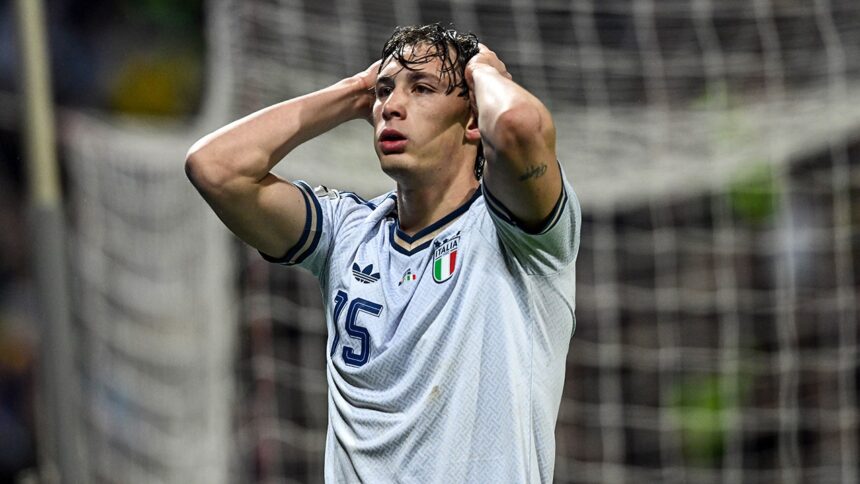
Tuesday night in Bosnia-Herzegovina was not just a football match; it was a historical reckoning. The setting was a European playoff, a last-chance saloon for a nation that once treated World Cup qualification as a birthright. The penalty-kick shootout loss was a cruel, fitting end to a torturous cycle. Each missed spot-kick felt like a hammer blow to the legacy of Buffon, Baggio, and Rossi. When the final attempt sailed wide, it confirmed the unimaginable: Italy is the first World Cup-winning team to miss three consecutive tournaments. The images were stark—veteran defender Giorgio Chiellini, in what was likely his final national team act, staring into a void of rain and despair, while the Bosnian celebration painted a contrasting tableau of joy against Italian anguish.
From Pinnacle to Precipice: The Unraveling of a Powerhouse
To understand the magnitude of this fall, one must recall the height from which Italy descended. The nation was once a soccer powerhouse, a bastion of tactical brilliance, defensive mastery, and clutch performance. Their four stars, earned in 1934, 1938, 1982, and 2006, are emblazoned on the crest as a permanent reminder of pedigree. The 2006 triumph in Berlin, sealed by Fabio Gennaro Grosso’s decisive penalty, was the apex. But what followed was a slow, then precipitous, decline. The failure to advance from the group stage in 2010 and 2014 was a warning. Missing Russia 2018 was a shock. Absence from Qatar 2022 became a haunting probability. Now, confirmed, it is a heartbreaking history.
The roots of this crisis are deep and multifaceted:
- Structural Stagnation: Serie A, once “Il Calcio Più Bello del Mondo,” has lagged in global commercial and sporting appeal for years. While producing tactical managers, the league’s pace and development pathways have struggled to keep up with the Premier League’s intensity and financial might.
- Generational Transition Failure: The failure to seamlessly transition from the golden generations of 2006 and 2012 (Euro finalists) has been stark. A production line that once delivered Baresi, Maldini, Totti, and Del Piero has sputtered, creating a talent gap in key creative and goal-scoring positions.
- Psychological Scarring: Each failure compounded the next. The playoff loss to Sweden in 2017 planted a seed of doubt. The European playoffs became a house of horrors, and the pressure of “must-win” matches seemed to paralyze a team still grappling with its identity post-European Championship glory in 2021.
Expert Analysis: What Went Wrong and What Comes Next?
The Euro 2021 victory under Roberto Mancini was a beautiful, fleeting illusion—a tactical masterpiece that papered over systemic cracks. It proved the individual quality still existed but masked the lack of depth and the unsustainable emotional peak required to win. The subsequent failure to qualify for Qatar exposed the core issues once more. The managerial shift from Mancini to Luciano Spalletti, while logical given Spalletti’s Napoli success, came amidst this turmoil and could not provide an instant fix.
The Italian squad now faces an identity crisis. Do they cling to the *catenaccio*-inspired principles that built their legend but feel outdated? Or do they fully embrace a more progressive, possession-based style that requires a technical profile of player they have not consistently produced? The shootout loss is merely the symptom; the disease is a national footballing philosophy at a crossroads.
Furthermore, the financial and cultural impact is immense. The World Cup is a global advertisement. Italy’s absence for twelve years means a generation of global fans grows up without seeing the Azzurri on that stage, diminishing brand value, commercial appeal, and the inspirational pull for young Italian athletes.
Predictions for the Azzurri’s Long Road Back
The path to redemption is long and unforgiving. The 2026 World Cup, with its expanded 48-team format, ironically offers a clearer path, but Italy cannot assume entitlement. Their future hinges on several critical factors:
- Youth Investment & Patience: The FIGC must commit to a holistic, long-term plan focused on youth development, modernizing coaching education, and perhaps encouraging top talents to seek competitive minutes abroad earlier.
- Managerial Stability: Spalletti must be given time and authority to implement his vision, regardless of early results. Constant turnover has been a hallmark of this failed era.
- Mental Rebuild: Exorcising the playoff demons and the weight of history is paramount. The narrative must shift from fear of failure to the joy of building something new.
- Serie A’s Role: The league must continue its recent uptick in competitiveness and style of play to better prepare Italian players for the intensity of international football.
Prediction: Italy will qualify for the 2026 World Cup. The expanded format is too great a safety net for a nation of their residual quality. However, the true measure of recovery will not be mere participation, but a deep, convincing run that reasserts their place among the global elite. The journey back to being a feared soccer powerhouse begins with humility and a total systemic overhaul.
Conclusion: A Requiem and a Rallying Cry
Italy’s heartbreaking history is now complete—a tragic trilogy of absence written in the ink of missed penalties and failed campaigns. The pain felt by players and millions of *Azzurri* fans worldwide is profound and valid. It is the pain of a fallen empire. Yet, in the world of sport, history is not only a record of what was, but a prologue to what can be. This third miss must serve as the ultimate catalyst, the rock bottom from which a new era is forged. The world will debate the top 26 players for 2026, but for Italy, the only list that matters is the one being built in youth academies, on training grounds, and in the minds of a footballing nation with its pride shattered but its passion eternally burning. The long, dark night of Italian football continues, but the first, faint light of a necessary rebuild must now dawn.
Source: Based on news from Fox Sports.