Van Gerwen’s Retirement Verdict: Is the Clock Ticking on Peter Wright’s Legendary Career?
The PDC World Darts Championship is a theater of dreams, but also a stark arena of reality. In a stunning second-round exit that sent shockwaves through Alexandra Palace, two-time champion Peter Wright was emphatically dismissed, losing in straight sets to debutant Arno Merk. The statistics were brutal: a sub-80 average, just two legs won, and a performance devoid of its characteristic spark. In the aftermath, a verdict from a rival kingpin cut deeper than any missed double. Three-time world champion Michael van Gerwen, fresh from his own victory, delivered a blunt assessment: “It’s time for him to retire anyway.” This is not just a story of an upset; it’s a seismic moment prompting a painful question about legacy, decline, and the right time for a sporting icon to bow out.
A Palace Humiliation and a Stinging Verdict
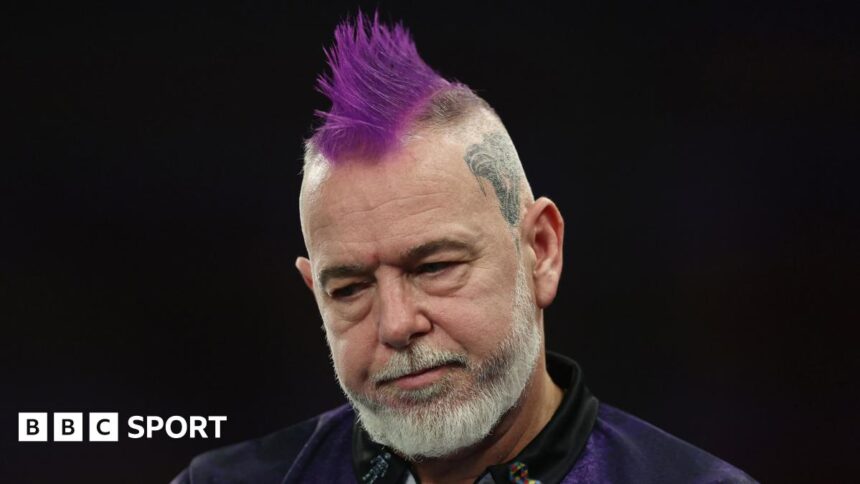
Peter Wright’s journey as the 30th seed was meant to be a resurgence, not a surrender. Yet against the relatively unknown Merk, ‘Snakebite’ looked uncharacteristically tame. The flamboyant costumes were present, but the devastating darts were absent. The defeat laid bare a troubling trend that has plagued Wright’s 2023 season: crippling inconsistency. From world champion in 2020 and 2022 to a player struggling to find his range, the descent has been sharp and public.
Michael van Gerwen’s comments, while harsh, were rooted in this observable decline. “I was not surprised by his performance,” stated the Dutchman, linking the defeat directly to Wright’s recent form. For a competitor of van Gerwen’s caliber, such a public call for retirement is unprecedented. It transcends gamesmanship and enters the realm of a sobering career prognosis from a peer who has shared the sport’s greatest stages with him. The critique carries weight not just for its source, but because it vocalizes what the data has been whispering for months.
Dissecting the Decline: What’s Gone Wrong for Snakebite?
To understand the gravity of van Gerwen’s statement, one must examine the factors behind Wright’s slump. This isn’t a single bad night at the office; it’s a pattern. Several key issues have converged:
- Technical Tinkering: Wright is famous for constantly tweaking his darts, stems, and flights. While this innovative spirit once gave him an edge, it now appears to be a source of instability, preventing him from settling into a reliable, repeatable action.
- Eroding Confidence: Darts is a sport played largely in the six inches between the ears. Repeated early tournament exits and poor averages have visibly dented Wright’s once-unshakeable self-belief. The body language against Merk—shoulders slumped, reactions muted—spoke volumes.
- The Relentless Rise of the Field: The PDC tour is deeper and more competitive than ever. Young, fearless talents like Merk see a struggling legend not as an idol, but as a scalp. Wright is no longer being outplayed only by the top four; he is vulnerable to the entire field.
- Inconsistent Averages: Once a consistent 95+ average player, Wright has seen his numbers frequently dip into the mid-80s, a territory that is simply not competitive at the elite level of modern darts.
These factors create a vicious cycle: poor form leads to experimentation, which leads to more uncertainty, which further undermines confidence.
Legacy vs. Livelihood: The Complex Retirement Calculus
The call for retirement is easy to make from the outside, but the decision is profoundly personal. Peter Wright, at 53, stands at a crossroads faced by all great athletes. On one side is his legendary legacy: a two-time world champion, a former world number one, and one of the most recognizable figures in the sport’s history. Does he risk tarnishing that by playing on through a prolonged slump?
On the other side are practical and passionate considerations. Darts is his profession and his life’s work. The desire to compete, the love for the stage, and the belief that he can fix his game are powerful motivators. Furthermore, with the PDC’s mandatory tour card system, retiring means walking away from a significant income source unless he is certain of his next move.
Van Gerwen’s perspective is that of a pure competitor: if you cannot compete for the biggest titles, you should make way. However, sports history is also filled with champions who battled through slumps to find glory once more. The question is whether Wright’s current issues are a temporary trough or a permanent decline.
What Comes Next? Predictions for Wright and the Darts Landscape
The immediate fallout from Ally Pally will be intense. The prediction here is not for an imminent retirement announcement. Peter Wright is a proud and stubborn competitor. He is more likely to:
- Publicly dismiss van Gerwen’s comments as motivation.
- Undergo another period of intense practice and possible equipment changes.
- Target a strong run in the early 2024 ProTour events to rebuild ranking points and confidence.
However, the 2024 season now becomes the ultimate litmus test. If he cannot arrest the slide and re-enter the top 16 or start challenging in majors, the external pressure—and perhaps internal doubt—will become overwhelming. The sport itself moves on ruthlessly. Van Gerwen, Littler, Humphries, and Smith are shaping the present and future. Wright’s narrative has shifted from “can he win?” to “can he compete?”
For Michael van Gerwen, his comments reveal a mindset focused on the pinnacle. By dismissing a fallen rival, he reinforces his own standards and sends a message to the entire field: sentiment has no place at the top. It was a cold, calculated statement from a man who sees the throne as his alone.
The Final Arrow: A Champion’s Right to Choose His Exit
Michael van Gerwen’s retirement verdict on Peter Wright is the explosive headline, but it is not the final word. While the analysis behind the comment is sound—Wright’s form is a grave concern for a player of his stature—the decision to retire belongs solely to the man behind the mohawk. True legends earn the right to leave on their own terms, even if those terms are messy and imperfect.
Wright’s challenge is no longer about winning another world title in the immediate future. It is about rediscovering a version of his game that commands respect and allows him to walk onto any stage without being labeled a vulnerable target. Whether he can find that spark again will define the final chapter of his incredible career. One thing is certain: the darts world will be watching, not with pity, but with the knowledge that a great champion’s final act is often his most compelling. The bell may not have tolled yet, but for Peter Wright, the time for honest reflection and a decisive comeback plan is now.
Source: Based on news from BBC Sport.