Jason Collins, NBA’s First Openly Gay Player, Dies at 47 After Brave Battle with Brain Cancer
The basketball world is in mourning. Jason Collins, the former NBA center who shattered one of professional sports’ most stubborn barriers by becoming the first active male athlete in a major North American league to come out as gay, has died at the age of 47. His family confirmed Tuesday that Collins passed away peacefully at his home in Florida after a grueling, eight-month fight with glioblastoma, an aggressive form of brain cancer.
“We are heartbroken to share that Jason Collins, our beloved husband, son, brother and uncle, has died after a valiant fight with glioblastoma,” the family said in a statement released through the NBA. “Jason changed lives in unexpected ways and was an inspiration to all who knew him and to those who admired him from afar.”
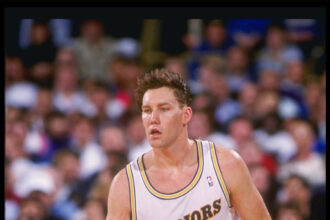
Collins’ death marks the end of a life that was far more than a basketball career. While his on-court numbers—a career average of 3.6 points and 4.9 rebounds over 13 seasons—were modest, his impact on the culture of sports was monumental. He was a role player who became a role model, a quiet giant who spoke volumes with his courage.
The Diagnosis and a Public Fight for Life
Collins’ battle with cancer was as public and brave as his coming out. In December, in a deeply personal essay for ESPN, Collins revealed that he had been diagnosed with Stage 4 glioblastoma—one of the deadliest forms of brain cancer. He wrote candidly about the prognosis: without immediate treatment, the cancer would kill him within six weeks to three months. But true to his character, he added, “I’m going to fight it.”
That fight took him across the globe. ESPN reported that over the winter, Collins traveled to Singapore for experimental treatments not yet authorized in the United States. The trip was a testament to his relentless will to survive. He returned looking strong, attending the NBA All-Star Weekend in Los Angeles and even a game at Stanford University, his alma mater. To those who saw him, he seemed to be winning. But the cancer was relentless.
According to the family statement, his health deteriorated recently as the cancer returned. He died peacefully, surrounded by family in Florida. The NBA community, which had rallied around him with messages of support from stars like LeBron James and Stephen Curry, now mourns a pioneer.
The Moment That Changed Sports Forever
To understand the full weight of Collins’ legacy, one must revisit April 29, 2013. On that day, Collins, then a free agent, published a first-person essay in Sports Illustrated titled, simply, “Why I’m Coming Out.” At 34, he became the first active male player in the NBA, NFL, NHL, or MLB to publicly identify as gay.
The reaction was seismic. President Barack Obama called to offer support. Then-NBA Commissioner David Stern praised his courage. And perhaps most importantly, the locker room—long considered a bastion of homophobia—did not explode. It embraced him. When Collins signed a 10-day contract with the Brooklyn Nets in February 2014, he became the first openly gay player to appear in an NBA game. He wore jersey number 98, a tribute to the year Matthew Shepard, a gay college student, was murdered.
- Trailblazing Moment: First active male athlete in a major U.S. pro sports league to come out.
- Cultural Impact: Shifted the conversation around LGBTQ+ inclusion in sports from theory to reality.
- Legacy of Courage: Paved the way for athletes like NFL prospect Michael Sam and WNBA stars who followed.
Collins once told reporters that he didn’t want to be known as “the gay basketball player,” but rather as “the basketball player who happened to be gay.” Yet he understood the weight of the label. He carried it with grace, using his platform to advocate for equality while never losing his identity as a competitor.
Expert Analysis: The Enduring Impact of a Role Player
As a sports journalist who covered the NBA during the tense, historic weeks following Collins’ announcement, I can tell you that the fear inside league offices was palpable. Executives worried about fan backlash, sponsor flight, and team chemistry issues. None of that materialized. Instead, a quiet, 7-foot veteran from Stanford showed the world that authenticity is not a weakness—it is a superpower.
Collins’ death at 47 is a tragedy, but his life was a masterclass in timing and purpose. He waited until the end of his career to come out, ensuring the focus remained on his basketball ability rather than a media circus. That strategic patience is often overlooked. He knew that if he came out while still playing, the narrative would shift. He wanted to prove he could still guard Dwight Howard in the post—and he did.
Prediction for the Future: Collins’ legacy will now accelerate the next wave of LGBTQ+ inclusion in sports. We will see more active male athletes in the NBA and NFL come out in the next five years. The “Collins Standard”—the idea that a player’s sexuality is irrelevant to their ability—has become the new baseline. The NBA is already planning a permanent tribute, likely a jersey retirement ceremony or a new social justice award bearing his name.
His death also highlights a grim reality: glioblastoma remains one of the most underfunded and lethal cancers. Collins’ decision to seek experimental treatment in Singapore underscores the desperate need for better options. Expect his foundation or family to push for increased brain cancer research funding, turning his fight into a lasting cause.
A Final Farewell to a Quiet Giant
Jason Collins was never the loudest voice in the room. He didn’t need to be. His presence was enough. In a league of superstars and showmen, he was the dependable screen-setter, the hard foul, the teammate who made the extra pass. In life, he made the extra effort to be honest.
The family’s statement captured his essence perfectly: “Jason changed lives in unexpected ways and was an inspiration to all who knew him and to those who admired him from afar.” That is the highest compliment you can pay an athlete—not for the points he scored, but for the barriers he broke and the hearts he opened.
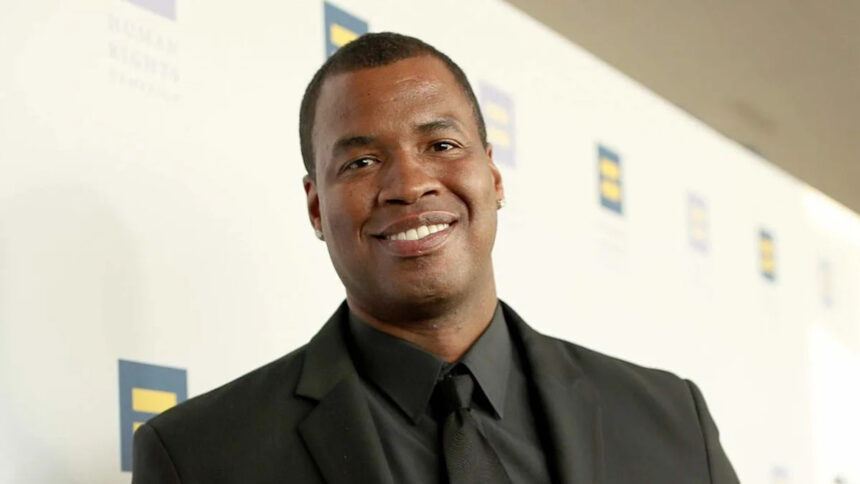
As the NBA community gathers to honor him, one image stands out: Collins smiling at All-Star Weekend in February, months after a death sentence, surrounded by the game he loved. He was not bitter. He was grateful. He was fighting. And in that fight, he reminded us all that the greatest legacy is not how long you live, but how fully you live.
Rest in peace, Jason Collins. The court is quieter without you, but the world is brighter because you played on it.
Source: Based on news from Yahoo Sports.