Kings’ De’Andre Hunter Trade Fallout: A Franchise Defining Misstep
The Sacramento Kings, a franchise perpetually navigating the murky waters between hope and despair, have plunged to a new nadir in the 2025-26 season. With a league-worst 12-38 record as the trade deadline looms, the organization finds itself in a state of paralysis, a reality thrown into stark relief by the widespread roasting of their recent acquisition of De’Andre Hunter. The consensus from analysts and fans alike is a damning indictment: this roster, as constructed, is “hard to sell.” This isn’t just a bad season; it’s a case study in flawed roster construction and a warning sign of a potentially prolonged stay in the NBA’s basement.
A Perfect Storm of Failure in Sacramento
The Kings’ descent wasn’t supposed to be this precipitous. The core that once sparked “Light the Beam” excitement has been dismantled by injury, age, and questionable decision-making. The absence of Domantas Sabonis and Keegan Murray for more than half the season is a catastrophic blow, stripping the team of its interior engine and most promising two-way wing. However, to blame injuries alone is to ignore the foundational cracks in this roster.
This is a team caught in a debilitating time warp. The supporting cast, built to complement a contending core, now stands exposed as a collection of ill-fitting parts. Russell Westbrook, whose ferocity and heart remain undeniable, is nonetheless one of the team’s three best players in 2026—a statement that speaks volumes about the roster’s talent deficit. Meanwhile, DeMar DeRozan and Zach LaVine are skilled scorers, but their games are built on athleticism and volume shooting that naturally declines with age. Relying on them to carry a franchise at this juncture is a strategy rooted in nostalgia, not realism.
The result is a team without an identity, a direction, or, most crucially, a clear path to valuable assets at the trade deadline.
The “Hard to Sell” Reality of the Kings’ Trade Assets
As losses mount, the logical step for a team in Sacramento’s position is to initiate a sell-off, liquidating veteran assets for future draft capital and young talent. Yet, the Kings’ roster presents a unique set of challenges for any front office attempting to reboot.
- DeMar DeRozan: A respected veteran and proven bucket-getter, but on an expiring contract. Contenders may offer a late first-round pick, but his defensive limitations and specific offensive style limit the market.
- Zach LaVine: Once a coveted All-Star, LaVine’s value is at an all-time low due to his massive long-term contract, injury history, and defensive concerns. The Kings would likely have to attach sweeteners to move him, the opposite of a rebuild-friendly transaction.
- Russell Westbrook: His contract is more manageable, and his playoff experience and energy are assets. However, his fit on a contender is highly specific, likely fetching only a second-round pick or end-of-rotation player.
- Domantas Sabonis: The most valuable chip, but moving him signals a full tear-down. His contract is also significant, and his recent injury complicates talks. The return would need to be substantial to justify dealing your best player.
This is the crux of the “hard to sell” problem. The Kings’ most available players are either aging veterans on expiring deals (low return) or high-salary players with diminished value (negative return). The De’Andre Hunter trade, acquiring another mid-tier wing on a sizable contract, only exacerbated this issue, adding another player who doesn’t move the needle but complicates the salary sheet.
The De’Andre Hunter Trade: A Symbol of Misdirection
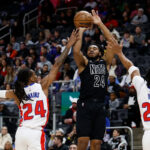
The acquisition of De’Andre Hunter from Atlanta was the move that crystallized the confusion surrounding the Kings’ direction. Hunter is a fine player—a capable, low-usage wing defender who can hit open threes. He is the prototype of a role player for a playoff team. For the Sacramento Kings of 2026, he is a baffling acquisition.
This trade was not the action of a seller. It was the move of a team pretending to retool on the fly, using limited assets to acquire a player who does nothing to address their long-term future. Instead of accumulating picks or taking a flier on a young prospect, the Kings took on more salary for a player who turns 28 this season and has his own injury concerns. In the context of a 12-38 season, it’s a bet on mediocrity. For a fanbase enduring yet another lost season, it feels like a betrayal of the logical path forward: the full embrace of a rebuild.
The roasting from national media was instant and severe. The move was seen as a failure to read the room, a desperate grasp for respectability that only deepens the hole. Hunter isn’t the problem; the philosophy behind acquiring him is.
Predictions: A Long Road Ahead with Few Clear Options
Given the constraints of their roster, the Kings’ immediate future looks bleak, and their options at the deadline are limited.
Most Likely Scenario: A quiet, underwhelming deadline. The Kings will likely find a taker for DeRozan, netting a protected first-round pick and a role player. Moving LaVine or Westbrook will prove far more difficult, and they may still be on the roster after the deadline. Sabonis will stay, as the offers won’t match his value to the franchise, even in a down year.
The Hunter Effect: His presence, along with Harrison Barnes’ remaining years, creates a logjam at forward that stifles the development of younger players and offers a ceiling of “competent.” This mid-tier purgatory is the most dangerous place for an NBA franchise.
Long-Term Forecast: Without a dramatic, tear-down move involving Sabonis or a miraculous lottery win for a franchise-altering prospect, the Kings are staring at a multi-year rebuild. The contracts of LaVine and Hunter will be difficult to move without attaching draft capital, the very resource they need to accumulate. The path to contention requires patience, asset collection, and likely more pain—a reality the Hunter trade suggests the front office is unwilling to accept.
Conclusion: A Franchise at a Crossroads
The Sacramento Kings are not just losing games; they are losing their way. The “hard to sell” critique is about more than just trade value; it’s about selling a vision to a fanbase that has endured decades of disappointment. The De’Andre Hunter trade was a message, and the message received was one of shortsightedness and fear—fear of a true rebuild, fear of bottoming out, fear of admitting the current core’s window has slammed shut.
True courage in the NBA often looks like taking a step backward to eventually leap forward. The Oklahoma City Thunder’s model of stockpiling picks and developing young talent is the modern blueprint. The Kings, by clinging to veterans and adding complementary pieces like Hunter, are following an obsolete map. Until the organization makes the painful but necessary decision to fully commit to a youth movement and asset accumulation, they will remain exactly where they are: at the bottom of the standings, roasted for their decisions, and, hardest of all, easy to ignore.
Source: Based on news from Yahoo Sports.